


The Complete Guide to Anti Spider Spray for UK Homes
At its core, an anti-spider spray is a purpose-made solution, either chemical or natural, designed to do one of two things: kill spiders on contact or create an invisible barrier that puts them off entering your home in the first place. These sprays are a fast-acting tool for dealing with unwelcome eight-legged visitors, particularly during the autumn months when they suddenly seem to be everywhere.
Keeping Your Home a Spider-Free Zone
Finding spiders scuttling across the floor is a common headache for many UK households, especially during that late summer and autumn rush. This is mating season, which means male spiders are on the move and far more likely to wander into our living spaces looking for a partner.
This guide is your practical roadmap to creating a more spider-free environment, cutting through the jargon to give you real, workable solutions. We'll look at everything from powerful sprays that offer immediate results to gentler, natural alternatives perfect for homes with curious pets and young children.
Your Practical Guide to Spider Control
Let's be honest, nobody wants to feel like they're living in a chemistry lab. This guide is all about giving you the confidence to choose and use an anti-spider spray effectively. It's not just about what to buy, but how to use it to get the best results without overdoing it.
The aim is to shift from just reacting when you see a spider to proactively managing your home. By understanding the different tools available, you can create a much more comfortable and peaceful living space. The journey to a spider-resistant home starts with a bit of know-how.
A truly effective spider control plan combines a reliable spray with simple preventative measures. Sealing entry points and reducing clutter are just as important as the product you choose.
What You Will Discover
In this article, we'll cover the key areas you need to understand to get a complete picture of spider management. We believe that an informed approach is always the best defence against any household pest.
Here’s what you can expect to learn:
- How Sprays Work: We’ll demystify the science behind repellent and insecticidal sprays, explaining the core differences in simple, straightforward terms.
- Choosing the Right Product: We'll break down how to select the best spray for your specific needs, whether that’s for indoor safety or creating a strong outdoor barrier.
- Safe Application: You’ll get a step-by-step guide to applying these sprays safely and effectively, focusing on those key entry points to create preventative barriers. Many of these small gaps can be sealed, and you can learn more about effective draught sealing to block pests.
- Proactive Prevention: We’ll share some simple, low-cost tips to make your home less attractive to spiders, which will help reduce how much you need to rely on sprays in the long run.
How Anti-Spider Spray Actually Works
To get the upper hand on a spider problem, it’s worth knowing what’s going on inside that spray bottle. Think of anti-spider sprays as falling into two different camps, each with its own strategy: repellents, which play defence, and insecticides, which are all about offence.
One type works by making an area completely unappealing for spiders to even consider entering. The other is designed for direct, swift elimination. Once you understand this key difference, you can pick the right game plan for your home.
The Two Main Types of Spider Spray
Almost every spider spray you'll find fits into one of two categories. Knowing which one you're holding is the secret to getting the results you're after. Let's break down how each one gets the job done.
-
Repellent Sprays (The Deterrent): These are like an invisible force field for spiders. They don’t usually kill them, but instead, they create a boundary that spiders simply can't stand to cross. Their secret weapon is nearly always scent.
-
Insecticidal Sprays (The Eliminator): These are the ones you reach for when you need a quick, direct solution. They contain active ingredients that attack a spider’s biology, taking care of an existing problem right there and then.
A good way to think about it is this: A repellent is like a "No Trespassing" sign that spiders can sense from a distance. An insecticide is more like an electrified fence that zaps them the moment they touch it.
How Repellent Sprays Create a Barrier
Repellent sprays work by completely overwhelming a spider's delicate senses. Spiders don’t smell like we do; they "taste" and "smell" their environment through tiny sensory hairs on their legs. Potent scents effectively blind these senses, making an area feel confusing, hostile, and somewhere they want to avoid.
Many of these sprays rely on natural essential oils. Ingredients like peppermint, citronella, or lavender oil might smell lovely to us, but they’re incredibly overpowering for spiders. When you spray these along windowsills or door frames, you’re creating a powerful aromatic border that essentially tells spiders to find an easier way in elsewhere. It's a brilliant preventative tactic.
The Science Behind Insecticidal Sprays
Insecticidal sprays work on a totally different principle. Their active ingredients are usually a class of chemicals called pyrethroids – clever synthetic versions of a natural insecticide found in chrysanthemum flowers.
When a spider walks across a surface treated with a pyrethroid-based spray, the chemical is absorbed right through its legs. From there, it targets the spider's central nervous system, leading to paralysis and, ultimately, elimination. This makes them fantastic for dealing with spiders you can see, but also for creating a residual barrier that stays lethal to any new arrivals for weeks to come.
The demand for effective pest control, including anti-spider spray, is on the rise. A lot of this is down to the UK's temperate climate and warmer weather patterns, which are helping spider populations thrive. In fact, professional pest control call-outs for spiders jumped 25% between 2019 and 2024. This is part of a much bigger picture, with the European pest control market projected to hit USD 10.81 billion by 2034. You can read more about the growth of the European pest control market here.
Comparing Repellent and Insecticidal Sprays
To help you decide which spray is right for your situation, it helps to see their core differences side-by-side. One is for keeping them out, and the other is for getting them out.
Here’s a quick comparison to make the choice clearer:
| Feature | Repellent Sprays (Deterrent) | Insecticidal Sprays (Eliminator) |
|---|---|---|
| Primary Goal | To keep spiders from entering an area. | To kill spiders on contact or shortly after. |
| Main Ingredients | Often natural; essential oils like peppermint. | Typically synthetic chemicals like pyrethroids. |
| Best For | Proactive prevention and sensitive areas. | Immediate removal and long-lasting barriers. |
| Application | Applied to entry points to create a barrier. | Sprayed directly on spiders or surfaces. |
Ultimately, the best choice comes down to whether you're playing defence to prevent a problem or offence to solve one that's already there. Many households find that a combination of both is the most effective strategy.
How to Choose the Right Spider Spray
Picking the right anti-spider spray isn’t just about grabbing the most potent bottle you can find. It's more of a balancing act, matching the right product to your home, your family, and the specific spider issue you're facing. Get it wrong, and you might use a powerful chemical where a gentle deterrent would have done the job, or vice-versa.
It really comes down to a few straightforward questions. Are you trying to build a defensive wall around the outside of your house, or just dealing with the odd eight-legged visitor in the kitchen? Do you have pets sniffing around the skirting boards or kids playing on the floor? Your answers will point you towards a solution that’s both effective and right for your space.
Indoor Use vs Outdoor Barriers
First things first, you need to decide where you'll be using the spray. The stuff made for creating an outdoor barrier is completely different from a spray designed for inside your home. Mixing them up can be a waste of time or even a bit risky.
-
Outdoor Sprays: Think of these as the heavy-duty option. They're built to stand up to the elements – rain, sun, you name it – creating a tough, long-lasting perimeter around your property. They’re perfect for spraying on foundations, window frames, and doorways to stop spiders before they even think about coming inside.
-
Indoor Sprays: Here, safety and smell are the main concerns. These formulas are made for enclosed spaces. They're often less powerful, evaporate without leaving nasty residues, and frequently use natural ingredients like peppermint oil to put spiders off without coating your home in harsh chemicals.
It’s a bit like painting. You’d use a durable, weather-resistant paint for the garden fence, but a non-toxic, low-odour one for a child’s bedroom. The same logic applies perfectly to spider sprays.
Prioritising Safety for Pets and Children
For most of us in the UK, nothing is more important than the safety of our pets and children. Their smaller size and natural curiosity mean they’re more vulnerable to the chemicals in traditional insecticides. This is where natural, plant-based repellents really come into their own.
Formulas that rely on essential oils are a much safer bet. Spiders can't stand the strong scent of peppermint, lavender, or citronella, but these are generally harmless to people and pets when used correctly. Always keep an eye out for sprays that are clearly labelled as "pet-safe" or "child-friendly".
When you're unsure, have a quick look at the active ingredients. If the list is full of long, complicated chemical names, you're probably holding a synthetic insecticide. If it lists things like peppermint oil or acetic acid, you’ve got a natural deterrent in your hands.
This flowchart helps break down whether you need to deter or eliminate based on what you're dealing with.
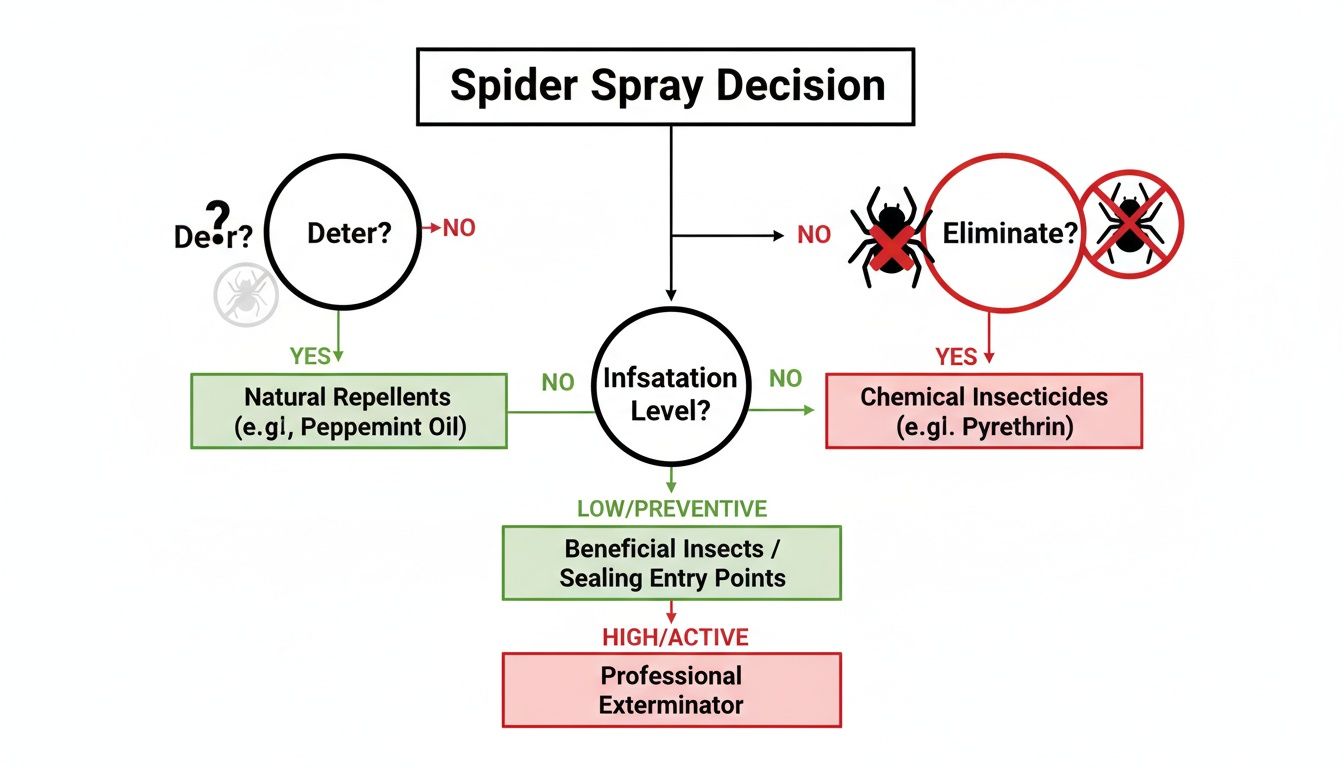 As you can see, if you're just trying to keep them out, a deterrent is your best option. But if you’ve already got an active problem, you’ll need an elimination product.
This shift towards gentler solutions isn’t happening in a vacuum. It’s part of a growing UK demand for natural insect repellents, as more of us look for DEET-free and eco-friendly choices. This trend has been sped up by climate shifts leading to more spider sightings, with the British Pest Control Association noting a 20% rise in spider-related calls between 2021 and 2023.
Long-Term Prevention vs Instant Action
Finally, what's your immediate goal? Are you face-to-face with a spider right now and need it gone, or are you playing the long game to stop them from showing up at all?
-
Instant Action (Kill-on-Contact): These are usually your classic insecticidal sprays. They’re designed for a quick, decisive response when you spot a spider and want it dealt with immediately. They work, but it’s a reactive approach.
-
Long-Term Prevention (Residual Barrier): These sprays create a lasting barrier that works for weeks or even months. Whether it's a natural repellent or a synthetic insecticide, you apply it to key entry points to create an invisible shield that either deters or kills any spider that tries to cross.
For a really bad or stubborn infestation, a simple spray might not cut it. If spiders have well and truly moved in, you might need to bring out the big guns. You can learn more about how a smoke bomb pest control solution works for tackling widespread problems in places like attics or sheds.
By thinking through these three things—location, safety, and your goal—you can choose a spider spray that solves the problem without costing you your peace of mind.
Applying Spider Spray Safely and Effectively
Having a good anti-spider spray is a great start, but knowing how to use it properly is what really makes the difference. It’s not just about pointing and shooting at every spider you see. The real trick is to apply it methodically, creating a powerful defensive barrier that works for weeks while keeping your home and family safe.
Think of it like painting a room. You wouldn't just slap a new colour onto a dusty wall, would you? You’d clean the surface first so the paint sticks properly and gives a smooth, even finish. The exact same idea applies here.
Prepare the Area First
Before you even unscrew the cap, a little prep work goes a very long way. Spiders love quiet, undisturbed spots, so your first job is to shake up their favourite hangouts. This simple step ensures the spray actually reaches the surfaces it needs to, instead of just sticking to dust and old webs.
Start by giving the areas you plan to treat a thorough vacuum. Get right into the corners, along skirting boards, and behind any furniture you can move. After that, grab a brush or duster and clear away all the cobwebs. Doing this not only gets rid of their current homes but also clears the path for the spray to create a clean, effective barrier.
Focus on Key Entry Points
To get the most out of your spray, you need to think like a spider. Where are they most likely to get into your house? By targeting these specific entry points, you create an invisible shield that stops them before they can even get settled. It’s a much smarter approach than just dealing with them one by one as they appear.
Here are the prime locations to focus on:
- Window Frames and Sills: Give the entire frame, inside and out, a light and even misting.
- Doorways and Thresholds: Apply a solid barrier along the bottom of doors and around the doorframe.
- Air Vents and Grilles: Spiders often use these as hidden motorways to get from room to room.
- Cracks and Gaps: Look for tiny openings where pipes or wires enter your home and give them a quick spray.
The goal is to create a continuous, unbroken line of defence. You don't need to soak everything; a light, consistent mist from about 30cm away is perfect.
Think of it as setting up a security system for your home. You're not just setting a trap here and there; you're securing all the weak spots to stop intruders before they even cross the perimeter.
Always Put Safety First
Whenever you're using any kind of household spray, safety has to be the top priority. This is especially true if you have children or pets around. Even the most natural, plant-based formulas need to be handled with care to keep everyone safe and sound.
Good ventilation is your best friend. Open up the windows and doors in the area you’re treating to get the air flowing. This helps the spray dry quicker and gets rid of any strong smells. It’s also a smart move to wear gloves to avoid getting the product on your skin. If you need some, you can find disposable gloves that are suitable for household tasks.
Most importantly, keep kids and pets out of the room until the spray has completely dried. This is the one rule you can't skip. Once it's dry, most modern sprays are perfectly safe for the whole family.
Know When to Reapply
An anti-spider spray isn't a "one and done" fix. Its power will naturally wear off over time, particularly in places exposed to weather. To keep your home spider-free, you'll need to re-up that barrier every so often.
Always check the product label for specific instructions, but here’s a good rule of thumb:
- Indoor Surfaces: Plan to reapply every 3-4 months to keep the protective shield strong.
- Outdoor Surfaces: You'll need to do it more often – after heavy rain or every 4-6 weeks during peak spider season in late summer and autumn.
Follow these straightforward steps, and you'll be able to use your anti-spider spray with total confidence, creating a safe and effective defence that keeps your home comfortable all year round.
Proactive Spider Prevention Tips for Your Home
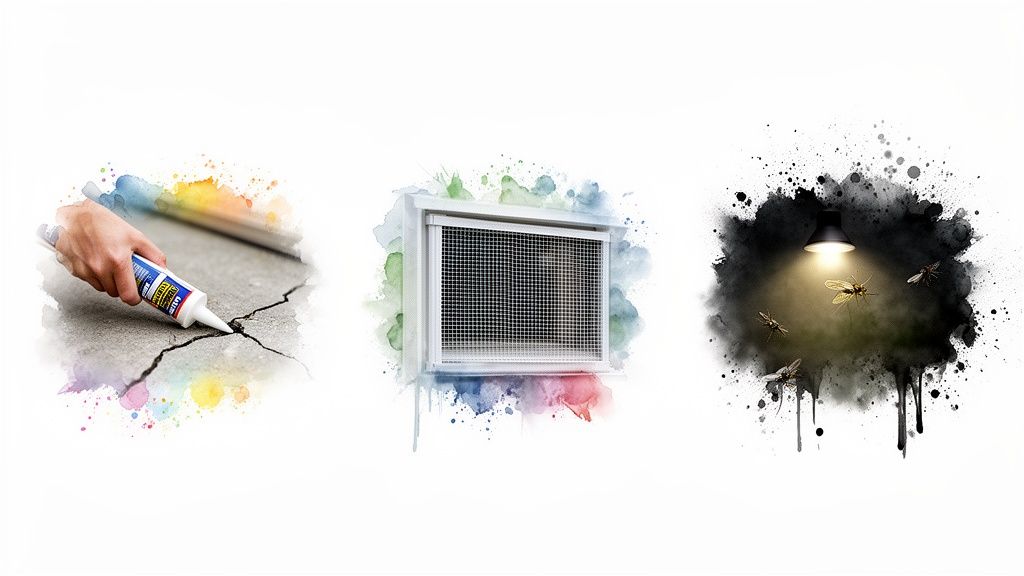
A good anti-spider spray is brilliant for dealing with spiders you can see, but the real secret to a spider-free home is to make it an unwelcome place for them to begin with. It's all about playing the long game.
When you mix these preventative tips with a spray routine, you’re building a multi-layered defence. Think of it as strengthening your home's armour, which means you'll need to spray less often and make your space naturally uninviting to eight-legged guests.
These steps are simple, don’t cost much, and work surprisingly well. They all boil down to two things: blocking their way in and getting rid of what attracts them in the first place—food and shelter.
Sealing Up Entry Points
Spiders are experts at squeezing through the tiniest of gaps. That small crack around a window or a tear in a screen is like an open door for them. Your first mission is to walk the perimeter of your home and seal up these little gateways.
You don't need to be a DIY pro for this. Just grab some quality sealant or caulk and fill in any cracks around window and door frames, or where pipes and wires enter the house. Don't forget to check air bricks and vents; you can cover these with a fine mesh to stop spiders getting in without blocking the airflow.
- Check Window Screens: Look for any rips or holes in your window and door screens and patch them up. Make sure they sit snugly in the frame.
- Inspect Door Sweeps: Add draught excluders to the bottom of your outside doors to close that very common gap.
- Examine Foundations: Scan the brickwork and foundation for any small cracks and fill them as soon as you spot them.
Making Your Home Less Appealing
Spiders come inside for two very simple reasons: to find food and a place to hide. If you limit their access to both, they’ll have no reason to stick around. This is where a bit of smart housekeeping makes all the difference.
Start by having a good clear-out in the spots spiders love most. Lofts, basements, garages, and sheds are prime real estate for them because they're usually dark, quiet, and full of undisturbed clutter like cardboard boxes and old furniture.
A tidy, organised space is a spider's worst nightmare. By taking away their favourite hiding spots, you force them out into the open and encourage them to move on to a neighbour's cluttered shed instead.
It’s clear this proactive approach is catching on. In the UK, the insect repellent market has grown a lot recently, which tells us people are looking for practical ways to protect their homes. Aerosol sprays are leading the pack because they’re easy to use and last a long time, offering a reliable defence, especially when spiders become more active between August and October. You can find more details about the UK insect repellent market and its growth.
Cut Off Their Food Supply
Spiders are hunters, and their main diet consists of other insects. If your house is full of flies, moths, and other little critters, it’s basically a spider buffet. Getting the general insect population under control is a huge step towards preventing spiders.
One of the easiest changes you can make involves your outdoor lights. Standard white bulbs are like magnets for insects. Switching to yellow "bug light" bulbs for your porch or garden can seriously cut down the number of insects buzzing around your home at night. Fewer insects means less food, and less food means fewer spiders. For any bugs that do make it inside, you might want to look at using sticky fly traps to control pests.
Your Path to a Spider-Resistant Home
So, where do we go from here? Hopefully, this guide has given you the confidence and practical know-how to tackle your spider problem head-on. You're no longer just guessing; you now understand the crucial difference between a spray that kills on contact and one that repels, which is half the battle won.
We've covered how to pick the right product, whether you need a pet-safe formula for the living room or a heavy-duty barrier for the shed. More importantly, you know how to apply it safely and effectively, turning a simple can of spray into a proper line of defence for your home.
Your Complete Spider Management Strategy
Remember, the best results rarely come from a single magic bullet. A good anti spider spray is a fantastic tool, but it works even better when you combine it with a bit of common sense prevention. Sealing up those sneaky gaps around windows, having a good clear-out in the attic, and keeping other bug populations down all play a huge part.
Think of it as creating layers of security for your home:
- The Outer Wall: Start with prevention. Seal entry points and make your home less inviting to begin with.
- The Perimeter Guard: Use your barrier spray correctly around doors, windows, and vents to stop them from getting in.
- The On-Demand Response: Keep a reliable spray handy to deal with any eight-legged intruder that slips past your defences.
When you put these pieces together, you get a powerful, long-term solution that means you're not constantly reaching for the spray can.
You're no longer just reacting to spiders when you see them; you're proactively managing your home to keep them out. This is the real secret to creating a comfortable, spider-free space for you and your family.
Moving Forward with Confidence
By following these steps, you've built a complete strategy. You know how to choose the right tools, use them safely, and think one step ahead of the spiders. This isn't just about getting rid of the ones you see today; it's about discouraging them from coming back tomorrow.
A well-rounded plan also includes a way to monitor and catch any that do get through. For a non-toxic option that works brilliantly alongside your spray routine, you can learn more about how indoor spider glue traps work. With this knowledge, you’re fully equipped to keep your home the comfortable sanctuary it ought to be.
Your Top Questions About Spider Spray Answered
It's completely normal to have a few questions before you start spraying anything around your home. After all, you want to be sure you’re using the product safely and effectively.
To help you get started with confidence, I've answered some of the most common queries we hear from homeowners across the UK. Think of this as a quick chat to clear up any last-minute doubts.
Is Anti-Spider Spray Safe for My Pets and Children?
This is usually the first question people ask, and rightly so. Keeping your family safe—including the four-legged members—is the top priority. The good news is that many modern spider sprays are formulated with this in mind, but it’s crucial to know what you’re buying.
For complete peace of mind, look for sprays specifically labelled as "pet-safe" or "child-friendly." These tend to use natural, plant-derived ingredients like peppermint oil. Spiders can't stand the smell, which makes it a great repellent, but it’s completely harmless to people and pets once it’s dry.
No matter what the bottle says, the golden rule is simple: always follow the instructions on the label to the letter. Keep children and pets away from the treated area until the spray has fully dried. This one step is the key to preventing any direct contact and ensuring everyone stays safe.
Once dry, the spray forms an invisible barrier that does its job without posing a risk, even if a curious toddler touches a skirting board or a pet sniffs a windowsill.
How Long Does One Application Last?
This is a classic "it depends" situation. How long your spider-free barrier lasts hinges on the specific product you've chosen and where you've sprayed it.
As a general rule of thumb, an indoor treatment can last anywhere from four to twelve weeks. When you spray it on undisturbed surfaces like the back of a wardrobe, along skirting boards, or in quiet corners, it's shielded from wear and tear and can last for months.
Outdoors is a different story. A barrier sprayed around your home's foundation, on patios, or on external window frames is exposed to the elements. A heavy downpour can wash it away, so you'll need to reapply it more often to keep the defence strong. Your best bet is to check the product label—it will give you the most reliable advice on how often to re-spray.
Will the Spray Stain My Walls or Furniture?
Nobody wants to trade a spider problem for a set of ugly stains on their walls or sofa. It’s a perfectly valid worry! Thankfully, most well-made spider sprays are water-based and designed to dry without leaving a trace on common household surfaces.
But it’s always better to be safe than sorry. Delicate fabrics, certain paint finishes, and natural wood can sometimes react in unexpected ways.
That’s why I always recommend doing a quick spot test before you go all-in.
- Find a small, hidden spot to test. Think behind the sofa, on a bit of carpet that's under a rug, or on the inside hem of your curtains.
- Give it a quick, light spray.
- Let it dry completely.
- Check for any discolouration or marks.
This little two-minute check gives you the confidence to go ahead, knowing you're protecting your home from spiders without damaging your decor.
At Deal For Any Occasion, we provide a wide range of effective and affordable pest control solutions to help you keep your home comfortable and spider-free. Explore our collection of home and garden essentials today. Find out more at https://dealforanyoccasion.com.