


A Parent's Guide to Educational Toys for Preschoolers
When people talk about "educational toys," it’s easy to picture complicated gadgets with flashing lights and sounds. But honestly, the best ones are far simpler. Think of them as tools for play that have a purpose—cleverly designed to weave learning into your child's world so naturally they won't even notice it’s happening.
What Makes a Toy Truly Educational?
At its core, a brilliant educational toy is much more than just a way to keep a child busy; it's a key that helps unlock their potential. It’s not just a single item, but one piece of a much larger ‘playtime toolkit’. Each tool in this kit is thoughtfully made to help your preschooler build something vital for their future, whether that’s the foundation for solving problems or the confidence to make friends.
These toys work by seamlessly blending skill development with the pure joy of discovery. A toddler stacking colourful rings isn't just playing—they're running a mini-experiment in physics, sharpening their hand-eye coordination, and getting a first feel for size and order. The learning isn't a chore; it’s just a happy accident that comes from following their curiosity.
The Power of Purposeful Play
The real magic of educational toys for preschoolers is how they target specific areas of development. They’re intentionally built to get children actively involved, not just watching from the sidelines. For a toy to be genuinely educational, it needs to invite a child to think, create, and engage with it.
- Cognitive Growth: Puzzles and shape sorters get those little cogs turning, encouraging logical thinking.
- Motor Skills: Things like building blocks and lacing beads are fantastic for developing fine motor control.
- Social-Emotional Learning: Pretend play sets give children a safe space to practise empathy and learn how to cooperate.
This focus on purposeful play is exactly why parents are searching for these kinds of toys more and more. Here in the UK, the toy market hit a massive USD 13,948.24 million in 2024, and it was the infant and preschool category that took the biggest slice of the pie. This trend is being driven by a growing demand for toys that mix fun with early learning, and the market is only expected to get bigger by 2035.
The best educational toys don't feel like lessons; they feel like adventures. They are the ones that grow with your child, offering new challenges as their skills advance, ensuring that playtime is always productive.
This is why simple, open-ended toys often turn out to be the most valuable. A set of plain wooden blocks can be a castle one day and a spaceship the next, offering limitless room for creativity. In the same way, a kids educational learning laptop can introduce letters and numbers in a fun, interactive way that feels just like a game. The aim is to provide tools that spark their imagination and empower them to guide their own learning, turning every moment of play into a step towards a brighter future.
Matching Toys to Your Child's Developmental Stage
Choosing the right educational toy isn't about grabbing the most popular thing off the shelf. It’s more like finding the perfect pair of shoes for a growing child. You need a fit that’s just right—not so tight it causes frustration, and not so loose it offers no support. The real goal is to find a toy that meets them exactly where they are and gently nudges them towards that next little milestone.
A toy that’s too simple will quickly lead to boredom. On the other hand, one that’s far too advanced can make them feel defeated, putting them off playing altogether. You're looking for that sweet spot: the "just-right" challenge. It should be engaging enough to capture their imagination but require just enough effort to master, giving them that wonderful rush of accomplishment when they finally figure it out.
This diagram illustrates how a well-rounded playtime toolkit should address the core areas of a child's growth.
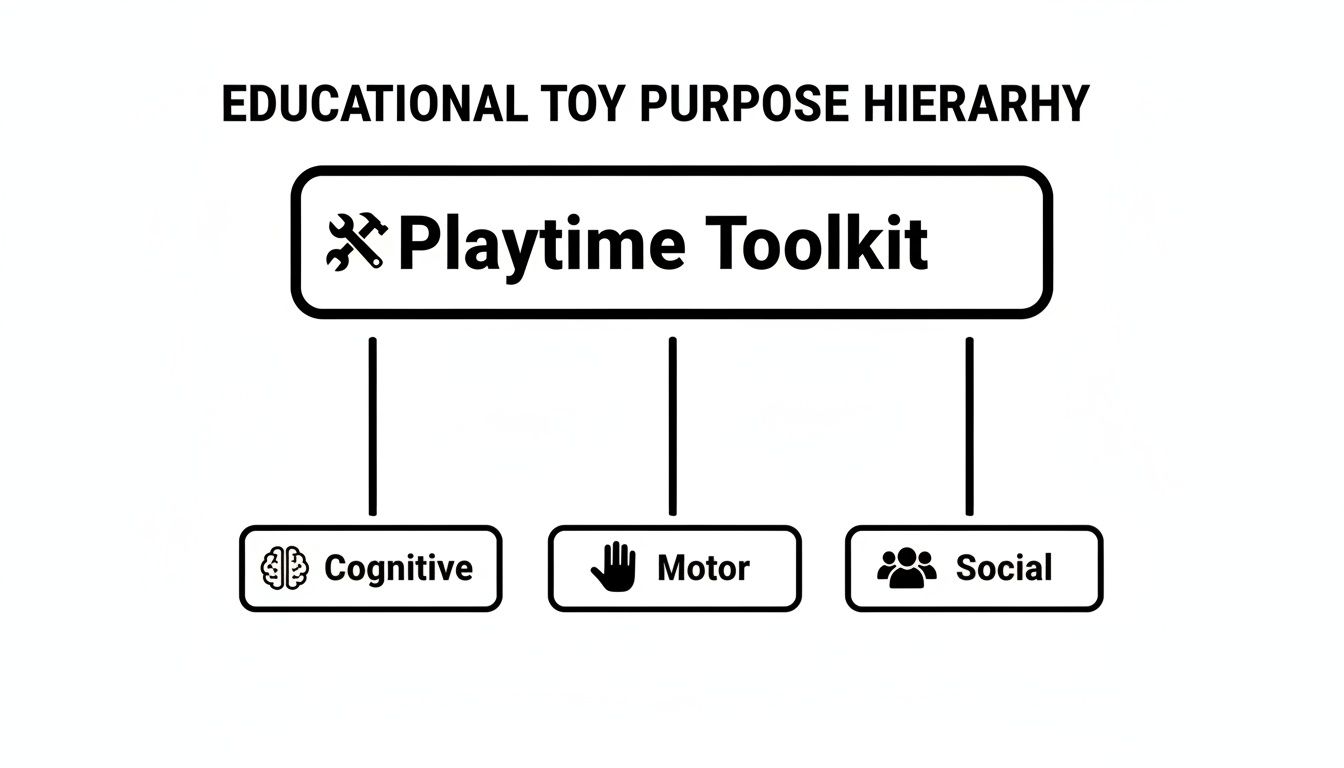
The key takeaway here is balance. The most effective play experiences are those that nurture cognitive, motor, and social skills in harmony, building a solid foundation for all their future learning.
Supporting Physical and Motor Skills
The preschool years are a time of incredible physical leaps. Children are mastering everything from big movements like running and jumping (gross motor skills) to small, precise actions like holding a crayon (fine motor skills). The right toys can act as their personal training equipment, making this development feel like pure, intuitive fun.
To strengthen those small muscles in their hands and fingers, look for toys that need a bit of hands-on manipulation.
- Building Blocks: Stacking, balancing, and connecting blocks are fantastic for building hand-eye coordination and spatial awareness.
- Lacing Beads: The simple act of threading beads onto a string is a brilliant way to develop the pincer grasp, a skill essential for writing later on.
- Modelling Clay: Squeezing, rolling, and shaping clay strengthens hand muscles while providing a wonderful sensory experience.
- Puzzles: Picking up and fitting pieces together hones dexterity and problem-solving. A colourful floor puzzle, like this Clementoni Dumbo 40-piece puzzle, is great for both fine and gross motor development as they have to move around to place the pieces.
These activities aren't just about physical strength; they're directly linked to a child’s growing independence, helping them learn to do things like buttoning a coat or using a knife and fork.
Fostering Cognitive Growth
Cognitive development is all about how children think, explore, and figure things out. Educational toys are brilliant tools for building these core mental skills—like problem-solving, memory, and logical reasoning—by presenting little challenges that get them thinking critically and creatively.
Take a classic shape sorter. At first, a child might just try to force a square peg through a round hole. But through trial and error, they start to learn which shape goes where, creating a mental map of cause and effect. That’s problem-solving in its purest form.
The right toy at the right time acts as a catalyst for curiosity. It doesn't give the answers but instead encourages the child to ask questions and discover the solutions for themselves, building resilience and confidence along the way.
Toys that give their brain a good workout often include:
- Sorting and Patterning Toys: These cleverly introduce early maths concepts like classification and sequencing.
- Memory Games: Simple matching card games can give a significant boost to short-term memory and concentration.
- Open-Ended Building Sets: Whether it's magnetic tiles or traditional wooden blocks, these toys encourage planning, design, and spatial reasoning.
Nurturing Language and Social Skills
Play is the primary way preschoolers learn to communicate and connect with other people. Toys can create fantastic scenarios that encourage them to practise language, understand social cues, and develop empathy.
Pretend play is particularly powerful here. A toy kitchen, a doctor's kit, or a set of animal figures can easily become the centre of an elaborate story. As children invent these narratives, they are expanding their vocabulary, learning to take turns in conversation, and exploring different social roles from a safe and fun perspective.
The demand for toys that support these critical skills is on the rise. In fact, the UK toys market for children up to 5 years old is projected to grow with a CAGR of 4.5% between 2025 and 2034. This growth is largely fuelled by parents choosing smart, interactive educational toys that enhance skills like critical thinking and language, moving beyond traditional rattles to embrace things like interactive puzzles and building sets.
By carefully picking toys that align with their current motor, cognitive, and social-emotional stage, you’re giving your child the tools they need to thrive. You're making sure their playtime is not only fun but also deeply developmental.
What Makes a Great Preschool Toy?
When you’re on the hunt for educational toys, it’s all too easy to be swayed by flashy packaging and promises of genius-level development. But the truth is, the best features aren't always the most obvious ones. Before any toy can build skills or fire up the imagination, it has to be safe, tough, and designed for how children really play.
Let's be honest, figuring out toy safety can feel a bit overwhelming. But there are a few clear things to look for. These aren't just 'nice-to-haves'; they're the bedrock of a good toy and what separates a five-minute distraction from a real investment in your child's learning journey. Knowing what to spot will help you choose with confidence.
Cracking the Code on UK Safety Standards
If you're buying toys in the UK, the first and most important thing to look for is the UKCA mark (UK Conformity Assessed). This little symbol is more than just a sticker; it's a legal guarantee from the maker that the toy meets the UK's rigorous safety regulations. It shows the product has passed tests for everything from flammability and sharp points to harmful chemicals.
Think of the UKCA mark as your quality-control check. It tells you the toy is:
- Built properly: It won't easily break into small, dangerous bits that could become a choking hazard.
- Made from safe materials: It's non-toxic, so you don't have to worry when it inevitably ends up in your child's mouth.
- Designed for the right age: It has been assessed and deemed suitable for the age group on the label.
Always check for this mark on the box or the toy itself. It's a quick look that offers huge peace of mind. And while you're thinking about safety, don't forget the playroom itself. Getting your home ready for curious explorers is just as important, which includes things like installing baby safety socket inserts.
Built to Last Through Playtime, and Then Some
Let's face it, preschoolers aren't exactly known for being delicate. Toys will be dropped, thrown, bashed, and pulled in all directions. A toy that shatters after a week isn't just a waste of money—it can be downright dangerous. Durability isn't a luxury; it's a necessity.
Good materials are a dead giveaway. Look for solid wood, sturdy BPA-free plastics, and strong, reinforced stitching on soft toys. These are the hallmarks of a toy that can handle the rough and tumble of daily play. A truly well-made toy can even be passed down to younger siblings, extending its value for years.
A truly durable toy is one that can survive the most creative (and chaotic) play scenarios your child can dream up. It should be a reliable partner in their daily adventures, not a fragile object they have to handle with care.
This kind of resilience means the toy can be a consistent, dependable part of their developmental toolkit.
The Power of Open-Ended Play
Often, the most powerful educational toys are the simplest. We're talking about open-ended toys—the kind that can be used in countless ways, with the only limit being a child's imagination. Compare a set of plain wooden blocks to a plastic character that just says a catchphrase when you press a button.
Those blocks can be anything: a castle, a speeding train, a zoo enclosure, or a colourful bridge. This amazing versatility encourages:
- Creativity: The child has to invent the story and decide what the toy is for.
- Problem-Solving: They have to figure out how to make their structures balance or create the pattern they see in their head.
- Adaptability: The same toy stays fun as they grow, moving from simple stacking to complex, imaginative building projects.
This design philosophy puts your child in the driver's seat. Instead of just reacting to a toy's built-in features, they become the director of their own play. This fosters independence, flexible thinking, and a genuine love of learning. By focusing on safety, durability, and open-ended design, you’re choosing toys that will truly enrich your child's world.
A Smart Shopper's Guide for UK Parents
Investing in your child's learning through play doesn't mean you have to break the bank. With a few smart strategies, you can find brilliant, high-quality toys that deliver real value. This guide is here to help UK parents navigate the world of toy shopping, from choosing the right materials to keeping the playroom from taking over the house.
The demand for these developmental tools is bigger than ever. Back in 2020, during the pandemic, the UK actually became the largest market for educational toys in the region, and that trend hasn't slowed down. In fact, the market is expected to hit USD 5.36 billion by 2026, driven by parents looking for toys that really boost a preschooler's IQ and sensory skills. You can read more about this growing trend over on Fortune Business Insights. It's clear that UK parents really value the power of purposeful play.
By learning what to look for, you can make confident choices that champion your child’s growth without overspending.
Making Smart Choices: Wood vs. Plastic
When you’re standing in the toy aisle (or scrolling online), one of the first things you'll notice is the choice between wood and plastic. Each has its pros and cons, and there isn't a single 'best' option. The right material often comes down to your family's priorities, your budget, and how your child likes to play.
-
Wooden Toys: Often praised for their classic feel and incredible durability, wooden toys are a fantastic, sustainable choice. They have a satisfying weight and robustness, making them perfect for timeless classics like building blocks and puzzles. The downside? They can sometimes be a bit pricier and aren't always the best for a splash-about in the bath.
-
Plastic Toys: Modern, high-quality plastic toys are lightweight, often more affordable, and incredibly versatile. They can be moulded into all sorts of wonderful, complex shapes for elaborate playsets and are usually a breeze to clean. The golden rule here is to make sure they are made from BPA-free, non-toxic plastic to keep playtime completely safe.
A healthy mix of both materials usually creates the most balanced and engaging toy box for a growing preschooler. To help you weigh it up, here’s a quick comparison of common toy materials.
Choosing the Right Toy Material
| Material | Pros | Cons | Best For |
|---|---|---|---|
| Wood | Highly durable, sustainable, classic aesthetic, encourages imaginative play. | Can be more expensive, heavier, not suitable for water play. | Building blocks, puzzles, role-play sets, ride-on toys. |
| Plastic | Lightweight, versatile, easy to clean, often more affordable. | Can be less sustainable, potential for BPA (look for BPA-free). | Bath toys, intricate playsets, outdoor toys, electronic toys. |
| Silicone | Soft, flexible, food-grade safe, easy to clean, heat-resistant. | Can attract dust/fluff, may be less durable for sharp teeth. | Teething toys, sensory bins, flexible stacking toys. |
| Fabric/Felt | Soft, safe for all ages, great for sensory and comfort play. | Can be difficult to clean, may harbour dust mites. | Soft toys, dolls, puppets, quiet books, playmats. |
Ultimately, the best choice depends on what you value most—be it the timeless durability of wood or the easy-clean versatility of plastic.
Practical Tips for Toy Storage
A mountain of toys can quickly transform a calm living room into a scene of pure chaos. A simple and effective storage system not only keeps your home tidy but also teaches your child brilliant life skills like responsibility and organisation. When children can easily find what they want to play with, it empowers them to play more independently.
Here are a few simple solutions that work wonders:
- Go for Clear Bins: See-through containers let children spot their favourite toys without needing to tip everything onto the floor.
- Label Everything: Use pictures or words on labels so even the youngest children can learn where everything belongs.
- Start a Toy Rotation: Keep a selection of toys tucked away and swap them out every few weeks. This simple trick keeps playtime feeling fresh and exciting and stops your child from feeling overwhelmed by having too much out at once.
A well-organised playroom is more than just tidy—it's a learning environment in itself. It empowers children to take ownership of their belongings and makes playtime a more focused and creative experience.
Navigating Online Shopping with Confidence
Shopping for educational toys for preschoolers online offers amazing convenience and choice, but it pays to be a savvy shopper. When you're browsing, it’s important to look beyond the shiny product photos and clever marketing copy.
First, always read customer reviews, but do it with a critical eye. Look for detailed feedback that talks about a toy's durability, how engaging it was, and whether it was a genuine hit with children in the right age group. A few negative reviews aren't a deal-breaker, but if you see recurring complaints about safety or poor quality, it's best to steer clear.
Next, pay close attention to UK-specific details. Reputable retailers like Deal For Any Occasion make this easy by showing prices with VAT already included and ensuring all electronic toys come with proper UK plugs. This kind of transparency avoids any nasty surprises at checkout. Looking through curated collections, like their range of children’s accessories and toys, can also help you find items that have already been chosen for their quality and value.
Finally, keep an eye out for seasonal sales and promotions. Signing up for newsletters or following your favourite shops on social media can give you a heads-up on upcoming discounts, helping you get the best possible price. With these tips in your back pocket, you can shop smart and find the perfect tools to inspire your little one’s play.
Unlocking Creative Play at Home
A great educational toy is a fantastic starting point, but its real magic comes alive with a dash of imagination. Let's be honest, the most memorable playtimes aren't just about the toy itself, but the worlds built around it. You don't need a detailed plan or a basket full of expensive accessories to make this happen.
With just a few simple suggestions, you can help your child see their favourite toys in a completely new way. This doesn't just get more mileage out of each toy; it turbocharges its educational value, turning a familiar object into a gateway for curiosity and discovery. It’s all about sparking that interaction and using toys as a launchpad for adventure.
Transforming Everyday Toys into Adventures
The secret is to look past what a toy is supposed to do. A set of building blocks isn’t just for stacking towers. They could be a sprawling city for toy cars, an intricate maze for a superhero figure, or even colourful ‘vegetables’ for a play kitchen. All it takes is a few open-ended questions to get their creative cogs turning.
A simple prompt can change everything:
- For Building Blocks: "Let's build a cosy house for this teddy bear. What do you think he'd like inside?" Suddenly, you’ve shifted from just stacking to storytelling and problem-solving.
- For Puzzles: "How about we work as a team? You find all the pieces with blue on them, and I'll look for the red ones." A solitary activity just became a fun, collaborative game.
- For Art Supplies: "Instead of drawing something we know, let's invent a monster! What funny shape would it be? How many wobbly legs should it have?" This nudges them away from simple drawing and into pure imagination.
These little nudges don't take much effort, but they can transform passive play into a truly active and engaging experience.
Fostering Deeper Engagement with Simple Props
You can massively broaden the horizons of play by bringing in simple things from around the house. A big cardboard box is never just a box—it's a rocket ship. A blue blanket on the floor is a stormy sea. A handful of bottle caps becomes pirate treasure. Adding these items encourages children to be resourceful and see the potential in everything.
Why not add another layer to their favourite educational toys for preschoolers with a themed challenge? If they adore their animal figures, you could build a "jungle" in the living room using cushions as mountains and green towels as grass. This kind of scene-setting makes their games feel so much more immersive.
The goal isn't to direct their play, but to provide a richer environment for their own stories to unfold. A little bit of creative setup from you can lead to hours of self-directed, imaginative play for them.
Nurturing Creativity with Storytelling
One of the most powerful tools you have is storytelling. Weaving a story around toys helps children build their vocabulary, understand emotions, and grasp the concept of cause and effect. You can get the ball rolling and then pass it over to them to continue the tale.
For example, with a tub of modelling clay, you could start with, "Once upon a time, there was a little green dinosaur who felt his tummy rumbling..." Then, you simply ask, "What do you think he wanted to eat for his dinner?" This little prompt invites them to take ownership of the story, shaping the clay to match their ideas. Toys like the Hey Clay Dinos modelling set are brilliant for this, giving them a ready-made character to inspire a narrative.
By joining in as a co-creator, you're not only strengthening your bond but also showing them that when it comes to creative play, the possibilities are truly endless.
A Foundation for a Lifelong Love of Learning
Choosing the right educational toys for preschoolers is about so much more than just filling a toy box. It’s an investment in your child’s future, giving them the tools to build a genuine, lifelong passion for learning. These aren't just playthings; they are the very building blocks for curiosity, resilience, and creative thinking, turning simple playtime into powerful moments of discovery.
As we've seen, the secret is looking past the bright lights and loud noises. The best toys are often the simplest, focusing on what truly matters: safety, durability, and most importantly, open-ended play. A great toy meets your child at their level, providing just enough of a challenge to build their confidence and inspire them to explore, question, and create on their own terms.
Time to Start Exploring
You now have everything you need to choose toys with confidence and purpose. Remember, the right toy can unlock whole new worlds of imagination, laying a solid foundation for skills that will serve them for years to come. It’s always about quality over quantity—finding those special items that spark real joy and active engagement.
Investing in purposeful play is one of the most powerful gifts you can give your child. It nurtures their natural curiosity and teaches them that learning isn’t a chore, but an exciting adventure that never has to end.
Ready to put what you've learned into practice? You can discover a wonderful, curated selection of high-quality educational toys over at Deal For Any Occasion. With secure online shopping and nationwide UK shipping, finding the perfect tools to inspire your preschooler’s next great adventure is simple. It's time to start building their playtime toolkit.
Your Educational Toy Questions, Answered
Choosing the right educational toys can feel a bit daunting, so let's clear up some of the common questions we hear from parents across the UK. Think of this as your practical guide to making smart, confident choices for your little one.
When Should We Start with Educational Toys?
You can introduce simple sensory toys right from birth, but the real magic happens during the preschool years, roughly between ages two and five. This is a crucial window where children's development just skyrockets. They're like little sponges, absorbing new skills and ideas at an amazing pace.
My advice is always to start simple. Begin with toys that build those core motor skills, like big stacking rings or chunky puzzles with easy-to-grab knobs. Once they've mastered those, you can move on to more complex challenges like building sets with more pieces, early STEM kits, or simple board games. The trick is to match the toy to where they are right now—you want them to feel challenged and successful, not overwhelmed.
How Can I Tell if a Toy Is Genuinely Educational?
That’s a great question, especially since the word "educational" gets slapped on just about everything these days. A truly educational toy is one that gets your child actively involved in problem-solving and creative thinking, rather than just sitting back and watching. It puts them in the driver's seat.
Here’s a quick mental checklist I use:
- Is it open-ended? The best learning toys can be used in countless ways, letting your child's imagination run wild.
- Does it grow a skill? Look for toys that clearly help with something specific, whether it's critical thinking, learning to share, or developing finger dexterity.
- Is it safe and durable? Always look for the UKCA safety mark and check the age guidance on the box. It’s there for a reason!
Ultimately, if a toy sparks curiosity and makes your child think for themselves, you're on the right track.
Do More Expensive Educational Toys Mean Better Quality?
Absolutely not. A toy's real value lies in its design and how it clicks with your child, not its price. In fact, many of the most effective learning tools are the timeless, budget-friendly classics that have been staples in playrooms for decades.
I'm talking about things like a good set of wooden blocks, some modelling clay, simple jigsaws, and basic art supplies. These offer endless opportunities for creativity and skill-building without breaking the bank. The best value comes from a toy that can be played with again and again in completely new ways.
A toy's true worth is measured in moments of discovery, not in pounds and pence. The goal is to find high-value playthings that are both effective and budget-friendly.
How Many Educational Toys Does My Child Actually Need?
When it comes to developmental play, quality always wins over quantity. A room overflowing with toys can be incredibly overwhelming for a preschooler. It often leads to them flitting from one thing to the next without ever getting into that deep, focused state of play where the real learning happens.
A smaller, well-chosen collection of versatile toys is far more powerful. It pushes children to get more creative with what they have. I’m a huge fan of a toy rotation system: keep some toys stored away and swap them out every few weeks. This simple trick keeps things feeling fresh and exciting, and as a bonus, it helps keep the clutter under control.
At Deal For Any Occasion, we believe every child deserves the chance to learn through play. Explore our carefully selected range of affordable, high-quality educational toys that are perfect for inspiring young minds. Shop our full collection today!