


Garden Clothes Dryer: garden clothes dryer Tips for Efficient Outdoor Laundry
A garden clothes dryer is a wonderfully simple bit of kit—essentially a frame or line system set up outside for air-drying your laundry. It’s the perfect escape from the endless cycle of damp clothes draped over radiators and the constant drone of a power-hungry tumble dryer.
Why a Garden Clothes Dryer Is a UK Household Essential
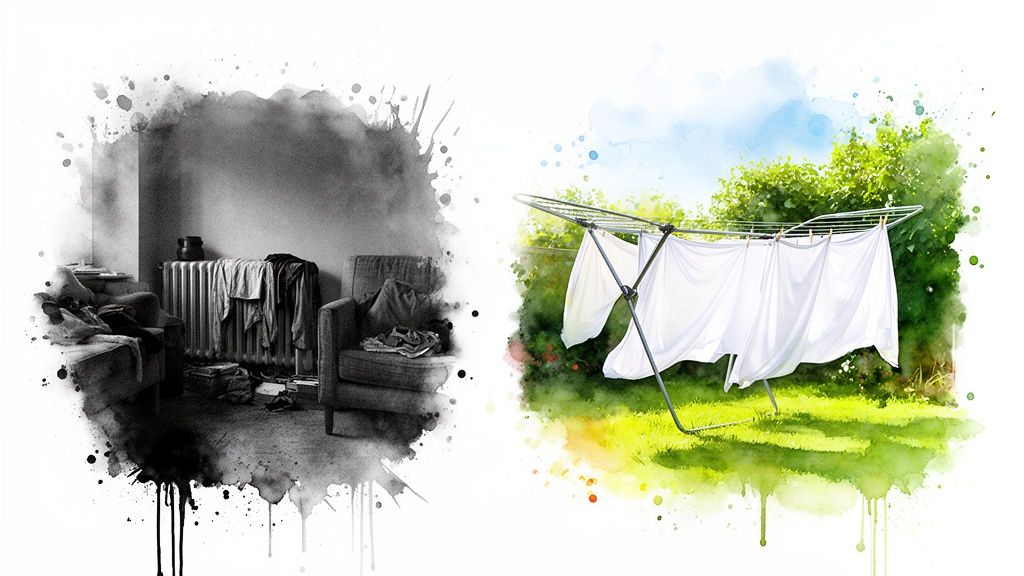
For so many of us in the UK, laundry day feels like a constant battle against damp and clutter. Clothes hanging off every radiator, condensation streaming down the windows, and that familiar musty smell of fabrics that just won't dry. It’s a scene of indoor chaos that not only makes a home feel untidy but also pumps litres of moisture into the air, creating the perfect conditions for damp and mould.
Then you have the tumble dryer. It’s quick, yes, but it’s also a costly habit. With energy bills always seeming to climb, an appliance that can cost over £1 per cycle really starts to make a dent in the household budget. It's a modern convenience that often feels more like a financial drain.
This is where the humble garden clothes dryer comes into its own, proving itself as a true household hero. It brings back a simpler, smarter way of doing laundry and turns a thankless chore into a genuinely satisfying task.
Embrace a Fresher, Simpler Laundry Day
Picture this: stepping out into your garden to hang freshly washed clothes on a bright, breezy day. Instead of the harsh, artificial heat of a machine, your laundry is dried by the natural power of the sun and wind. The benefits are impossible to ignore.
- Unbeatable Freshness: Nothing, and we mean nothing, beats the clean, natural scent of line-dried laundry. The sun's UV rays even act as a natural disinfectant and brightener, helping to kill bacteria and keep your whites brilliant without any harsh chemicals.
- Serious Cost Savings: A garden clothes dryer costs absolutely nothing to run. By making the switch from a tumble dryer, the average UK family can see a very welcome reduction in their yearly electricity bills.
- A Truly Eco-Friendly Choice: Using the wind and sun instead of electricity drastically cuts your household's carbon footprint. It’s a small change that makes a big difference for the planet.
- Gentler on Your Clothes: The intense heat of a tumble dryer is tough on fabrics, causing them to shrink, fade, and wear out faster. Air drying is much gentler, preserving your favourite clothes and helping them last for years to come.
A Practical Solution for British Weather
Let’s be honest, the UK weather doesn't always play ball. But even with our unpredictable climate, a garden clothes dryer is a proper garden staple. A 2023 survey showed that while 68% of households much prefer to air-dry their laundry, 42% are forced to use other methods during the UK's average 150 rainy days a year, which just goes to show how vital an efficient outdoor dryer is. You can read more about UK laundry habits on mordorintelligence.com.
Don't worry, this guide will show you exactly how to make the most of every single dry spell, no matter how brief
How to Choose Your Perfect Garden Clothes Dryer
Choosing the right garden clothes dryer is a bit like picking the perfect tool for a job. The best one for you hinges entirely on your garden space, how big your family is, and just how much laundry you get through each week. Get this right, and you're set for years of hassle-free, fresh-smelling laundry. It’s well worth taking a moment to think it through.
This guide will walk you through the most common types of outdoor dryers, helping you match your needs to the perfect model. We'll break down everything that matters, from capacity to materials, so you can make a choice you’re happy with.
Sizing Up Your Space and Needs
Before you start looking at shiny new dryers, the first step is to have a good look at your own setup. A massive rotary dryer might seem like a great idea, but if you've only got a small patio, it's just not going to work.
Ask yourself a few simple questions:
- How much garden space do you actually have? Get the tape measure out and see what you're working with. If you're eyeing up a rotary model, don't forget it needs room to spin freely without clothes smacking into the fence!
- How many wash loads do you do a week? Someone living alone might get by with 20 metres of line space, but a busy family could easily need 50 or 60 metres to handle all the clothes, towels, and bedding.
- What's your garden surface like? Is it a soft lawn that’s perfect for a ground spike, or a hard patio that needs a different solution, like a wall-mounted unit?
Answering these questions will instantly narrow down your options, saving you from buying a dryer that’s just not a good fit for your home.
Comparing the Main Types of Garden Dryers
Once you've got a clear picture of what you need, it's time to explore the different styles out there. Each one has its own strengths, designed for different homes and lifestyles.
Rotary Clothes Dryers
Often called an "umbrella" dryer, the rotary clothes dryer is the classic choice for a reason and a familiar sight in UK gardens. It’s built around a central pole with arms that open up to hold a huge amount of washing line, all within a surprisingly small footprint.
These are the real workhorses of the outdoor laundry world. They offer masses of drying space—often 40 to 60 metres—which is more than enough for three to five loads of washing. Their clever design also lets them spin gently in the breeze, which really helps speed up drying time.
Wall-Mounted Dryers
If you're short on ground space—think small patios, balconies, or courtyards—a wall-mounted garden clothes dryer is a brilliant solution. These fix straight onto an outside wall and fold out when you need them, usually in a concertina or fan shape.
They don't offer as much line space as a big rotary (typically 15 to 25 metres), but their biggest advantage is how discreet they are. When you're done, they fold away neatly against the wall, taking up practically zero space. If you want to dry laundry outside but can't stand the idea of a permanent fixture in your garden, this is the one for you. For smaller jobs or indoor drying, a compact foldable concertina airer can also be a handy companion.
Retractable Clothes Lines
For the ultimate space-saver, you can't beat a retractable clothes line. This clever gadget is a wall-mounted box with one or more lines tucked inside. You just pull the lines across to a hook or bracket on an opposite wall or post, and when you’re finished, they zip right back into the unit.
This makes them pretty much invisible when not in use, which is perfect for keeping your garden looking tidy and uncluttered. They're a fantastic choice for smaller loads or for anyone who only wants a washing line to appear on laundry day.
Key Takeaway: The demand for outdoor drying solutions is on the rise, with global market projections jumping from USD 1.63 billion in 2022 to an estimated USD 2.58 billion by 2030. Here in the UK, where around 35% of housing stock consists of flats and apartments, there's a real push away from bulky indoor appliances. A 2022 test by Which? found that rotary dryers can dry a 10kg load in just 4-6 hours, slashing energy use by a staggering 90% compared to an electric tumble dryer. You can read more about the growing laundry dryer market on fortunebusinessinsights.com.
To make things even clearer, here’s a quick comparison to help you weigh up the options.
Comparing Garden Clothes Dryer Types
This table breaks down the most popular types of garden clothes dryers, helping you see at a glance which one might be the best fit for your space and laundry pile.
| Dryer Type | Best For | Typical Capacity | Pros | Cons |
|---|---|---|---|---|
| Rotary (Umbrella) | Large families, gardens with lawns | 40-60 metres | Huge capacity, spins in the wind for faster drying | Takes up permanent garden space |
| Wall-Mounted | Patios, balconies, small spaces | 15-25 metres | Folds away neatly, very discreet when not in use | Lower capacity than a rotary dryer |
| Retractable Line | Minimalist gardens, occasional use | 10-30 metres | Virtually invisible when retracted, great space-saver | Lines can sag with very heavy loads |
Choosing the right type is the biggest step, but a couple of other details can make a big difference to how long your dryer lasts.
Materials and Durability Matter
Finally, don't forget to check what your dryer is made of. It needs to be tough enough to handle the famously unpredictable British weather!
- Steel: Usually powder-coated or galvanised for protection, steel is incredibly strong and stable. It's a bit heavier, but a good quality coating will keep rust at bay for years.
- Aluminium: This is a great choice because it's lightweight, making the dryer easier to handle and install. The best part? Aluminium is naturally rust-proof, so it has fantastic longevity, even in our damp climate.
A well-made dryer built from quality materials is a smart investment. It will pay for itself many times over in energy savings and will be a reliable part of your laundry routine for years to come. By matching the type, size, and material to your home, you'll find the perfect garden dryer to make laundry day a breeze.
Installation Tips for a Secure Setup
We’ve all seen it: the sad, leaning rotary dryer, looking like it’s had a bit of a rough night. A wobbly clothes dryer isn't just an eyesore; it's a recipe for disaster when a classic British gust of wind decides to send your freshly washed laundry tumbling onto the grass.
Getting the installation right from the get-go is the secret to a sturdy, reliable dryer that'll stand firm for years. It's the difference between a trusty garden tool and a constant source of frustration. The key is picking the right way to anchor it for your garden's surface, whether that’s a lush lawn or a paved patio.
Choosing Your Anchoring Method
For rotary dryers, you’ve generally got two main options: a ground spike for simplicity or a concrete base for ultimate, rock-solid stability. What’s right for you really comes down to your garden and how permanent you want the fixture to be.
- The Ground Spike Method (Ideal for Lawns): This is the go-to for most people. It’s a doddle to install. You simply drive a metal or plastic spike into the soil, creating a secure socket for the dryer's main pole. It’s perfect for lawns because it involves minimal digging and you can even move it later if you fancy a change.
- The Concrete Method (For Ultimate Stability): If you want your dryer to be completely immovable, or you’re fitting it on a hard surface like a patio, this is your best bet. It involves digging a hole, popping in the ground tube that often comes with the dryer, and filling the space with concrete. It’s a permanent fix that offers unbeatable strength.
This decision often boils down to how much space you have and whether you're after a permanent solution. This little flowchart can help you visualise the best path for your home.
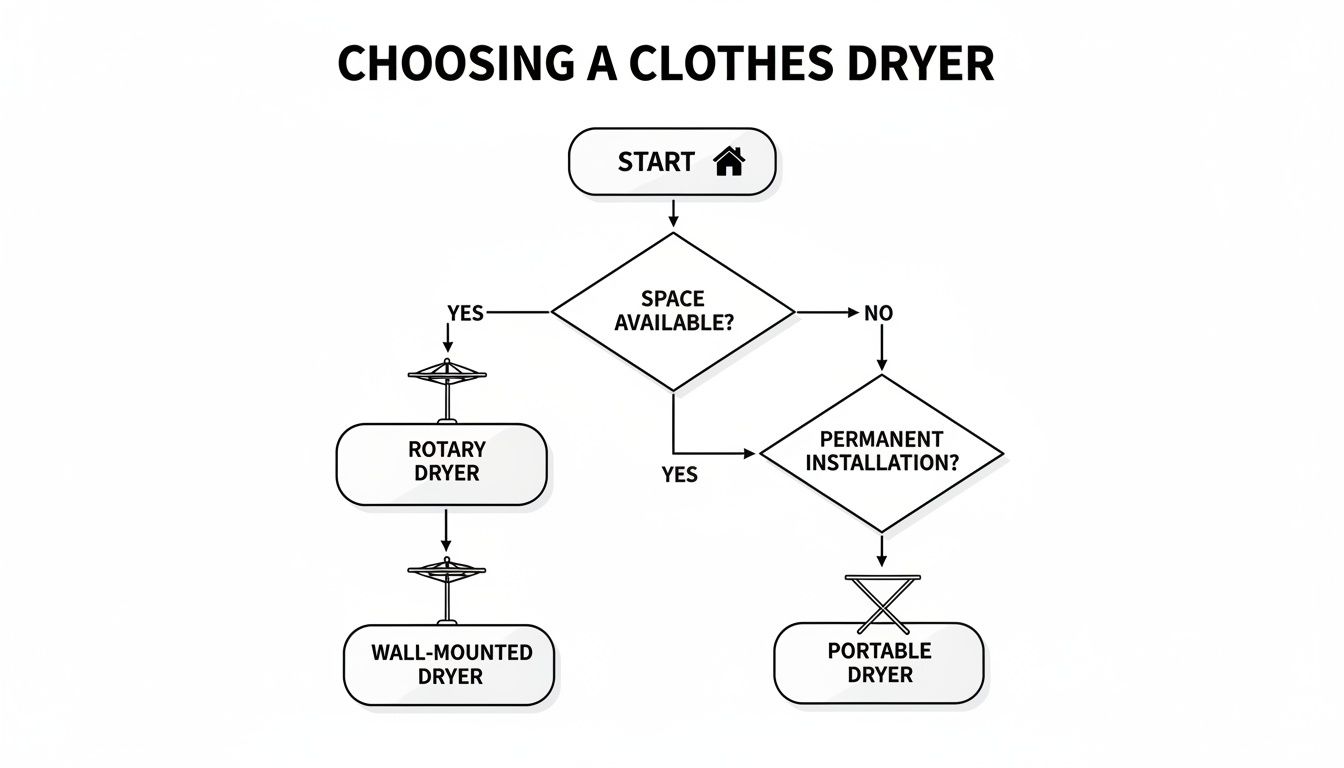
As you can see, the space you have is really the first thing to consider, guiding you towards either a big rotary model or one of the more compact, space-saving options.
Perfect Placement for Faster Drying
Where you put your dryer is just as crucial as how you fix it in place. You’re looking for the sweet spot: a good mix of direct sunlight and a bit of a breeze. Sunlight is a fantastic natural sanitiser and helps keep your whites bright, but it’s the airflow that really does the heavy lifting, whisking moisture away from your clothes.
Try to find a spot away from big trees or dense bushes. They block the wind and have a nasty habit of dropping leaves and other bits onto your clean washing. And don't forget to give it room to spin! Check the product’s "turning circle" diameter and add a bit extra just to be safe.
Safety First: Before you even think about digging, you absolutely must check for what’s buried underneath. You can hire a Cable Avoidance Tool (CAT scanner) to scan for hidden pipes and electrical cables. Trust me, hitting a service line is a dangerous and expensive mistake you don’t want to make.
Step-by-Step Installation Guide
If you've gone for the popular ground spike method on your lawn, here are a few simple steps to get a secure fit:
- Prepare the Spike: Pop a small block of wood over the top of the spike. This little trick stops you from damaging it when you start hammering.
- Drive it In: Using a sledgehammer or a heavy mallet, begin to drive the spike into the soil. Keep a spirit level handy and check it often – you need it to go in perfectly straight, otherwise, you’ll end up with that leaning tower we talked about.
- Check the Depth: Keep going until the top of the spike is flush with the surface of the lawn. This is important to stop it from becoming a trip hazard later on.
- Insert the Pole: Slot the main pole of your garden clothes dryer into the socket. It should feel snug and stable, ready for its first load of laundry.
Of course, if you’re really tight on space, you might be interested in a wall-mounted retractable clothes line. It's a different kind of installation, but just as effective. By taking a little time to get your dryer set up properly, you’re setting yourself up for years of free, fresh, sun-dried laundry.
Mastering Outdoor Drying in Any Season
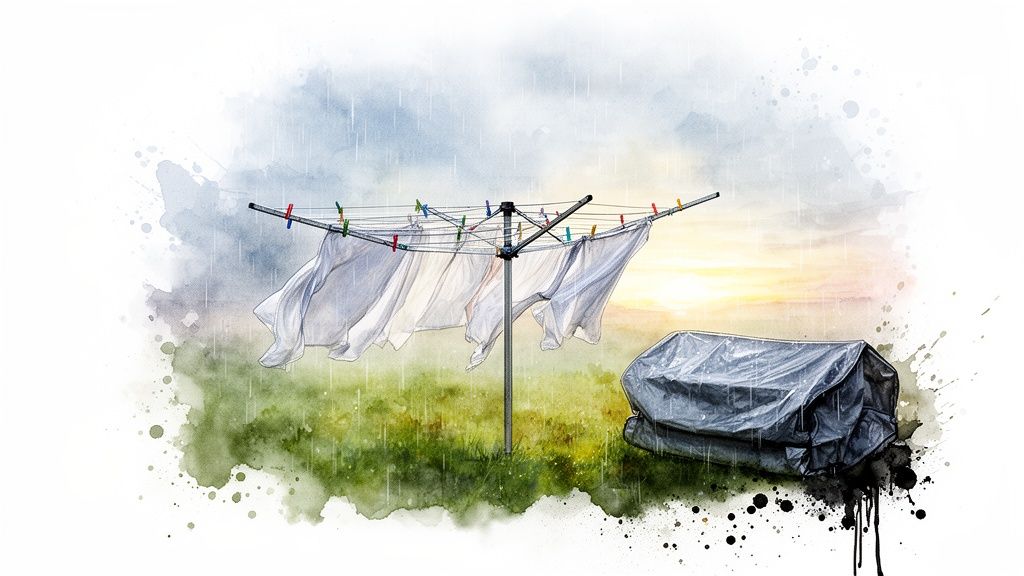
It’s a common misconception that a garden clothes dryer is only good for scorching summer days. I can see why people think that, but with a few smart tactics, you can get that incredible outdoor freshness into your laundry almost all year round, even with our famously unpredictable British weather.
Don't let a cooler day or a bit of cloud put you off. The real secret to drying clothes outside isn't raw heat; it's airflow. A bright, breezy autumn afternoon can often dry a load of washing far better than a still, humid day in the middle of July. It’s all about turning your dryer from a seasonal luxury into a year-round workhorse.
The rise of the garden clothes dryer in the UK makes perfect sense when you think about it. We’re all looking for ways to be a bit more sustainable, and recent forecasts show 62% of households are actively trying to cut their energy bills. An outdoor dryer is a perfect solution, making the most of the UK's average 106 clear days a year. And even with around 133 wet days annually, a 2023 poll found 51% of us still prefer drying outdoors for that unbeatable fresh scent. You can read more about the European dryer market on datainsightsmarket.com.
Adapting to the British Weather
To get the most out of your dryer year-round, you need to think a bit like a sailor and learn to work with the wind. On days when the sun is hiding, the breeze is your best friend.
- Maximise Airflow: This is crucial. When loading your rotary dryer, always leave at least a hand’s width of space between each item. It allows air to get in and around the fabric, wicking moisture away much faster.
- Strategic Placement: A simple but effective trick is to hang larger, heavier things like towels and jeans on the outer lines where they'll catch the most wind. Lighter items like t-shirts and socks can go on the sheltered inner lines.
- Time It Right: Try to get your washing out in the late morning. This gives it the best chance to catch the warmest, driest part of the day before the evening damp starts to creep in.
Essential Accessories for All Seasons
A few well-chosen accessories can make a world of difference, protecting both your laundry and your garden dryer from the elements. Think of them as the essential kit for any serious outdoor drying enthusiast.
A high-quality, waterproof cover for your dryer is an absolute must-have. When you’re not using it, a cover keeps the lines clean from bird droppings, tree sap, and general garden grime. In winter, it’s invaluable for protecting the mechanism from frost and ice, ensuring it opens smoothly on the next dry day. For other delicate items in your garden, you might also want a garden plant frost protection fleece cover to keep them safe.
Pro Tip: Invest in a set of strong, sturdy clothes pegs. Cheap plastic ones often go brittle in the cold and snap, while weak pegs will give up at the first gust of wind, sending your clean laundry straight onto a muddy lawn.
Finally, give a thought to your laundry basket. A plastic one is a practical choice as it's easy to wipe clean and won’t get soggy if it’s caught in a sudden shower. With these simple strategies, your garden clothes dryer will become one of your most valuable household tools, saving you money and giving you that lovely line-dried scent whatever the season.
The True Cost: Garden Dryers vs Tumble Dryers
When you're trying to decide how to dry your laundry, it’s easy to get fixated on the price tag in the shop. But that’s just the beginning of the story. The real cost shows up over the years, in the quiet hum of an appliance and the slow, steady drain on your bank account.
Let's have a proper head-to-head comparison and see how the numbers stack up between a garden clothes dryer and an electric tumble dryer.
A garden dryer has one beautiful, undeniable advantage: once you've bought it, it costs absolutely nothing to run. That's it. It works its magic using the free, natural power of the sun and a bit of a breeze. No electricity bills, no complicated moving parts waiting to break down, and definitely no hidden running costs.
A tumble dryer, on the other hand, is a bit of a financial black hole. Every single cycle guzzles electricity, an expense that adds up much faster than you’d think, especially with UK energy prices being what they are.
Crunching the Numbers
Let's get down to brass tacks. An average tumble dryer cycle in the UK can set you back anywhere from 85p to over £1.50, all depending on how efficient your machine is and what you’re paying for electricity.
If your family runs the tumble dryer just four times a week, you’re looking at a minimum of £176 a year – just for drying clothes. For bigger families or during our long, damp winters, that figure can easily shoot up. The key thing is, these costs never go away. A garden dryer, however, starts paying for itself from the very first wash you hang out.
A study from the Energy Saving Trust pointed out that air-drying laundry is one of the simplest and most effective ways for a household to slash its energy use. Making the switch can save a typical family over £150 a year and make a real dent in their carbon footprint.
A Clear Winner for the Planet
The money side of things is pretty convincing, but the environmental argument is even more clear-cut. A garden clothes dryer operates with a zero carbon footprint. It runs on 100% renewable energy—the sun and the wind—to get the job done. Simple as that.
In contrast, a tumble dryer is one of the most power-hungry appliances you can have in your home. Every time you switch it on, it contributes to your household's carbon emissions, playing its part in the bigger picture of climate change. Choosing to dry your clothes on a line is a small change in your routine that adds up to a huge positive for the planet.
Cost Comparison: Garden Dryer vs Tumble Dryer
So, what does this look like over the long haul? The table below gives a rough idea of the costs, and the difference is staggering.
| Cost Factor | Garden Clothes Dryer | Electric Tumble Dryer |
|---|---|---|
| Average Upfront Cost | £50 - £150 | £250 - £600 |
| Annual Running Cost | £0 | £176+ (based on 4 cycles/week) |
| Total Cost After 1 Year | £50 - £150 | £426 - £776 |
| Total Cost After 5 Years | £50 - £150 | £1,130 - £1,480 |
| Total Cost After 10 Years | £50 - £150 | £2,010 - £2,360 |
The numbers really do speak for themselves. Even with a conservative estimate, you could save over £2,000 in a decade.
A garden clothes dryer isn't just another purchase; it's a savvy investment that gives you a real return, year after year. And if you’re concerned about the noise and vibration from your indoor appliances, something simple like anti-vibration feet pads for washing machines and dryers can make a world of difference. Ultimately, switching to outdoor drying saves you a significant amount of cash and helps you live a more sustainable, eco-friendly life.
Keeping Your Dryer Going Strong with Simple Maintenance
Your garden clothes dryer works hard, so a bit of TLC now and then will keep it in great nick for years to come. Think of it like maintaining your car; a few simple checks and a quick clean-up can prevent bigger problems down the line. You don't need a specialist toolkit, just a few minutes every so often to keep things running smoothly.
Honestly, most of what you need is probably already under your kitchen sink. A cloth, a bit of soapy water, and a good eye are your best tools for the job. Making this a regular habit means your dryer will always be ready for the next load of washing.
The Quick Clean-Up Routine
First things first: keeping it clean is the easiest win. A clean dryer means your clothes stay clean, without any annoying streaks from grime or surprises from the local bird population.
- Wipe the Lines: Before you peg out your laundry, always give the lines a quick wipe with a damp cloth. It takes seconds and gets rid of any dust or pollen that's settled overnight.
- Wash the Frame: Every so often, treat the main pole and arms to a wash with some warm, soapy water. This gets rid of stubborn dirt and helps protect the metal finish from the British weather.
- Check the Moving Parts: For rotary airers, open and close it a few times to make sure the mechanism is moving freely. If it feels a bit stiff or groans, a little spray of a silicone lubricant on the joints will have it gliding open like new.
Top Tip: Don't forget where your laundry starts! Grime and limescale can build up inside your washing machine, which can make your clothes feel less than fresh. To make sure your laundry is spotless before it even hits the line, consider using a good washing machine cleaner treatment to keep your appliance in top condition.
How to Fix Common Annoyances
Even the sturdiest clothes dryer can have its off days. The good news is that most common gripes are dead easy to sort out yourself, saving you the cost of calling someone out or buying a whole new one.
The classic problem is a sagging washing line. It’s completely normal; the lines naturally stretch over time with the weight of wet towels and duvets. Most modern rotary dryers are designed for this and have a simple re-tensioning system. Just clicking the dryer open to its highest setting is often enough to pull the lines taut again. If it's just one rogue line causing the trouble, you can usually unhook it and re-thread it a bit tighter. Job done.
Common Questions About Garden Clothes Dryers
Even with all the benefits of drying clothes outdoors, a few practical questions often pop up. We get asked these all the time, so here are some straightforward answers to help you feel completely confident about choosing and using your garden clothes dryer.
How Much Space Do I Need for a Rotary Dryer?
For a typical rotary dryer, you'll need a clear circle of about 4 to 5 metres across. Think of this as its 'turning circle' – it's the space it needs to spin freely without your clean washing catching on a fence, wall, or rose bush.
It’s always a good idea to measure your space and check the specific dimensions of the model you’re looking at before you buy. If you're a bit tight on space, don't worry. A wall-mounted or retractable line is a brilliant alternative that takes up zero garden floor space.
Can I Leave My Dryer Outside All Winter in the UK?
You certainly can. Most modern garden dryers are built tough, using weather-resistant materials like powder-coated steel or aluminium that can handle a typical British winter.
That said, if you want to really look after it and get the most years out of it, a heavy-duty, waterproof cover is a great investment. It’s a simple thing, but it keeps the lines clean from winter grime and frost and protects the central mechanism from ice. This way, it'll be ready to go on that first bright and breezy day of spring.
My Washing Line Is Sagging. How Can I Fix It?
A droopy washing line is a classic problem, but thankfully, it’s usually very easy to sort out. The weight of all that wet laundry eventually causes the lines to stretch a little over time.
Most rotary dryers have a clever re-tensioning mechanism built-in. Often, just clicking the dryer open to its highest setting is enough to pull the lines taut again. If it’s just one line that’s sagging, you can sometimes unhook and re-thread it a bit tighter. For older models, a replacement line kit is cheap, cheerful, and an easy DIY job.
What Is the Best Way to Load a Rotary Dryer?
Believe it or not, there's a bit of an art to loading your dryer that can make a real difference to how quickly things dry. It’s all about getting the air to flow.
The golden rule is to hang your heavier items – think jeans, jumpers, and bath towels – on the outer lines where they'll catch the most breeze. Pop smaller, lighter things like socks, t-shirts, and underwear on the more sheltered inner lines.
Also, try to leave a hand's width of space between each item. This lets the air circulate properly, which not only speeds up drying but also stops that damp, musty smell you get when clothes are all bunched together.
Ready to embrace fresher laundry and lower energy bills? Explore the fantastic range of practical home and garden solutions at Deal For Any Occasion. Find the perfect garden clothes dryer and all the accessories you need for your home at https://dealforanyoccasion.com.