


How to Start Vegetable Garden: how to start vegetable garden for UK beginners
Starting your own vegetable garden is much simpler than you might think. It really just boils down to a few key things: finding a sunny spot, getting your soil right, picking some easy-going plants, and giving them a bit of regular care. If you nail these basics from the get-go, you’re setting yourself up for a brilliant first harvest. It’s a fantastic project for any beginner in the UK, even if you’ve only got a tiny bit of space to play with.
From Patch to Plate: Your Gardening Journey Begins
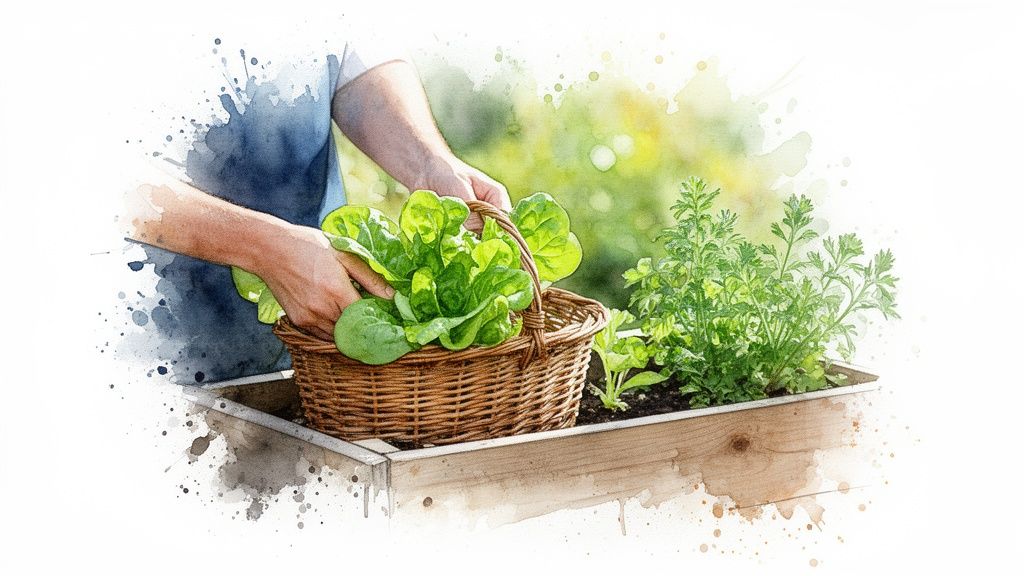
Ever dreamt of nipping outside to grab a few salad leaves or pulling up your own spuds for dinner? You’re in the right place. This guide is all about cutting through the noise and showing you how to start a vegetable garden with practical, affordable steps that actually work for beginners here in the UK.
We’re going to skip the complicated jargon and focus on what really matters. Don't worry about feeling overwhelmed; you're about to join a huge community of gardeners across the country who get a real buzz from growing their own grub. The appetite for home-grown food has never been stronger.
Why Grow Your Own Vegetables?
The rewards of tending your own food patch, no matter how small, are huge. It’s about so much more than just having fresh ingredients on hand; it’s a brilliant hobby that gets you outdoors and gives you a genuine sense of achievement.
Here are a few of the best bits:
- Unbeatable Flavour and Freshness: Veggies picked just minutes before they hit your plate have a taste that shop-bought produce simply can’t compete with.
- Save a Few Quid: Growing your own can make a real dent in your grocery bill, especially with staples like potatoes, beans, and salad leaves.
- Good for Body and Mind: The gentle exercise, fresh air, and calming process of looking after plants are fantastic stress-busters.
- A More Sustainable Choice: You cut your food miles down to zero and you know exactly what’s gone into your food—no mystery pesticides here.
The interest in growing our own food is absolutely soaring. The UK has around 330,000 allotment plots, but demand is so high that nearly 79,000 people are on waiting lists. In many places, you could be waiting over 18 months! It just goes to show how many of us are keen on becoming a bit more self-sufficient.
But here’s the great news: you don't need a massive allotment to get started. Your journey can begin with a few pots on the patio or a small, sunny bed in the back garden. With our guide and the right garden and outdoor essentials, you’ll have everything you need to get growing.
Finding the Right Spot and Preparing Your Soil
Before you even think about buying a single seed packet, let's talk about the two things that will make or break your new vegetable patch: location and soil. Honestly, getting this right from the very beginning is the secret to a successful harvest and saves so much frustration down the line.
Think of it as building a solid foundation. For vegetables, that foundation is healthy, fertile soil in a spot that gets plenty of sunshine. Most veg are serious sunbathers and need at least six hours of direct sunlight a day to grow well and produce anything worth eating. A good trick is to watch your garden over a full day to see which areas stay sunny the longest.
A south-facing spot is the classic ideal, but don't despair if you don't have one. Just aim for the sunniest patch you've got. Also, try to find somewhere with a bit of shelter from strong winds, as they can easily damage young plants. And a final practical tip: make sure you’re not too far from a tap. Trust me, you’ll thank yourself later when you're not lugging heavy watering cans across the entire garden in mid-July!
Getting to Know Your Soil
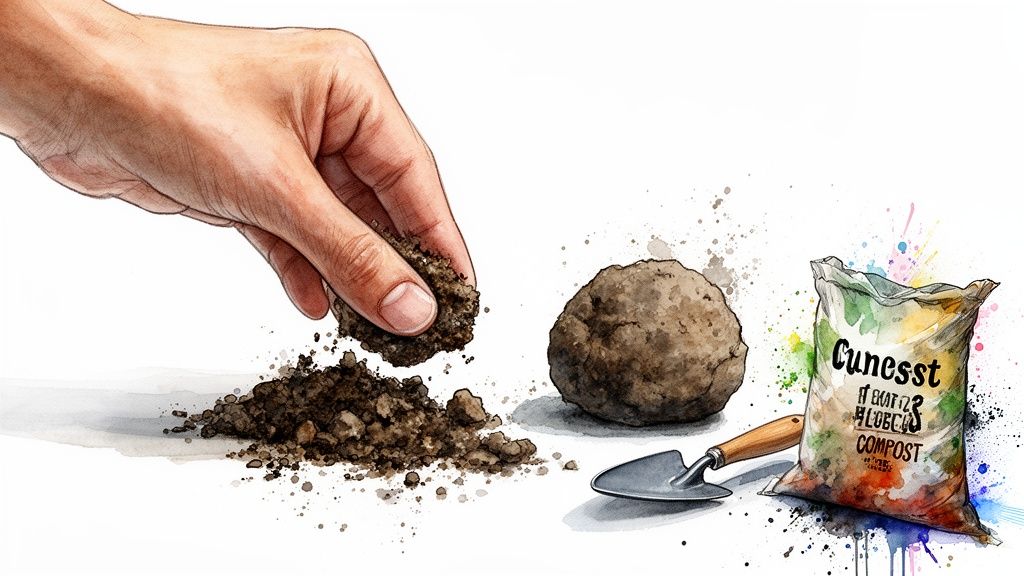
Right, you’ve picked your sunny spot. Now it’s time to get your hands dirty and find out what you’re working with. You don’t need any fancy lab equipment; a simple squeeze test tells you almost everything you need to know. Just grab a handful of damp soil (not sopping wet) and clench your fist.
- Clay Soil: Does it form a smooth, solid sausage that stays together? That’s clay. It's packed with nutrients but can be heavy, sticky when wet, and bake solid in summer.
- Sandy Soil: Does it feel gritty and just fall apart the moment you open your hand? You've got sandy soil. It's easy to work with and warms up fast in spring, but it drains like a sieve, washing nutrients away.
- Loamy Soil: Does it hold together loosely but crumbles easily when you poke it? Congratulations, you've hit the gardener's jackpot! This is loam, the perfect mix of clay, sand, and organic matter.
Most garden soil is a combination of these, but this simple test gives you a brilliant idea of what you need to do to improve it. Don't worry if you have heavy clay or pure sand – both can be turned into fantastic veg-growing soil.
Your soil is a living ecosystem, not just dirt. The goal is to create a crumbly, dark, and sweet-smelling environment. This texture allows roots to breathe and find water, while the dark colour indicates it's rich in the organic matter that feeds your plants.
Prepping the Ground for Planting
Now for the really satisfying bit: getting your patch ready for planting. First things first, you need to clear the area completely. Get rid of all weeds, grass, and any big stones. For pesky deep-rooted weeds like dandelions or couch grass, the only real way to deal with them organically is to dig them out, root and all. A sturdy telescopic hand rake can be a lifesaver here, making it much easier to clear away all the debris.
With the ground cleared, it's time to feed your soil. The single best thing you can do for any soil type is to add heaps of organic matter. We’re talking about well-rotted manure, your own garden compost, or good-quality peat-free compost from a bag.
Spread a generous layer – at least 5-10cm deep – over the entire surface. Then, use a garden fork to gently work it into the top 15-20cm of soil. This one action works wonders: it breaks up heavy clay to improve drainage, helps sandy soil hold onto water and nutrients, and gives your new plants the best possible start in life.
Choosing Your First Veggies (The Easy Wins)
Walking into a garden centre for the first time can be a bit much. Rows upon rows of colourful seed packets, all promising amazing results. It's easy to get carried away.
But the secret to a brilliant first year is to keep things simple. By picking a few reliable, low-maintenance vegetables, you’ll build your confidence and, most importantly, actually get to eat what you grow. That’s the real prize when you're just finding your green fingers.
Let's park the fussy, temperamental crops for another year. Right now, the goal is to grow things that are almost guaranteed to thrive in our unpredictable UK climate. We're looking for vigorous plants that give you a tasty reward without too much drama.
Top Picks for Your First Veg Patch
To get you off to a flying start, here are a few tried-and-tested favourites that are perfect for beginners. They're forgiving, productive, and taste a world away from the supermarket stuff when freshly picked.
- Salad Leaves: Don't just buy a packet of 'lettuce'. Look for 'cut-and-come-again' varieties. You can snip the outer leaves as you need them, and the plant just keeps growing from the middle for weeks. It’s like having a living salad bowl on your doorstep.
- Radishes: These are the sprinters of the veg patch. You can sow them straight into the soil and be pulling them up in as little as four weeks. A fantastic way to get a quick, satisfying win under your belt.
- Runner Beans: A true British allotment classic for a reason. Give them a simple frame to climb, and they'll reward you with a massive crop all summer long. The more you pick them, the more they produce.
- Courgettes: A word of warning: one or two plants is probably enough for a whole family! They are unbelievably productive. Just find them a sunny spot, give them rich soil, and keep them well-watered.
Easy-Grow Vegetable Planner for UK Beginners
Sometimes, seeing the year mapped out makes everything feel more manageable. Here’s a quick reference guide to help you choose and schedule your first crops, focusing on reliable and productive vegetables.
| Vegetable | Best Time to Sow (UK) | Approx. Time to Harvest | Top Tip for Success |
|---|---|---|---|
| Salad Leaves | March - September | 4 - 8 weeks | Sow a small batch every few weeks for a continuous supply. |
| Radishes | March - August | 4 - 6 weeks | Don't let the soil dry out, as this can make them woody. |
| Runner Beans | April - June | 10 - 12 weeks | Provide a sturdy frame of canes for them to climb. |
| Courgettes | April - May (indoors) | 8 - 10 weeks | Water the soil, not the leaves, to help prevent mildew. |
This simple plan helps you get started with crops that will deliver real results, turning your patch from bare soil to a source of fresh food in just a few months.
Starting your own plot isn’t just a rewarding hobby; it’s a smart financial move. The UK's home-grown veg market is valued at a massive £2.32 billion, representing a significant slice of the nation's fresh produce consumption. Choosing easy wins like lettuce, which can be ready in just six weeks, helps you tap into this value right from your own back garden.
A little extra thought now can save you headaches later. Try popping a few marigolds around your plot – their scent is a brilliant natural deterrent for pests like greenfly. If you're starting seeds indoors, getting them strong and healthy before they go out is key. Using a simple grow light with a dimming cable gives them the best possible start in life, especially on those gloomy spring days.
Sowing Seeds and Planting Out Your Garden
With your plot prepped, it’s time for the really exciting part: getting your plants in the ground. This is the moment your vision for a thriving vegetable patch starts to become a reality. There are two main ways to go about this, and the best method often depends on what you're growing.
Some hardy veg, like carrots, radishes, and beetroot, are best sown directly into the soil where they will grow. For others, particularly more tender crops like tomatoes, courgettes, and peppers, giving them a head start indoors on a warm windowsill is a massive advantage, especially with our unpredictable UK spring weather.
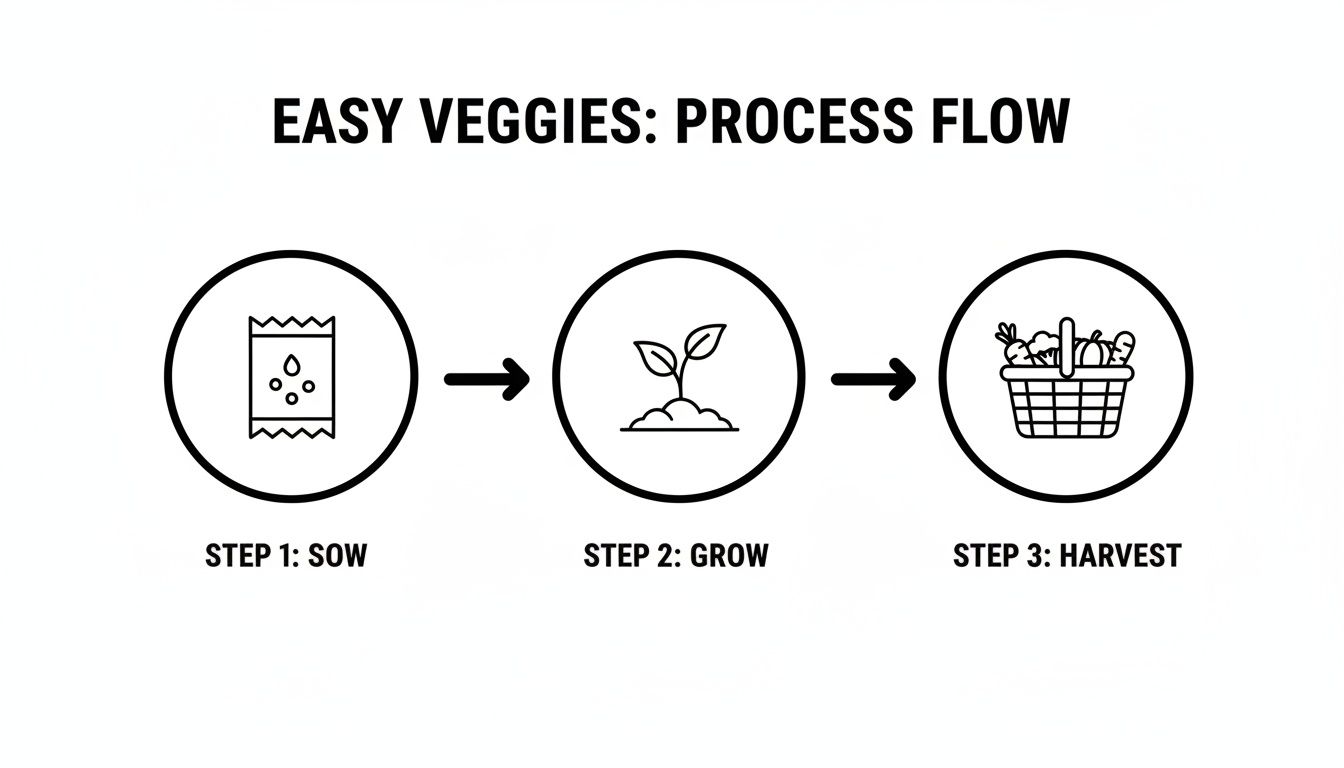
As you can see, the journey is a straightforward cycle: sow, grow, and then enjoy the rewards.
Sowing Seeds Directly Outdoors
When you’re sowing straight into the garden, good prep is everything. Start by raking the soil level to create a fine, crumbly surface. A simple trick I’ve used for years to get perfectly straight rows is to stretch a piece of string between two sticks. Then, just use the corner of a hoe or a trowel to draw a shallow channel, called a drill, along your string line.
A good rule of thumb is to sow seeds at a depth of about twice their own diameter. Sprinkle the seeds thinly along the drill. It’s so easy to get carried away, but overcrowding is a classic beginner mistake that leads to weak plants competing for light and nutrients.
Gently cover the seeds with soil, pat it down lightly, and give it a careful water with a fine rose on your watering can. And please, don't forget to label everything! You’ll be surprised how quickly you forget what you planted where. You can find some excellent value reusable plastic plant labels to keep it all organised.
Starting Seeds Indoors and Planting Out
For those more delicate plants, starting them indoors gives them a crucial head start. Simply fill small pots or seed trays with seed compost, sow your seeds, and cover them lightly. Keep the compost moist but not waterlogged on a sunny windowsill, and watch them spring to life.
Once your seedlings have grown a few true leaves and all risk of frost has passed, you can’t just chuck them straight outside. They need to be gradually acclimatised to the harsher outdoor conditions in a process called hardening off.
Hardening off is non-negotiable for indoor-grown plants. It prevents shock from the sudden change in temperature, wind, and sunlight, which can stunt growth or even kill young seedlings. Honestly, this simple step is one of the most important things you can do to ensure they survive the move.
Here’s a simple schedule to get them toughened up:
- Days 1-3: Place the seedlings outside in a sheltered, shady spot for just a couple of hours.
- Days 4-6: Gradually increase their time outdoors and introduce them to a bit of morning sun.
- Days 7-10: Leave them out for most of the day, bringing them in only at night.
- After 10-14 days: They should be tough enough to be planted in their final positions in the garden.
Follow these steps, and you'll give your young plants the robust start they need to flourish and produce a fantastic crop.
Looking After Your Veg Patch: The Essentials
Now that your seeds are in and the young plants are finding their feet, your job changes. You're no longer the planner and builder; you're the caretaker. This is where the gentle, rewarding rhythm of gardening really begins – the simple, regular tasks that help your vegetable plot flourish. It’s not about complicated schedules or mysterious potions, just a bit of mindful watering, weeding, and feeding.
It turns out you’re in good company. A fascinating report showed that 60% of UK adults are regularly out in their gardens, but only a quarter of us would actually call ourselves 'gardeners'. It just goes to show you don't need a special title to get stuck in and grow your own food. And with the average UK garden measuring 244m², there's usually a bit of space to learn the ropes. You can read more about the UK's gardening habits and what they mean for you.
How To Get Watering Just Right
Consistent watering is key, but it's a classic case where more isn't always better. Your aim is to encourage deep, strong roots that can seek out moisture even when the topsoil is dry. The best way to do that is to water thoroughly but less often, rather than giving your plants a quick splash every day.
So, how do you know when it’s time? Forget the guesswork and use the good old-fashioned finger test. Just poke your index finger a couple of inches into the soil next to your plants. If it feels dry at the tip, it’s time for a good, long drink. Try to water the base of the plants, avoiding the leaves, as this helps prevent fungal problems. Using a multi-function garden hose spray gun on a gentle shower setting makes this job much easier.
Top Tip: Watering early in the morning is ideal. This gives the soil time to absorb the moisture before the sun gets strong, reducing evaporation and setting your plants up for the day ahead.
Keeping on Top of Weeds
Let’s be honest, weeding is nobody's favourite job, but it’s absolutely essential. Weeds are greedy competitors, stealing water, nutrients, and sunlight directly from your vegetables. If you let them take over, you'll definitely see the difference in your final harvest.
The secret is to tackle them little and often. It's much less daunting to pull a few small weeds every other day than to face a thicket that's appeared after a week of neglect.
- For bigger patches: A long-handled hoe is a lifesaver. On a dry, breezy day, just skim it under the surface of the soil to slice off tiny weed seedlings.
- Close to your veg: Careful hand-weeding is the only way to go. Get a firm grip and pull gently, trying to get as much of the root out as you can.
A Little Extra Food for Hungry Crops
While you've done the hard work preparing your soil, some vegetables are what we call 'heavy feeders'. They put a huge amount of energy into producing their fruit and will thank you for an extra boost during the growing season.
Think of it as giving them a packed lunch to see them through the day. Once plants like tomatoes, courgettes, peppers, and runner beans start to produce flowers, they’ll really benefit from a weekly feed. A liquid seaweed feed or a specific tomato food, diluted in your watering can as per the instructions, works wonders. This simple step will pay you back with a much bigger and tastier crop.
Harvesting Your Crops and Planning Ahead
This is it—the moment all your hard work pays off. Knowing precisely when to pick your vegetables is the secret to unlocking their best flavour and texture. It's less about ticking dates off a calendar and more about getting to know your plants and watching for the tell-tale signs of readiness.
For instance, a lettuce is ready when its heart feels solid with a gentle squeeze. Runner beans are perfect when they're young and snappy; leave them too long, and they'll turn tough and stringy. Potatoes are a bit of a treasure hunt! For new potatoes, a good rule of thumb is to wait until the flowers open, then have a careful rummage around to see if the tubers have reached the size you're after.
Smart Harvesting for a Bigger Yield
How you harvest can make a massive difference, especially with certain veg. Using the right technique can actually encourage your plants to keep producing for weeks, giving you far more food from the same small patch of ground.
This works brilliantly for things like cut-and-come-again salad leaves, spinach, and most herbs.
- Simply snip off the outer leaves as you need them, always leaving the central growing point untouched.
- This signals the plant to push out fresh new growth from the centre.
- With runner beans and courgettes, picking often is the key. The more you pick, the more they’ll produce. A good pair of garden bypass pruning shears will give you a clean cut without tearing the stem.
One of the most common mistakes beginners make is leaving veg on the plant for too long. Picking promptly not only ensures you get the tastiest produce but also tells the plant to get busy making more flowers and fruit.
As the main growing season starts to wrap up, your thoughts can turn to next year. Clear away any spent plants and get them on the compost heap. It's also the perfect time to tuck your beds in for the winter by spreading a thick blanket of compost or well-rotted manure over the soil. This protects it from the worst of the weather and enriches it for the spring rush.
You can even get a jump on next season's crops. Some hardy vegetables like garlic, broad beans, and certain onion sets can be planted in the autumn. They’ll sit quietly over winter and then burst into life as soon as things warm up, rewarding you with a wonderfully early harvest.
Your Top Gardening Questions Answered
We all have a million questions when we first start. It's completely normal! Don't worry, every seasoned gardener was once a beginner. Here are some quick, no-nonsense answers to the questions that pop up most often when you're starting a veg patch in the UK.
How Much Sun Does a Vegetable Garden Really Need?
This is a big one. For most vegetables to really thrive and give you a good harvest, you're looking for at least six hours of direct sun a day. In the UK, a south-facing spot is the absolute dream ticket.
But what if your garden is a bit shady? Don't despair. You can still grow plenty. Leafy greens like lettuce, spinach, and chard are surprisingly tolerant, as are root veg like carrots and beetroot. They can get by quite happily on just four hours of sun.
Can I Garden in Pots if I Have No Lawn?
Absolutely! Container gardening is a fantastic way to grow your own, whether you have a patio, a balcony, or just a sunny front step. The key is to go for decent-sized pots – at least 30cm deep is a good rule of thumb – and fill them with a quality, peat-free potting compost.
You'd be amazed at what you can grow. Things like tomatoes, all kinds of salad leaves, herbs, and even potatoes in a grow bag do brilliantly in containers.
One of the first things beginners ask about is pests. In the UK, your main adversaries will be slugs and snails, which think your tender young seedlings are a delicious buffet. You can fight back organically with things like beer traps, copper tape around your pots, or by using organic slug pellets.
Ready to get your hands dirty? Find all the affordable tools and essentials you need to get your new vegetable patch started at Deal For Any Occasion. Explore our Garden & Outdoor collection today.