


What Is the Best Way to Clean Carpets for UK Homes
There’s no single "best way" to clean a carpet. The secret is actually a smart, consistent approach that combines three things: routine vacuuming, quick-fire stain removal, and the occasional deep clean. Think of it as a complete care plan for your flooring – the daily habits prevent long-term damage, while the bigger cleans restore your carpet's original glory.
The Foundations of a Truly Clean Carpet
A genuinely clean carpet isn't just about what you can see on the surface. It’s about a system. If you only ever vacuum, you’re missing the deep-down grit and allergens that slowly wear away the fibres. On the other hand, deep cleaning without the regular upkeep is like visiting the dentist once a year but never brushing your teeth – you're always fighting a losing battle.
The goal here is to build a simple routine you can actually stick with, one that balances daily maintenance with more intensive treatments. This doesn't just keep your carpets looking fresh; it genuinely extends their life and even improves the air quality in your home. It’s all about being proactive, not just reacting to a mess.
Building a Complete Cleaning Strategy
So, what does this balanced strategy look like day-to-day? It’s about weaving three core habits into your regular home-keeping schedule:
- Consistent Upkeep: Regular vacuuming is your first and best line of defence. It pulls up the daily dust, dirt, and tiny abrasive particles before they have a chance to get ground in and cause real wear.
- Rapid Response: Getting to spills the moment they happen is crucial. Acting fast stops them from setting into permanent stains, saving you a much tougher job later on.
- Restorative Deep Cleans: Every so often, a proper deep clean is needed to flush out the embedded grime and allergens that your vacuum just can’t reach. This is what brings back the carpet’s true colour and soft texture.
This three-pronged approach is becoming more and more common across the UK, as people realise that just vacuuming isn't enough. In fact, the UK's carpet cleaning services market was valued at around USD 3,988.7 million in 2022, and that number is expected to keep climbing. Carpet cleaning makes up over 72% of this market, which shows just how important it has become for a healthy, well-maintained home. You can learn more about the UK's growing demand for professional carpet care in recent reports.
Once you get your head around these core ideas, you can stop thinking of it as a chore and start seeing it as a proper system for keeping your carpets looking and feeling fantastic for years.
Mastering Your Vacuuming Routine for Lasting Results
Your vacuum cleaner is far and away the most important tool you have for keeping your carpets in great shape. It's easy to think of vacuuming as just another chore, but it’s much better to see it as your first line of defence. The secret to clean carpets isn't just about tackling stains; it’s about preventing the deep-seated damage you can't even see.
Think about what gets tracked into your home every single day: tiny, sharp grains of sand and grit. With every step, these abrasive little particles get ground into your carpet fibres. This acts like sandpaper, slowly scratching and fraying the pile, which is why the busiest parts of your home often look flat and worn out long before their time. A good, consistent vacuuming routine pulls these damaging particles out before they have a chance to dig in.
Adopting a Professional Vacuuming Technique
There's a world of difference between a quick once-over and a proper, thorough clean. The professionals don’t rush the job; they work methodically to get the best results, and you can easily borrow their techniques to take your own routine from a surface-level tidy to a deep, restorative clean.
The key to effective vacuuming isn't about speed; it's all about technique. You want to give the machine's brush and suction enough time to really work on the carpet pile, agitating it and pulling out all that embedded dirt.
- Go Slow: Push your vacuum slowly and deliberately across the floor. A quick, rushed pass just skims the surface and leaves most of the nasty stuff behind.
- Overlap Your Passes: Imagine you're mowing a lawn. Make sure each stroke overlaps the last one by about a third. This simple trick ensures you cover every single inch and don't leave any tell-tale streaks of missed dirt.
- Use Your Attachments: Dust and debris love to collect along skirting boards and in tight corners. Get into the habit of using the crevice tool to clean these edges, preventing that grey "frame" of dust from building up around the room.
By simply slowing down and using overlapping passes, you can remove up to 85% more dirt and allergens from your carpets compared to a quick, haphazard clean. This small change makes a massive difference to both the appearance and lifespan of your flooring.
How Often Should You Really Be Vacuuming?
The right vacuuming schedule really depends on how much foot traffic an area gets. A one-size-fits-all approach just doesn't cut it. A better way is to think of your home in zones, which helps you put your effort where it's needed most.
- High-Traffic Areas: Think hallways, stairs, and your main living room. These spots should be vacuumed at least twice a week. If you've got pets or young children, you might need to bump that up to three or even four times.
- Low-Traffic Areas: Rooms that don't see much action, like a spare guest room or a formal dining room, can usually be kept on top of with a weekly vacuum.
The type of machine you use plays a big part, too. Upright models are often brilliant for deep-pile carpets because of their powerful agitation, while cylinder vacuums give you a bit more flexibility for tackling stairs and furniture. And, of course, modern cordless vacuums are a godsend for quick, daily touch-ups in busy spots like the kitchen or entryway.
For anyone looking to put daily maintenance on autopilot, robotic vacuums can be a game-changer. They keep on top of things so your main machine's dust capacity is always ready for a deeper clean. You can even find high-capacity, self-disposing vacuum bags for Roomba models and other automated cleaners. At the end of the day, the best vacuum is the one that suits your home and your lifestyle, making this essential job as easy as possible to stick with.
A Practical Guide to Removing Common Carpet Stains
Even with the best vacuuming routine, life happens. A dropped mug of tea, a splash of red wine, or muddy paws can feel like a carpet catastrophe, but they don't have to be. The secret to stopping a spill from becoming a permanent stain is knowing how to act quickly and correctly. Think of this as your emergency handbook for tackling those all-too-common household spills.
First things first, let's get one rule straight: blot, don't scrub. Scrubbing at a fresh spill is the worst thing you can do. It forces the liquid deeper into the carpet fibres and spreads the stain outwards, turning a small problem into a much bigger one.
Instead, grab a clean, dry cloth (or a few paper towels) and press down firmly on the stain. Your goal is to absorb as much as you can. Always work from the outside of the spill inwards to stop it from spreading. Once you've blotted up the worst of it, you can move on to a cleaning solution—and you might be surprised to find the best ones use simple ingredients you already have in your cupboards.
Tackling Red Wine Spills
A red wine stain feels like the ultimate test for any carpet owner, but it's not a lost cause. The moment it happens, get blotting. You want to lift as much of that wine as possible before it has a chance to settle into the fibres.
After a thorough blotting, you've got a couple of solid options. A classic trick is to cover the damp stain with a generous layer of salt. It sounds odd, but the salt works to draw the remaining wine out of the carpet. Just let it sit for a few hours (or until it turns pink), then simply vacuum it all up.
For a more active approach, a simple homemade solution works wonders:
- Mix one tablespoon of white vinegar and one tablespoon of washing-up liquid into two cups of warm water.
- Dip a clean white cloth into your solution and gently sponge the stain.
- Keep dabbing with the solution, then blotting with a dry cloth, until the stain vanishes.
- To finish, sponge the area with a little cold water and blot it dry. This rinses out any soapy residue.
Removing Coffee and Tea Stains
In most UK homes, a cup of tea or coffee is never far away, which means spills are inevitable. These drinks contain tannins, which can leave a stubborn yellowish-brown mark if you don't act fast. As always, your first move is to blot, blot, blot.
A simple vinegar solution is your best friend here. Mix equal parts white vinegar and water in a spray bottle and lightly mist the stained area. You don't want to soak it, just dampen it. Let that sit for 10 to 15 minutes; the mild acid in the vinegar needs a little time to break down the stain.
Once it's had time to work, gently blot the spot with a clean, dry cloth. You might need to repeat the process, but it's usually very effective. If you're dealing with an old or particularly stubborn mark, an enzymatic cleaner like a Vanish soap bar stain remover is brilliant for breaking down the organic compounds.
Dealing with Muddy Footprints
Given our wonderfully unpredictable British weather, muddy footprints are practically a rite of passage. Here’s the trick with mud, and it’s a bit counterintuitive: let it dry completely. If you try to clean wet mud, you’ll just smear it into a bigger, deeper mess. Have patience!
Once the mud is bone dry, grab a stiff brush or the edge of a spoon and break up the caked-on dirt. Scrape off as much as you can, then give the area a thorough vacuum to suck up all the loose bits. Honestly, this step alone often solves most of the problem.
If there's still a shadow of a stain left behind, a mild detergent solution is all you need.
- Mix a teaspoon of clear washing-up liquid into a cup of warm water.
- Dip a clean cloth in and gently blot the stain, working from the outside in.
- After the stain is gone, "rinse" it by blotting with another cloth that's just damp with plain water.
This diagram shows the basics of a great vacuuming technique, which is your first line of defence. Removing that surface grit and dust before you tackle stains makes the whole process easier.
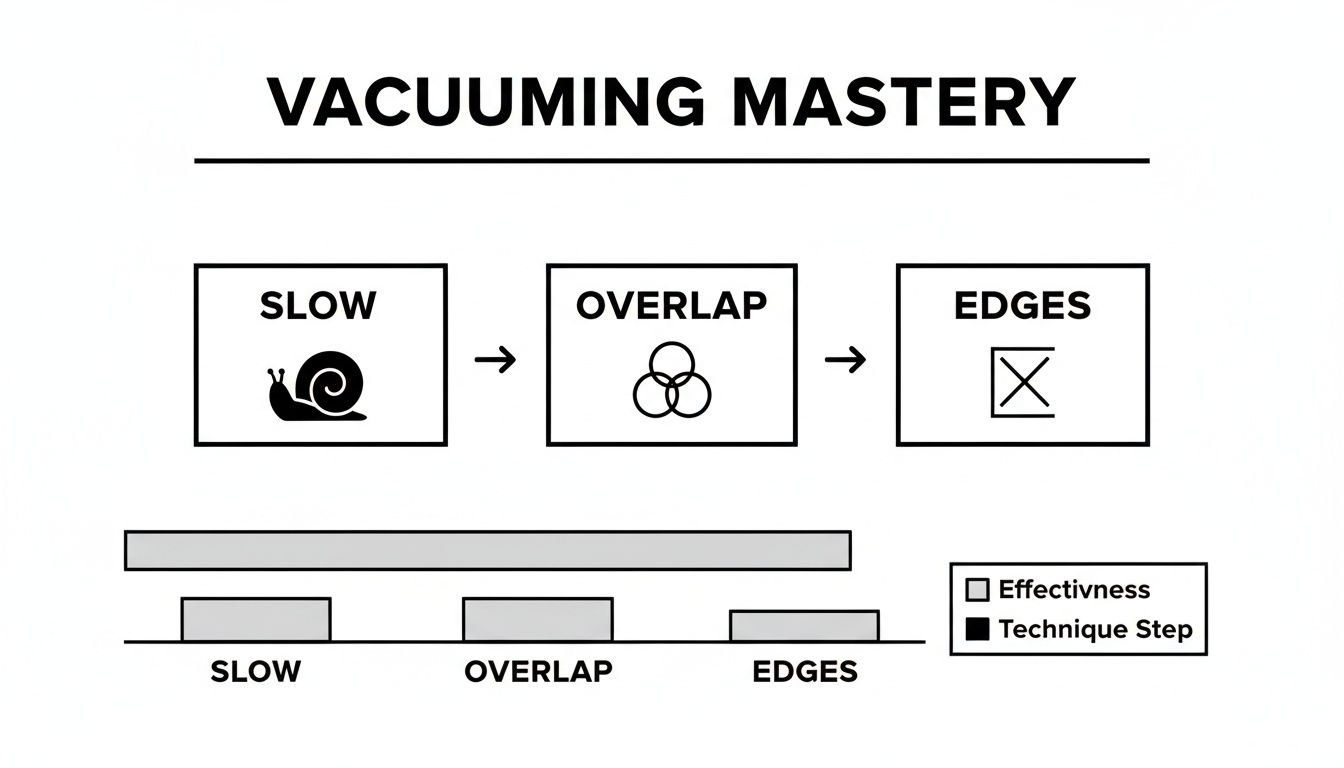 By going slow, overlapping your strokes, and getting right to the edges, you ensure there's no loose dirt to get mixed into a spill.
Your Go-To Guide for DIY Solutions
Having a few go-to recipes for stain removal can save a lot of panic. But before you tackle a stain in the middle of your living room, always test your cleaning solution on a hidden spot of carpet first—like inside a wardrobe—to make sure it doesn't affect the colour.
Below is a quick-reference table to help you tackle some of the most common household spills with ingredients you probably already own.
DIY Stain Removal Guide for Common Spills
| Stain Type | Initial Action | DIY Cleaning Solution | Method |
|---|---|---|---|
| Red Wine | Blot immediately with a dry cloth. | 1 tbsp white vinegar, 1 tbsp washing-up liquid, 2 cups warm water. | Sponge solution onto the stain, blot repeatedly, then rinse by blotting with a water-dampened cloth. |
| Coffee / Tea | Blot thoroughly to soak up as much liquid as you can. | Equal parts white vinegar and water in a spray bottle. | Lightly spray the area, let it sit for 10-15 minutes, then blot dry with a clean cloth. |
| Mud | Let it dry completely. No touching! | 1 tsp clear washing-up liquid in 1 cup of warm water. | Scrape off dried mud and vacuum. Blot any remaining stain with the solution, then rinse and blot dry. |
| Grease / Oil | Scrape off excess; sprinkle with baking soda or cornflour. | A few drops of washing-up liquid in warm water. | Let the powder absorb the oil for 15 mins, then vacuum. Blot with the soap solution to remove residue. |
With these simple techniques and a little know-how, you can handle most common carpet stains with confidence. Remember, acting fast with the right method is the key to keeping your carpets looking their best.
Choosing The Right Deep Cleaning Method
When your regular vacuuming just isn't cutting it anymore, it’s time to think about a deep clean. This isn’t just about surface-level tidying; it’s about getting right down into the carpet pile to tackle the stubborn dirt, oils, and allergens that make your carpets look tired and feel grimy. Think of it as the difference between a quick daily wipe-down of your kitchen counters and a proper seasonal deep scrub.
For this level of cleaning, the choice usually boils down to two main professional methods: steam cleaning and dry cleaning. Each has its own set of advantages and is better suited to different situations, carpet types, and even your family's lifestyle. Getting to grips with how they work is the first step to making the right call for your home.
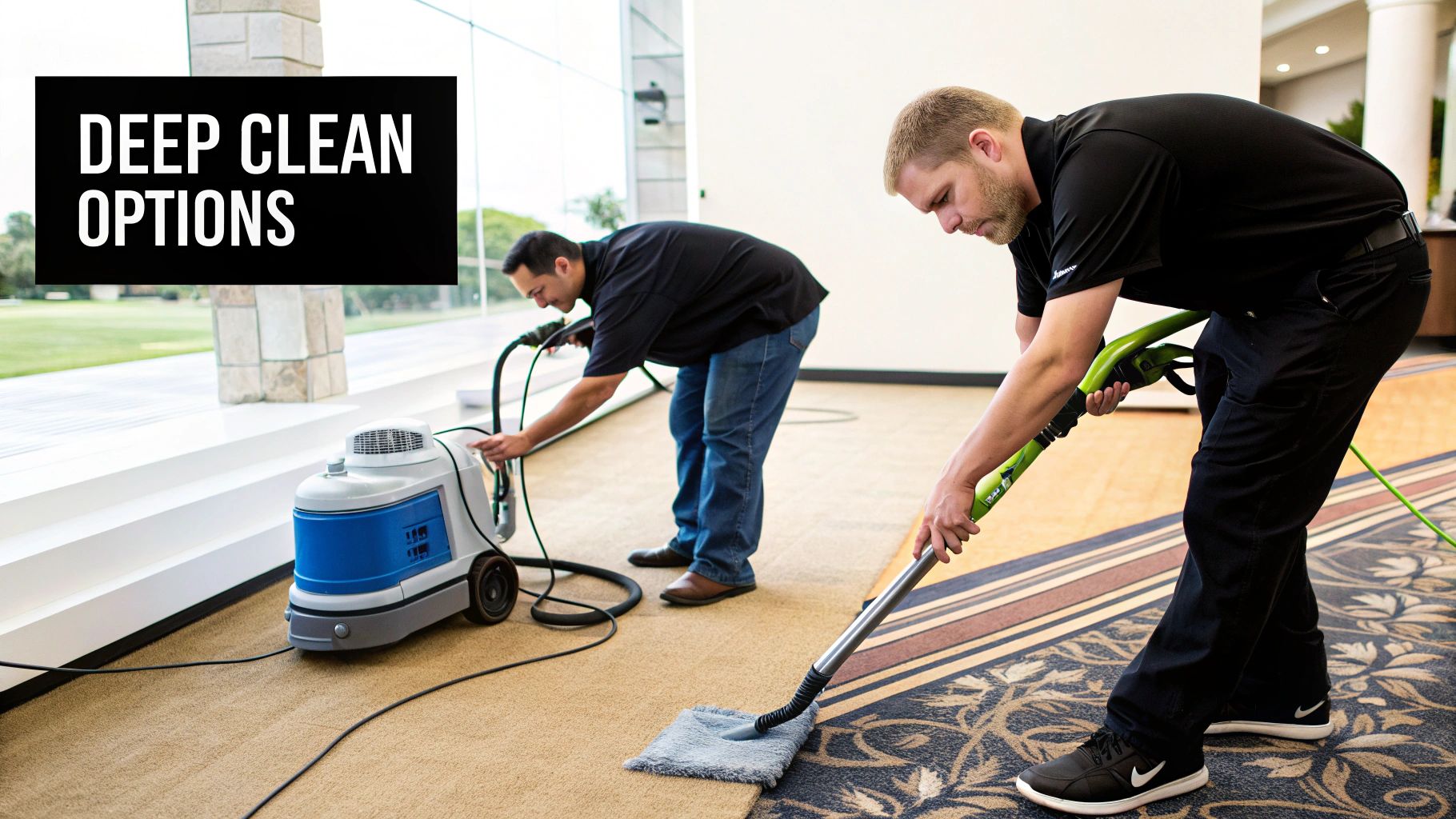
Steam Cleaning: The Deep Flush Method
Steam cleaning, which is more accurately called hot water extraction, is the real heavyweight champion of carpet cleaning. It’s the closest thing to giving your carpet a deep, restorative shampoo. The process involves injecting a high-pressure mix of hot water and specialised cleaning solutions right into the carpet fibres.
This powerful spray literally forces out trapped dirt, dust mites, and grime from the base of the pile. Immediately after, a high-powered vacuum sucks out the hot water, pulling all the dislodged dirt and allergens with it. The result is a carpet that’s been thoroughly cleansed and sanitised from the inside out.
Why Choose Steam Cleaning?
- The Deepest Clean Possible: It's brilliant at removing deeply embedded soil, bacteria, and allergens.
- Tough on Stains: The combination of heat, pressure, and potent cleaning agents makes short work of greasy or ground-in stains that other methods can't shift.
- No Sticky Residue: A proper hot water extraction rinses away virtually all the cleaning solution, leaving your carpet feeling soft and fresh, not sticky.
The one major downside is the drying time. Depending on the thickness of your carpet and the ventilation in the room, it can take anywhere from 6 to 12 hours (sometimes longer) to dry completely. That can be a bit of an inconvenience if you need to use the room again in a hurry.
Dry Cleaning: The Low-Moisture Alternative
For times when you just can't wait hours for your carpet to dry, there’s carpet dry cleaning. This method is a fantastic low-moisture solution—think of it less like a deep shampoo and more like a dry shampoo for your hair. It uses very little water, relying instead on absorbent chemical compounds to get the job done.
A technician spreads a dry or slightly damp powder over the carpet. Then, specialised machinery with rotating brushes works this compound deep into the fibres. The powder acts like thousands of tiny sponges, absorbing dirt and oils. After a short wait, the whole lot is vacuumed up, taking the grime with it.
Because it uses so little water, dry cleaning is often the go-to method for delicate natural fibres. Materials like wool, silk, or sisal can be easily damaged, warped, or discoloured by the high heat and moisture of steam cleaning.
Why Choose Dry Cleaning?
- Super Fast Drying: Your carpets are often dry and ready for foot traffic in under an hour, which means minimal disruption to your day.
- Gentle on Delicate Fibres: It’s a much safer bet for expensive or sensitive carpets that are prone to shrinking or colour bleeding.
- Great for Maintenance: It’s an ideal choice for a regular freshen-up between those deeper, hot water extraction cleans.
The trade-off, however, is that dry cleaning might not pack enough punch for heavily soiled carpets or deep-set, oily stains. For those kinds of jobs, you really need the flushing power of hot water extraction. If you're dealing with particularly stubborn spots, agitating them first with a tool like a drill brush carpet cleaning set can make a huge difference before the main clean. Ultimately, choosing the best way to clean your carpets means matching the right method to both the material and the mess.
Deciding Your Approach: DIY, Rental, or Professional?
Knowing the difference between steam and dry cleaning is one thing, but deciding who actually does the work is a whole other puzzle. Do you buy your own machine, rent one for the weekend, or just pick up the phone and call in a pro? There’s no single right answer—it all comes down to a trade-off between your budget, your time, and how desperate your carpets are for a deep clean.
Let's walk through each option to figure out which one makes the most sense for you.
The DIY Route: Buying Your Own Machine
Investing in a domestic carpet cleaner is a bit like buying a quality winter coat—it feels like a big outlay at first, but it can pay for itself many times over. This is hands-down the best choice for busy households, especially if you have children, pets, or just a general knack for spilling things.
Think of it as having your own little emergency service tucked away in a cupboard. When that glass of red wine takes a tumble, you can tackle it immediately instead of watching the stain set while you wait for a rental or a professional slot to open up. For that kind of peace of mind, owning your own machine is brilliant. You can find all sorts of affordable DIY tools and home essentials to get your cleaning arsenal started.
The trade-off? Home-use models simply don't have the muscle of their professional-grade cousins. They're fantastic for regular maintenance and tackling fresh messes, but they might struggle with years of built-up grime or very old, stubborn stains. You'll also need to find somewhere to store it and keep it clean.
The Middle Ground: Renting a Carpet Cleaner
For many of us, a full-on deep clean is more of an annual or biannual event. If that sounds like you, then renting a machine strikes a perfect balance between power and price. It gives you access to a seriously powerful piece of kit for a day or two, without the long-term commitment of buying and storing one.
Renting is the go-to solution for:
- The annual spring clean: Giving the whole house a proper, top-to-bottom refresh.
- End-of-tenancy deep cleans: A must-do if you want to see your full deposit again.
- One-off disasters: Perfect for cleaning up after a big party or an unfortunate pet-related incident.
The main downside is the sheer graft involved. It's on you to pick up the machine, figure out which cleaning solutions to buy, do all the hard work, and get it back to the shop on time. It's a proper hands-on job that will definitely eat into your weekend.
Calling in the Professionals: Unmatched Power and Convenience
Hiring a professional is the ultimate hands-off, hassle-free solution. You’re not just paying for the clean; you're paying for their industrial-strength equipment and, more importantly, their experience. A good technician knows exactly how to handle different carpet fibres and has seen every type of stain imaginable.
This is often the best route for carpets that are heavily soiled, made from delicate materials like wool, or have stubborn odours you just can't shift.
A professional hot water extraction machine works at far higher temperatures and has vastly more powerful suction than any unit you can buy or rent. It flushes out deep-seated dirt that other machines leave behind and pulls out much more water, meaning a deeper clean and significantly faster drying times.
While it might sound like the priciest option, the UK's competitive market keeps prices surprisingly reasonable. The cleaning sector has boomed, with 75,565 cleaning businesses operating by 2023. A massive 99% of these are small, independent outfits, often with fewer than 10 employees. This creates a vibrant landscape of local specialists competing on both quality and price, making professional help more accessible than you might think.
So, what's the verdict? It really boils down to your lifestyle. If you crave convenience and need the absolute best result for a tough job, a professional is unbeatable. For a cost-effective annual deep clean where you don’t mind a bit of hard work, renting is a fantastic choice. And for handling the daily battles in a busy home, owning your own machine offers priceless, on-demand support.
Essential Habits to Prolong Your Carpet's Life
Knowing the best way to clean your carpets is less about reacting to spills and more about proactive care. When you get into a few simple, consistent habits, you can dramatically extend the life and good looks of your flooring. Honestly, prevention is always easier than a cure.
Just think of your carpet as a major investment in your home, because it is. Small, regular actions are what protect it from the slow, steady wear and tear that makes a carpet look old before its time. By stopping dirt at the door and managing the pressure on the fibres, you’ll save yourself a lot of time, effort, and money down the line.
Implement a Strong First Defence
Your front door is the primary gateway for all the grit, mud, and moisture that act like sandpaper on your carpet fibres. The single most effective thing you can do to protect your carpets starts right there, before anyone even takes a step inside.
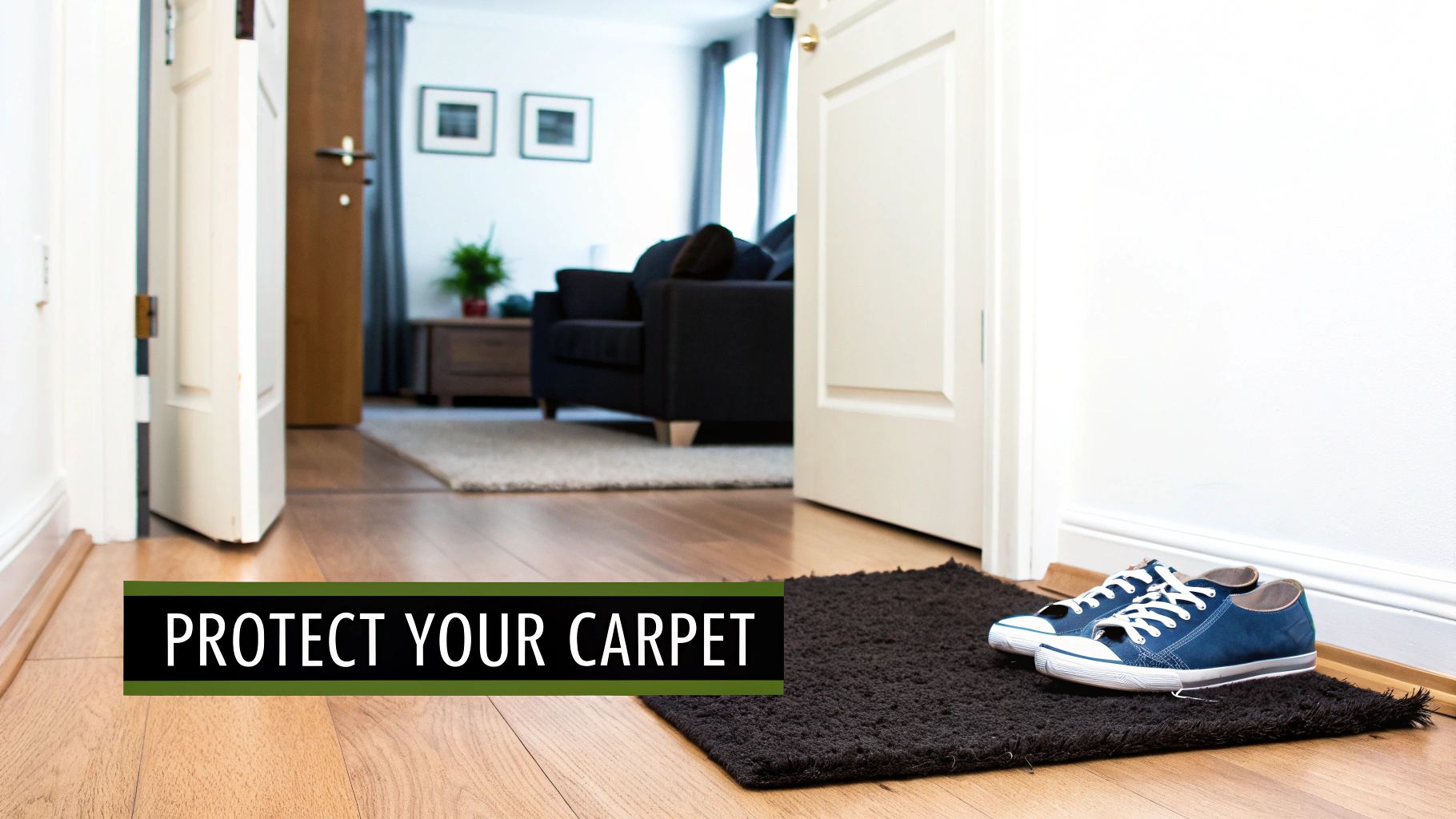
A simple ‘shoes-off’ policy is the most powerful habit you can adopt. It’s not just about mud; studies have shown just how much dirt and bacteria our shoes can track in. Getting family and guests to leave their footwear at the door massively cuts down on the grime that gets ground deep into the pile.
To make this rule stick, place high-quality doormats at every entrance.
- Outside Mat: Look for a coarse, tough mat designed to scrape off the worst of the mud and heavy debris.
- Inside Mat: Pair it with an absorbent mat just inside the door to catch any leftover moisture and fine dust.
This two-mat system creates a brilliant barrier, trapping the vast majority of damaging stuff before it even has a chance to get into your home.
Prevent Pile Crushing and Indentations
Heavy furniture that stays in one spot for years will inevitably crush the carpet pile underneath. This leaves behind those annoying indentations that can eventually become permanent. The constant pressure flattens and weakens the fibres, making them more vulnerable to wear.
A great maintenance strategy doesn't just focus on dirt; it also protects the actual structure of your carpet. Regularly moving your furniture is a key part of this, spreading the wear evenly and preventing permanent damage to the pile.
Rearranging your room from time to time is a fantastic solution. Even just shifting a sofa or a heavy coffee table by a few inches every six months can make a real difference. It gives the compressed fibres a chance to bounce back and breathe.
For the heaviest items, protective pads or cups are a must. And to make moving furniture for a rearrange or a deep clean much easier, consider accessories like these handy self-adhesive furniture sliders. They let heavy pieces glide smoothly over the carpet without snagging or causing damage. By adopting these simple habits, you’re actively looking after the health of your carpets, ensuring they stay a comfortable and attractive part of your home for many years.
Your Carpet Cleaning Questions, Answered
Even with the best routine, you’re bound to run into specific carpet cleaning questions. Getting to grips with the finer points of carpet care can be the difference between a quick fix and a lasting problem, whether you're wondering how often to deep clean or how to handle a delicate rug. Here are some straightforward answers to the questions we hear most often from UK homeowners.
Knowing these details helps you make better choices, ensuring you're using the right approach for your specific carpet. It’s the best way to avoid accidental damage and keep your carpet looking its best for years to come.
How Often Should I Deep Clean My Carpets?
For most homes, a good deep clean every 12 to 18 months is the perfect schedule. This is generally enough to tackle the deep-seated dirt, grime, and allergens that your weekly vacuum simply can't reach.
Of course, this isn't set in stone. If you have pets, small children, or family members with allergies, you’ll want to ramp that up to every 6 to 9 months. Don't forget about high-traffic zones like hallways and living rooms; they often need a bit more attention to stop them from looking tired and worn before their time.
Are Homemade Cleaners Safe for All Carpets?
Not necessarily. While DIY recipes using things like white vinegar and baking soda can work wonders on most synthetic carpets (like nylon or polyester), they can spell disaster for natural fibres.
Wool carpets, for instance, are very sensitive to pH levels. Using an alkaline substance like baking soda can actually damage the fibres, leaving them brittle over time.
Always, always test any cleaning solution—homemade or shop-bought—on a hidden spot first. Try a small patch inside a wardrobe or under a sofa that never moves. This one simple step could save you from a very expensive headache.
Can I Use a Carpet Washer on My Area Rugs?
It really comes down to what the rug is made of. Most synthetic area rugs can handle a home carpet washer just fine, much like a fitted carpet. They're built to stand up to a bit of water and agitation.
However, you should never let a carpet washer near delicate or natural-fibre rugs. Things like silk, jute, or antique wool rugs require a specialist's touch. A machine can cause irreversible damage, from colours running to shrinkage and fibre destruction. Always check the care label on the back of the rug before you even think about starting.
What Is the Best Way to Get Rid of Pet Odours?
When you're dealing with stubborn pet smells, especially urine, an enzymatic cleaner is your best friend. Standard carpet shampoos might cover up the scent for a little while, but they won't actually get rid of what's causing it.
Enzymatic cleaners are different. They contain active enzymes that literally break down and digest the organic proteins in pet messes, neutralising the odour at a molecular level. For the best results, blot the area well, be generous with the cleaner, and just let it air dry. The enzymes will do the hard work for you.
At Deal For Any Occasion, we provide a wide range of affordable home essentials and practical tools to help you keep every part of your home in top condition. Explore our collections for everything you need for your next cleaning project at https://dealforanyoccasion.com.
Article created using Outrank