


Finding the Best Dog Training Books for Your Companion
Choosing the right dog training book is probably one of the most important first steps you can take in building a great relationship with your dog. It's more than just a manual; a good book acts as a translator, helping you understand what your dog is trying to tell you and how to communicate back effectively.
Your First Step to a Well-Behaved Dog
Starting out with dog training can feel a bit daunting, with so much advice flying around. That’s where a good book comes in—it gives you a clear, structured path to follow. Unlike cherry-picking tips from random online videos or getting conflicting advice from well-meaning friends, a well-written book provides a single, consistent philosophy from cover to cover.
Think about it this way: trying to build a piece of flat-pack furniture using instructions from three different sets would be a recipe for disaster. It's the same with dog training. A cohesive guide ensures you and your dog are on the same page, working towards the same goals with the same methods. This consistency is everything; it cuts down on confusion and frustration for both of you.
Building a Foundation of Trust
At its heart, all good training is built on a strong bond between you and your dog. The very best training books put this relationship front and centre. They teach you how to read your dog’s body language and understand what motivates them, which is the real secret to success. This isn't just about teaching commands; it’s about fostering a partnership built on mutual respect.
The goal isn't just to have an obedient dog, but to have a confident and happy companion who chooses to cooperate because they trust your guidance.
This guide is here to help you sort through the stacks of dog training literature out there. We’ll walk through the different training philosophies you're likely to come across so you can pick a book that feels right for you and your furry best mate. To get you started, you can also explore our collection of essential pet supplies at home to gear up for your training journey.
What You Will Learn
We’ve designed this article to take the mystery out of choosing a training book, giving you the confidence to pick the perfect one. We'll be covering a few key areas to get you on the right track:
- Different Training Philosophies: We'll break down the core ideas, like positive reinforcement, that are the backbone of modern dog training.
- Matching a Book to Your Dog: You'll learn how to factor in your dog's age, breed, and unique personality.
- Practical Application: We'll give you tips on how to turn the advice on the page into real-world results that stick.
Understanding Different Dog Training Philosophies
Not all dog training books are created equal. Think of it this way: trying to train your dog without understanding the author's core philosophy is like trying to build flat-pack furniture with instructions for a completely different item. You might get somewhere, but it's going to be confusing and frustrating for everyone involved.
At its heart, a training philosophy is the "why" behind the methods. It's the set of beliefs that shapes every instruction in the book. Thankfully, most reputable trainers today lean heavily on humane, science-backed approaches designed to build a brilliant relationship with your dog, not break their spirit with fear.
The Rise of Positive Reinforcement
The philosophy you’ll see most often—and for good reason—is positive reinforcement. In simple terms, this means rewarding the behaviour you want your dog to repeat. It's like paying your dog a bonus (in treats, toys, or praise) for a job well done.
When your pup sits nicely instead of jumping on a visitor, they get a tasty reward. This makes them think, "Hey, sitting got me something great! I should do that again." It’s a powerful and kind way to build a dog who genuinely wants to work with you.
This move towards positive training is clear when you look at how people in the UK are investing in their dogs. British households spend around £10 billion a year on their four-legged friends, and a big part of that is education. In fact, the dog training equipment market is expected to hit USD 262.9 million by 2030, with basic gear like leads and collars making up 23.25% of that. People often start with a good book to grasp the theory before they even buy the equipment.
Precision Training with a Clicker
A popular tool within the positive reinforcement world is clicker training. This method uses a small device that makes a sharp "click" sound to mark the exact moment your dog does something right. It’s all about timing and clarity.
Think of the clicker as a camera shutter. You're trying to capture the split-second your dog offers the perfect "sit." The click is the shutter, and the treat that follows is the reward for that perfect picture.
This clear signal helps dogs learn incredibly fast. The sound cuts through any confusion and tells them, "Yes! That's exactly it! A treat is on its way." It’s a fantastic method for teaching everything from basic cues to complex tricks.
By getting to grips with these core ideas, you'll be able to pick a dog training book that feels right for both you and your dog. For more tips on pet care, you might be interested in our other blog posts.
How to Choose the Right Book for Your Dog
Picking the perfect dog training book isn't about grabbing the one with the flashiest cover or the most five-star reviews. Think of it more like finding the right instruction manual for a very specific, very fluffy piece of equipment—your dog. You wouldn't use a guide for a brand-new puppy to fix reactivity in an older dog, just like you wouldn't use a cake recipe to bake a loaf of bread.
The best book for you will be one that lines up with your dog’s age, breed, personality, and whatever training goals you've set. The secret is to be honest about where you and your dog are right now. A bit of clear-eyed assessment at the start will save you a heap of frustration down the road.
Match the Book to Your Dog
Before you even start looking at titles, take a minute to think about your specific situation. Are you about to bring home an eight-week-old fluffball who needs to learn everything from toilet training to not chewing the furniture? Or perhaps you've opened your home to a nervous rescue who needs to learn that the world isn't such a scary place.
The needs of a hyperactive Border Collie who thrives on mental puzzles are worlds away from a chilled-out ex-racing Greyhound who's just getting used to life on a sofa. Recognising these differences is your first step. It helps you find a book filled with advice you can actually use, rather than generic tips that don't quite fit.
The training philosophy of the author is also a huge piece of the puzzle. This chart can help you see how different training styles connect to specific methods, which is a major factor in the book you choose.
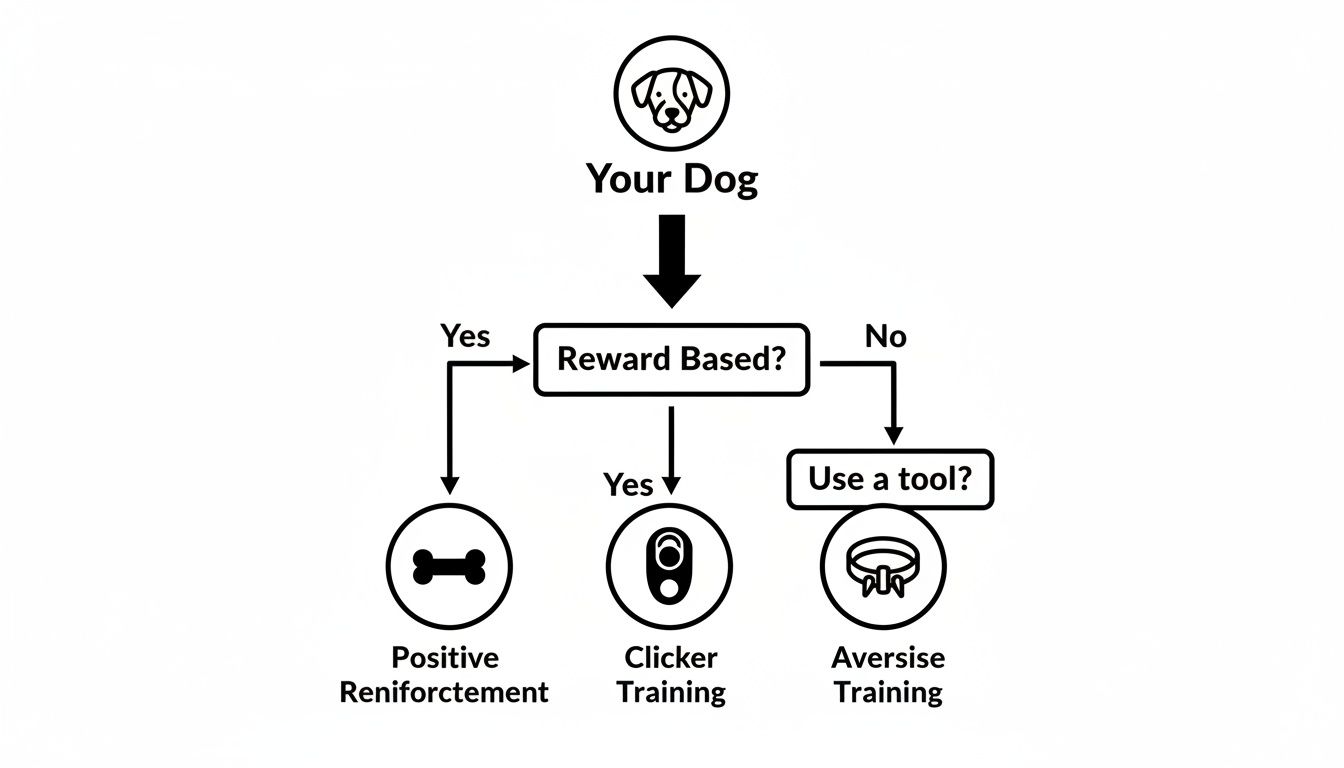
As you can see, modern, science-backed approaches like positive reinforcement and clicker training are popular for a reason—they build a great relationship based on trust and clear communication.
Pinpoint Your Primary Goal
Once you've got a good picture of your dog, it's time to figure out what you really want to achieve. Sure, everyone wants a "good dog," but getting more specific will help you find the right resource. Are you focused on building a solid foundation of sit, stay, and come? Or is there a particular problem, like barking at the postman, that's driving you mad?
Choosing a dog training book is like seeing a specialist. You wouldn't go to a cardiologist for a sprained ankle. Figure out your biggest challenge and find a book written by an expert on that very topic.
To help you narrow things down, the table below connects common situations with the type of book that will likely serve you best.
Matching Training Books to Your Dog's Needs
Use this table to identify the type of training book that best suits your dog's life stage and your training objectives.
| Dog's Life Stage / Situation | Primary Training Goal | Recommended Book Focus |
|---|---|---|
| New Puppy (8-16 weeks) | House training, socialisation, and basic manners. | Puppy Basics focusing on positive early experiences. |
| Adolescent Dog (6-18 months) | Managing excitability and reinforcing commands. | General Obedience with sections on impulse control. |
| Newly Adopted Rescue Dog | Building trust and addressing unknown histories. | Behaviour Modification with an emphasis on confidence. |
| Dog with Specific Issues | Leash pulling, excessive barking, or separation anxiety. | Problem-Solving Guides that target a single issue. |
| High-Energy or Working Breed | Providing mental stimulation and enrichment. | Advanced Training such as agility, scent work, or tricks. |
By thinking through these points, you can skip the generic advice and find a guide that feels like it was written specifically for you and your four-legged friend. It’s all about finding the right tool for the job to build a happier, stronger partnership.
What Types of Dog Training Books Are Available?
Stepping into the world of dog training books can feel like wandering into a massive library without a map. To find what you’re looking for, you first need to know how the shelves are organised. Just like a bookshop has sections for cooking or history, dog training guides are split into different categories, each one designed to help with a specific stage or challenge in your dog’s life.
Think of it like picking the right tool for a job. You wouldn't use a sledgehammer to hang a small picture, right? In the same way, the perfect book for house-training a brand-new puppy isn't going to be much help when you're teaching an adult dog complex agility moves. Understanding these categories is the first step to making training a success for both of you.
Foundational Puppy Training Guides
This is usually the first port of call for anyone with a new, four-legged family member. These books are all about that crucial early period, typically from 8 to 16 weeks old, and are packed with advice on everything that lays the groundwork for a well-behaved adult dog.
These guides are your roadmap for getting off to a flying start. They cover all the essentials, including:
- House Training: Practical, step-by-step plans to get your puppy into a reliable toilet routine and prevent accidents.
- Socialisation: How to safely introduce your pup to new people, places, sounds, and other dogs to build a confident, happy companion.
- Nipping and Bite Inhibition: Gentle techniques to teach your puppy how to control their mouth during play.
- Basic Crate Training: Tips for turning a crate into a safe, comfortable den your puppy will love.
General Obedience and Manners
Once you’ve got the puppy basics down, it’s time to move on to general obedience. These books are the all-rounders of the training world. They focus on teaching those core commands that make your dog a joy to live with, building on the foundations you laid in puppyhood and adding a bit more structure.
These books aren't so much about fixing a particular problem as they are about building a shared language with your dog. They show you how to communicate what you want clearly, whether it's a solid 'sit' or a reliable 'stay' when the doorbell rings.
Behaviour Modification Manuals
Are you pulling your hair out over a specific issue like relentless barking, leash-pulling that dislocates your shoulder, or separation anxiety? A behaviour modification book is what you need. These are specialist guides that dig deep into the "why" behind common problem behaviours. For instance, instead of just giving you a command to stop pulling, they'll help you understand why your dog pulls in the first place—which is the key to creating real, lasting change.
While you're working on behaviour, making sure your home is an engaging place can make a world of difference. For the cats in your family, you might get some great ideas from our guide on how to build a DIY cat tower.
Putting Knowledge into Practice with Your Dog
A dog training book is a brilliant starting point, but its real value comes to life when you close the cover and start working with your dog. The trick is to turn all that great theory into consistent, real-world action.
This doesn't mean you need to clear your schedule for hours of gruelling drills. Actually, the opposite is true. Short, focused sessions are far more effective. Just 10 to 15 minutes a day can create huge progress without overwhelming your dog or you.
Creating the Right Training Environment
First things first, you need to set the stage for success. Think of it like getting your ingredients ready before you start cooking. Find a quiet spot in your home, free from the usual chaos, where your dog can focus entirely on you.
That means the TV is off, your phone is on silent, and other pets or family members aren't wandering through. You're trying to create a positive, low-stress bubble where learning can happen easily.
The secret to effective training isn't the length of the session, but the quality of the focus within it. A productive five minutes is better than a distracted half-hour.
With your space sorted, break down the exercises from your book into tiny, achievable pieces. A command like "stay" isn't a single action; it's a chain of smaller steps. Start by rewarding your dog for holding still for just one second, then slowly build up the time. Celebrating these little wins is what builds momentum and keeps you both motivated.
Reading Your Dog and Staying Patient
Patience is probably the most important tool in your kit. Progress is rarely a straight line. You'll have amazing days and others where it feels like you've gone backwards. That’s completely normal, so don't get discouraged.
Learning to read your dog’s body language is also vital. A tucked tail, a big yawn, or constantly looking away are all signs your dog might be getting stressed or confused. When you spot these signals, it’s time to end the session on a positive note and try again later. For those training walks, a well-fitted harness is essential for safety and control; you can discover more about choosing the right no-pull dog harness to support your efforts.
Just keep these core principles in mind:
- Keep it Short: Several short sessions beat one long, draining one every time.
- Stay Positive: Always finish on a success, even if it’s a really simple one.
- Be Consistent: Use the same words and rewards to avoid confusing your dog.
By applying these practical tips, the wisdom from your chosen book will transform from words on a page into a stronger, happier relationship with your well-behaved dog.
Using Complementary Resources Beyond Books
Dog training books are a brilliant starting point, almost like the architect's blueprint for a well-behaved companion. But to actually build that house, you'll need more than just plans; you need a full toolbox. The best results often come from blending the wisdom you find in a book with other practical resources.
A book can lay out the steps for teaching a "stay," but seeing it happen is a completely different ball game. This is where online videos and courses really shine. They bring the words on the page to life, letting you see the trainer's posture, timing, and how they deliver a reward. That visual guide can be the missing piece that clicks everything into place.
Knowing When to Call a Professional
Doing it yourself is fantastic, but there are times when you just can't beat having an expert in the room with you. Books are great for common problems, but they can't give you personalised feedback or react to your dog's unique quirks in the moment.
It's probably time to call in a certified professional dog trainer if you're facing:
- Serious Behavioural Issues: Things like aggression, guarding food or toys, or intense separation anxiety are complex. They really need a professional to get to the root of the problem.
- Lack of Progress: If you're following the book to the letter but feel like you're just spinning your wheels, a trainer can often spot tiny things you're doing that are holding you back.
- Safety Concerns: Any behaviour that poses a risk to you, your dog, or anyone else needs immediate, expert help.
A good trainer doesn't make your book redundant. Think of them more like a private tutor who helps you understand and apply the lessons more effectively, tailoring the advice directly to your dog and your home.
Building Your Complete Training Toolkit
A truly effective training plan is about layering your resources. You might read a chapter on loose-leash walking, watch a quick video to see the technique in action, and then put it into practice on your next walk. For extra peace of mind when you're out and about, you could even explore tools like a GPS tracking device for pets.
This simple cycle of reading, watching, and doing is incredibly powerful. It helps cement the skills for both you and your dog, turning theory into real-world success.
A Few Common Questions About Dog Training Books
When you start digging into the world of dog training books, a few questions always seem to pop up. Let's clear up some of the most common ones so you can feel more confident turning those pages into real-world progress with your dog.
It’s natural to wonder if one single book can really work for any breed. The short answer is yes... and no. The basic ways all dogs learn are pretty universal, so a good book on positive reinforcement will give you a fantastic foundation. But knowing your breed's quirks can be a real game-changer. For instance, a general puppy guide might not cover the intense mental stimulation a super-smart Border Collie needs to stay happy and out of trouble.
How Quickly Will I See Results?
This is the million-dollar question, isn't it? The truth is, there’s no magic number. How fast you see progress really comes down to your consistency, your dog's personality and past experiences, and what you’re trying to teach.
You might be thrilled to see your puppy master "sit" in a handful of sessions over a weekend. But tackling a deep-rooted habit like pulling on the lead? That’s more of a long-term project, often taking weeks of patient, daily effort.
Think of it like this: you wouldn't expect to pick up a guitar and play a full song on day one. Training is a skill for both of you. It’s all about small, steady steps, so remember to celebrate those little victories along the way—they're what keep you both going!
Can I Really Train an Older Dog Using a Book?
Absolutely! That old saying, "you can't teach an old dog new tricks," is one of the biggest myths in the dog world. A good book is an excellent tool for training an older or rescue dog.
The main difference is that you might need a bit more patience. An older dog has had years to practise certain behaviours, so you’re not just teaching something new; you're also helping them unlearn old habits. With the right positive approach and plenty of consistency, dogs of any age are more than capable of learning and strengthening their bond with you. The core techniques don't change, no matter how many birthdays they've had.
At Deal For Any Occasion, we provide all the everyday essentials you need to support your training journey, from durable leads to engaging toys. Explore our affordable pet supplies and more at https://dealforanyoccasion.com.