


Hanging plants from ceiling: UK guide to safe, stylish suspensions
Hanging a plant from the ceiling is one of those simple design tricks that can completely change the feel of a room. It's not just about saving a bit of floor space; it’s about adding a whole new vertical dimension to your home. You're basically turning that empty overhead space into a living, breathing feature by installing a secure hook to hold your favourite plant, pot, and all.
Why Hanging Plants Are Taking Over UK Homes
You’ve probably noticed hanging plants popping up everywhere in the UK lately. What was once a bit of a niche, retro look is now a staple in modern homes. And for good reason. It’s more than just a clever way to squeeze another plant into a small flat; it adds a dynamic, almost sculptural quality to a room. By drawing your eyes upwards, a well-placed hanging plant can make a space feel taller, airier, and much more interesting.
This boom isn't just a fleeting trend. The numbers back it up: Brits have recently spent an incredible £6.1 billion on plants. In 2022 alone, nearly half of all adults (46%) bought at least one houseplant, which naturally led to people looking for more creative ways to show them off. It's become a huge part of interior design, especially for city dwellers trying to bring a bit of the outdoors in.
More Than Just Decoration
Let's be honest, though, it’s not just about how they look. Bringing plants into your home, especially at eye level, has some brilliant perks. They're little green powerhouses, quietly purifying the air, helping you focus, and even lowering stress levels. It’s that connection to nature—that biophilic touch—that so many of us are looking for in our living spaces.
By lifting plants off the floor, you're not just decorating; you're creating a living canopy. This simple shift can completely change a room's atmosphere, turning a stark corner into a lush, inviting retreat.
Anyone Can Do It
The thought of drilling into your ceiling can be a bit intimidating, I get it. But it's a perfectly manageable DIY project once you know what you're doing. The secret is figuring out what your ceiling is made of. Most UK homes will have one of three types:
- Plasterboard: This is the most common kind you'll find, where gypsum boards are fixed onto wooden beams.
- Wooden Joists: These are the strong, structural beams hidden behind the plasterboard. They're your best friend for hanging anything heavy.
- Concrete: You'll often find this in flats or newer buildings. It's super strong but needs a specific type of fixing.
With the right tools and a little bit of guidance, you can get a hook up securely and start your own aerial garden. If you're looking for ideas, check out our collection of stylish garden and outdoor essentials. This guide will walk you through everything you need to know, so your plants will look amazing and stay safely in place.
Choosing Plants and Pots That Won't Weigh You Down

Before you even touch a drill, the real success of your hanging garden starts with picking the right residents. It's about more than just what looks good; choosing the perfect plant and pot is crucial for making sure the whole setup is safe, secure, and easy to live with.
The goal is to strike that perfect balance between a beautiful display and a weight your ceiling can actually handle. It’s easy to forget how much weight adds up. A lovely terracotta pot, for instance, feels manageable when it's empty, but once you add damp soil and a growing plant, it can put a surprising amount of strain on your ceiling fixings.
Smart Plant Selections for Overhead Displays
Your best bet is to go for plants with a natural trailing or cascading habit. They are the ones that create that gorgeous, waterfall-like effect that makes hanging displays so stunning. The bonus? Many of them are incredibly low-maintenance, which is a huge plus when they're hanging just out of easy reach.
Here are a few popular choices that do really well in UK homes:
- Devil’s Ivy (Pothos): This one is a classic for a reason. It's tough, grows fast, and its heart-shaped leaves quickly form a lush cascade. It’s also very forgiving if you’re a bit forgetful with watering.
- String of Pearls (Senecio rowleyanus): A real showstopper. This delicate-looking succulent has long strands of bead-like leaves that look incredible hanging down. It just needs bright, indirect light and doesn't like to be overwatered.
- Spider Plant (Chlorophytum comosum): An old favourite that never goes out of style. The arching leaves and dangling "spiderettes" (its baby plants) add wonderful texture and layers to your display.
Hanging plants have truly become a staple in modern UK home decor. It's not just a feeling; a recent survey of over 1,000 Brits highlighted how popular orchids, succulents, and cacti are for suspended displays that add character without taking up floor space. This fits perfectly with industry predictions that see trailing philodendrons and Hoyas becoming ceiling favourites for their easy care and dramatic looks. You can read more about the latest indoor plant and pot trends.
Choosing the right trailing plant can feel overwhelming, so here’s a quick comparison to help you find the perfect match for your space.
Top Trailing Plants for UK Ceilings
| Plant Name | Light Requirement | Watering Needs | Best For |
|---|---|---|---|
| Devil's Ivy (Pothos) | Low to bright, indirect light | Water when top inch of soil is dry | Beginners, low-light corners |
| String of Pearls | Bright, indirect light | Infrequent; allow soil to dry out completely | Sunny spots and careful waterers |
| Spider Plant | Bright, indirect light | Moderate; keep soil lightly moist | Purifying the air and easy propagation |
| English Ivy | Low to medium light | Prefers to stay slightly moist | Cooler rooms and classic looks |
| Philodendron Heartleaf | Low to bright, indirect light | Water when top inch is dry | Creating long, lush, vine-like trails |
This table is just a starting point, of course. The key is to match the plant's needs with the conditions in your home for a display that thrives.
Choosing the Right Pot
The pot you choose is just as important as the plant itself. If there's one rule to follow, it's to think lightweight. Those gorgeous, heavy ceramic or concrete pots look amazing on a shelf, but they’re usually a bad idea for hanging from the ceiling.
Lightweight materials are a must. Opting for pots made from recycled plastic, fibre, or thin metal drastically cuts down the total weight on your ceiling hook. This makes your entire display safer and gives you peace of mind.
Thankfully, lightweight planters now come in a huge range of styles, from sleek and modern to designs that cleverly mimic traditional materials. You can find some beautiful white metal vases and vintage flowerpots that look fantastic without adding unnecessary kilograms.
One last tip: make sure your pot has drainage holes to keep the roots healthy. To avoid drips on your floor, simply pop the nursery pot inside a slightly larger, sealed decorative pot (often called a cachepot). It's the perfect solution
How to Figure Out Your Ceiling Type
Before you even touch a drill, the most important thing you need to do is work out what your ceiling is actually made of. The right hook for a solid joist will be a disaster in plasterboard, so getting this right from the start is non-negotiable. It’s the key to making sure your plants stay up where they belong.
The easiest way to get an initial idea is the good old ‘knock test’. It’s surprisingly effective. Just give the ceiling a firm rap with your knuckles in a few different places and listen closely.
- A hollow, drum-like sound? That’s almost certainly plasterboard. You're knocking on the empty space between the ceiling joists.
- A solid, dull thud? That tells you you've hit something much denser – probably a wooden joist or, in some flats and newer builds, concrete.
This quick test gives you a brilliant first clue. If you hear that sound change from hollow to solid as you knock along a line, you’re almost definitely dealing with a plasterboard ceiling fixed to a wooden frame.
Finding the Solid Ground
The knock test is a great starting point, but when you're hanging something heavy overhead, you can't rely on guesswork. This is where a little bit of kit comes in handy. An electronic stud finder is a small investment that will pay for itself over and over again.
These gadgets are designed to find the hidden wooden joists behind your plasterboard. Just slide it slowly across the ceiling, and it will beep or light up when it detects the solid wood. It pinpoints the strongest anchor points for you, taking all the mystery out of the job.
My best piece of advice: always, always try to fix your hook directly into a joist if you can. It provides a solid, structural anchor that can handle a lot more weight than plasterboard ever could.
The Final Safety Checks Before You Drill
Okay, so you've found what feels like a solid spot. Hold on a second. There’s one last, absolutely crucial check to do. Ceilings in UK homes are often a maze of hidden pipes and electrical cables. Drilling into one of those is a mistake you really don't want to make.
Before you make a single hole, run a combined pipe and cable detector over the area. It’s a simple tool that will beep to warn you if there are any live wires or water pipes lurking just behind the plaster. It's a quick scan that ensures your chosen location is both strong and safe. This focus on avoiding hidden dangers is just as important when installing other ceiling features, like stylish and secure pendant ceiling light fixtures.
Installing Ceiling Hooks Like a Pro
Right, this is where the fun really begins. You've figured out what your ceiling is made of, and now it's time to get those hooks in place so your green companions can take pride of place.
The secret to doing this safely and securely is all about matching the right hardware to the right surface. It’s what gives you that peace of mind, knowing your beloved plant isn’t going to come crashing down. We'll walk through the process for the three main ceiling types you'll find in UK homes. Each needs a slightly different touch, but the goal is the same: a sturdy anchor you can rely on.
Before you even think about drilling, it's worth double-checking your plan. A quick check now saves a lot of hassle later.
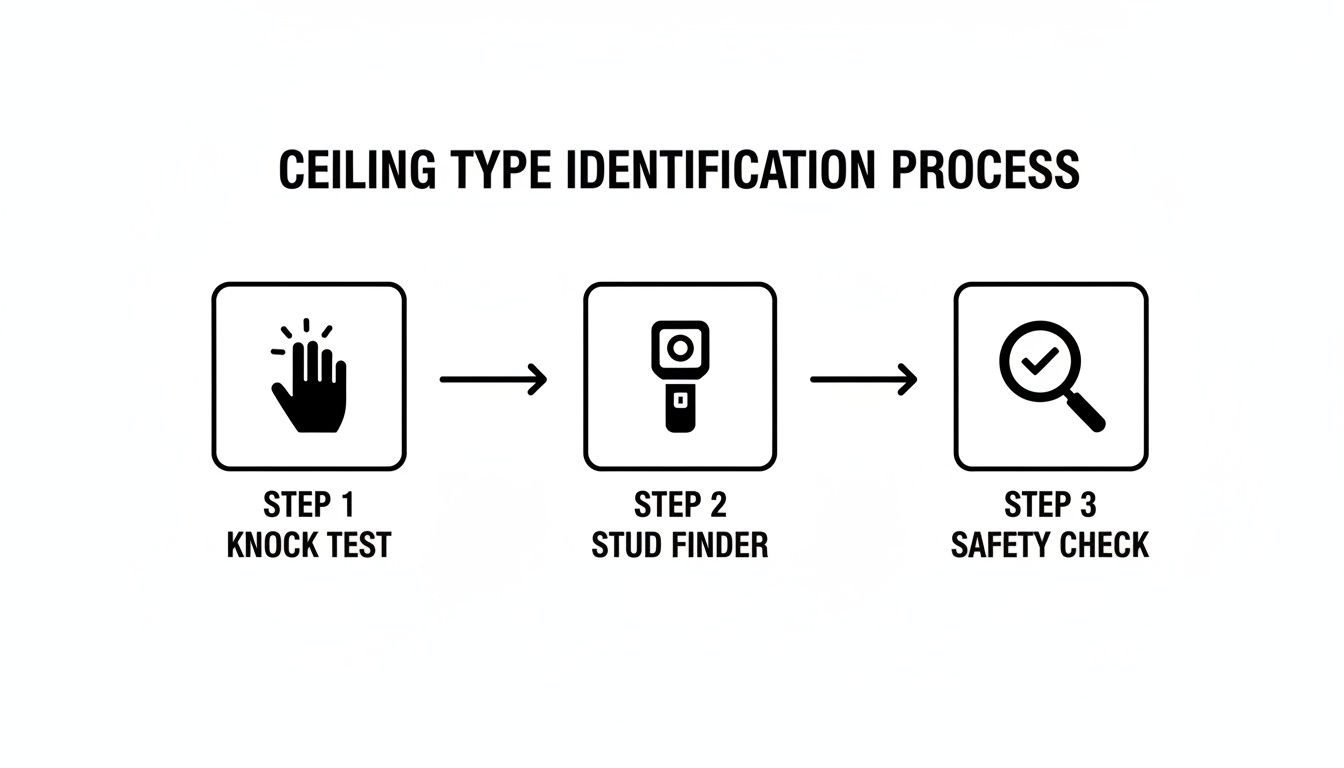
As this simple diagram shows, using your ears, a handy tool, and a final safety check is the best way to move forward with confidence.
Securing Hooks into Wooden Joists
Honestly, drilling into a wooden joist is the absolute gold standard for hanging plants. It's the strongest, most secure method because you’re anchoring directly into your home’s structural frame.
Once you’ve used your stud finder to pinpoint the centre of a joist, mark it with a pencil. The key here is to drill a pilot hole first. This small hole does two things: it stops the wood from splitting when you drive the hook in, and it makes screwing it in a whole lot easier.
Your Toolkit:
- Stud finder
- Pencil
- Tape measure
- Drill with a wood drill bit (just a touch smaller than your hook’s screw)
- A solid screw-in hook with a nice, deep thread
Drill your pilot hole right in the centre of your mark, then just twist the hook in by hand. Keep going until it’s good and tight – it should feel completely solid. When done right, a hook in a joist can easily hold 10-15kg, sometimes even more. It’s the perfect solution for your heavier plants in those lovely big ceramic pots.
Installing Fixings in Plasterboard
But what if your perfect plant spot falls right between the joists? Don’t worry, you can still hang a plant from plasterboard, but you absolutely must use a special fixing made for hollow walls. Whatever you do, don't just screw a standard hook into plasterboard on its own. It simply won't hold the weight.
Your best bet is a spring toggle bolt or a similar hollow-wall anchor. These are clever bits of kit. They go through a small hole in the ceiling, and then a set of wings springs open in the cavity above. This simple action spreads the load over a much wider area, stopping the hook from just ripping through the plasterboard.
Think of a spring toggle as a tiny anchor behind your ceiling. As you tighten the bolt, those 'wings' clamp down on the inside face of the plasterboard, creating a surprisingly strong fixing for light to medium-weight plants.
To fit one, you drill a hole just big enough for the collapsed toggle to squeeze through. Pinch the wings together, push it through the hole, and you’ll hear a satisfying little ‘pop’ as they open up. Then, just tighten the bolt to pull the hook plate flush with the ceiling. These fixings can generally hold around 5-7kg, which is ideal for smaller plants in lighter pots.
Anchoring into Concrete Ceilings
If you're in a modern flat or apartment, you’ve probably got concrete ceilings. They are incredibly strong, but they demand a bit more muscle and the right tools. You'll need a proper hammer drill and a masonry drill bit designed for concrete. A standard drill bit just won't cut it and you’ll likely burn it out.
For a really secure fixing, you’ll pair a ceiling hook with a plastic wall plug (like a Rawlplug) or a metal anchor. Mark your spot, then drill a hole to the depth and diameter recommended for the anchor you're using.
For particularly stubborn concrete, having the right drill bit can be a game-changer. For more information, you might be interested in this guide on extra-long HSS twist drill bits that work well with various materials.
Once the hole is drilled, give it a quick blow or vacuum to clear out the dust. Push the wall plug in so it sits flush with the ceiling, and then screw your hook firmly into it. The plug will expand as the screw goes in, creating a powerful friction grip inside the concrete. You'll have a rock-solid point to hang from.
Fixings and Load Capacity for Different Ceiling Types
Choosing the right fixing is crucial for safety. This table gives you a quick rundown of what to use where and a rough idea of how much weight it can handle. Always check the manufacturer's specific load ratings, as these are general guidelines.
| Ceiling Type | Recommended Fixing | Typical Max Load (kg) | Best Use Case |
|---|---|---|---|
| Wood Joist | Heavy-duty screw hook | 15+ | Large, heavy plants in ceramic or terracotta pots. |
| Plasterboard | Spring toggle bolt | 5-7 | Small to medium, lightweight trailing plants. |
| Concrete | Hook with masonry wall plug | 10-15 | Medium to large plants, securely anchored. |
Remember, these figures are just a guide. When in doubt, it’s always better to use a stronger fixing than you think you need.
Styling Your Hanging Garden for Maximum Effect
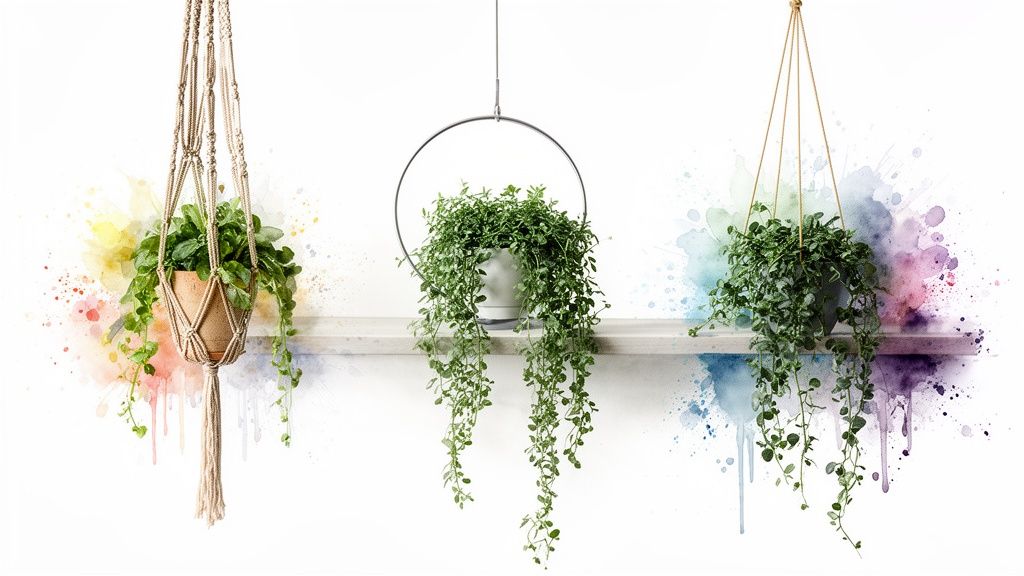
Now that your hooks are securely in the ceiling, the fun part begins: styling your new aerial garden. This is where you get to transform a simple plant into a stunning design feature that brings the whole room to life. Don’t just hang a plant – think of it as curating a living piece of art.
The secret to a really impressive display is creating visual interest. Rather than just popping a single plant in the middle of the room, think about how you can group them and layer them to draw the eye upwards. A thoughtfully arranged collection of plants can make your space feel so much more dynamic and complete.
Creating Layers and Depth
One of the best tricks in the book is to play around with different heights. Grouping three or more plants together and hanging them at varying lengths creates a gorgeous, cascading effect that feels intentional. It adds real depth and makes the arrangement look like a lush, unified installation instead of a few separate pots.
For instance, you could hang a long, trailing English Ivy highest, letting its vines tumble down. Then, stagger a fuller Spider Plant and a more compact String of Pearls below it. This kind of layering works wonders in an empty corner or above a piece of furniture, turning a neglected spot into an instant focal point.
Of course, a single, dramatic plant can be a total showstopper on its own. If you’ve got a big, beautiful specimen like a mature Boston Fern or a Burro’s Tail with impressively long trails, let it be the hero. Centering it over a coffee table or in a bay window makes a bold, confident statement.
Matching Hangers to Your Home's Style
The hanger you choose is just as important as the plant itself, as it’s your chance to connect your new greenery to your existing decor. The options are endless, so have a think about the overall vibe you’re going for.
- Bohemian and Natural: You can’t go wrong with macramé hangers for a relaxed, boho feel. Their woven textures add a lovely softness and an artisanal touch.
- Minimalist and Modern: For a cleaner, more contemporary look, try simple metal or leather hangers. Their sleek lines keep the focus squarely on the plant’s beautiful foliage.
- Industrial and Edgy: If your style is a bit more raw, consider using chains or fine metal wiring. This creates a really striking contrast, especially when paired with delicate, trailing plants.
The UK's passion for hanging plants from ceilings is growing fast. With over 30 million gardeners contributing to a massive £6.1 billion spend on plants, it's clear we love our greenery. This trend is huge in cities where vertical gardening is the perfect space-saving solution. Young people are especially keen, buying an average of two new houseplants a month – with trailing varieties being a top choice for ceiling displays. You can read more about the rise of hanging plants in the UK online. By carefully choosing your style, you're not just decorating; you're joining a nationwide movement to bring the outdoors in.
Your Top Questions About Hanging Plants Answered
It's completely normal to have a few last-minute questions before you start drilling into your ceiling. Let's walk through some of the most common ones I hear, just to make sure you're feeling confident before you begin.
Getting these final details sorted will ensure your hanging display is not just stunning but, more importantly, safe and secure for years to come.
How Much Weight Can My Ceiling Really Hold?
This is the big one, and the honest answer is: it completely depends on what you're fixing your hook into.
Screwing a hook directly into a solid timber joist gives you the strongest possible anchor. You can confidently hang between 10-15kg from a joist, which is perfect for larger plants in heavy ceramic or terracotta pots.
Plasterboard alone, however, isn't built to take much load. But, if you use a clever fixing like a spring toggle bolt, you can boost its holding power to around 5-7kg. This is usually more than enough for smaller, lighter plants.
Don't forget to calculate the total weight. That means the pot, the soil, the plant, and the extra weight from a fresh watering. When in doubt, always try to find a joist. It's the safest bet.
What's the Best Way to Water Hanging Plants Without a Mess?
Watering plants suspended in the air can feel a bit tricky, but a few simple techniques will keep your floors dry and your plants happy.
The most straightforward method is to simply take the plant down. Pop it in the sink or bath, give it a good soak, and let it drain for 20-30 minutes before hanging it back up. No drips, no mess.
If that's not practical, here are a couple of other tricks I use:
- A long-spouted watering can is your best friend. It lets you get the water right to the soil without splashing the leaves or spilling over the sides.
- Try the ice cube trick. Just place a few ice cubes on the soil. As they melt slowly, the soil absorbs the water gradually, preventing any sudden overflow.
- Double-pot your plants. I often leave plants in their plastic nursery pot (the one with drainage holes) and sit that inside a slightly larger, sealed decorative pot. It acts as a built-in saucer.
What Are the Essential Tools for This Project?
You really don't need a massive workshop full of tools to get this done. For most UK homes, a small handful of items will see you through the job.
To make things easy and safe, you'll want to have these on hand:
- An electronic stud finder – it’s the most reliable way to find those hidden ceiling joists.
- A cordless drill driver will make drilling pilot holes and driving screws a breeze.
- A basic set of drill bits that can handle both wood and masonry.
- A simple tape measure and pencil for marking your spot.
- A pair of safety goggles is a must-have to protect your eyes from dust.
Even with the best planning, a drill can slip. If you end up with a small, unwanted hole, don't worry. Our guide on how to fix a hole in the wall or ceiling can help you patch it up easily.
At Deal For Any Occasion, we have all the tools and home improvement essentials you need to get creative, from quality drill bits to beautiful planters. Check out our collections and find everything you need to build your dream hanging garden at https://dealforanyoccasion.com.