


How to Prepare Garden for Winter: A UK Gardener's Practical Guide
Knowing how to prepare your garden for winter really just boils down to a good, strategic tidy-up. It's all about protecting your plants and soil from the harsh weather to come. We're talking about clearing out old plants, raking up leaves, giving certain shrubs a prune, and laying down some mulch to keep the roots cosy. A few simple jobs now will pay dividends, setting you up for a healthy, vibrant garden next spring.
Starting Your Autumn Garden Clean-Up
As the bright colours of summer start to fade, the first real job on the list is a proper garden clear-up. This isn’t just about making the place look tidy for the neighbours; it's your first line of defence against pests and diseases that are desperately looking for a place to hide from the cold. Think of it as putting your garden to bed for a long, well-deserved rest.
Clearing Leaves and Spent Plants
First things first, get those fallen leaves off your lawn and out of the borders. If you leave a thick, wet blanket of them on the grass, you'll end up with slimy, bare patches come spring. Worse still, it's a five-star hotel for slugs and snails, giving them the perfect damp, dark spot to wait out the winter before munching on your fresh new shoots. An extendable garden rake is a brilliant bit of kit for this, letting you get into all the awkward corners without doing your back in.
Once the leaves are sorted, turn your attention to the flower beds. It's time to pull out any annuals that have had their day, like marigolds or cosmos. With your perennials, you have a bit of a choice. You can cut back any collapsed or diseased-looking foliage to keep things neat. But I'd recommend leaving some of the more architectural seed heads—things like echinacea, sedums, or teasels. They look absolutely stunning on a frosty morning and provide a vital food source for birds through the lean winter months.
Composting and Soil Health
Knowing what to compost is crucial. Any healthy plant stuff that's free from obvious problems like blight or mildew can go straight onto the compost heap. It'll break down over winter and turn into fantastic soil conditioner for next year.
But be ruthless with anything that looks diseased. Blighted tomato vines or rose leaves covered in black spot should go in your council's green waste bin or on the bonfire. Don't risk adding them to your compost, as you could just be reintroducing the problem next season.
This big clear-up does wonders for your soil, too. In fact, research shows that a good winter garden clearance can boost soil drainage by as much as 35%. That's a huge deal, especially with predictions of a 20% increase in extreme rainfall for the UK by 2030. Good drainage stops roots from rotting in waterlogged soil, a problem that affects nearly half of all unprepared garden beds. This simple tidy-up gets the ground ready, making sure your garden is raring to go when the weather finally warms up.
Protecting Plants and Soil from Frost
We all know how unpredictable a UK winter can be. A sudden, sharp frost is often the biggest danger to the plants you’ve spent all year nurturing. Thankfully, protecting them isn't about complex, time-consuming techniques; it's about a few simple, effective measures to shield your garden from the worst of the chill.
Give Your Soil a Winter Blanket
One of the best things you can do for your garden beds is to mulch. Think of it as tucking your soil in with a thick, insulating blanket for the winter.
Spreading a generous layer of bark chips, well-rotted compost, or leaf mould around the base of your plants makes a world of difference. Aim for a depth of about 5-10cm. This not only insulates the roots from freezing temperatures but also helps the soil hang on to moisture and even gets a head start on suppressing next spring's weeds.
Just be sure not to pile the mulch right up against the stems of your plants. Leave a small, clear ring around them, as too much moisture trapped against the stem can encourage rot.
Before you start layering on the mulch, it's a good time to decide what to do with the last of your summer plants. This quick guide can help.
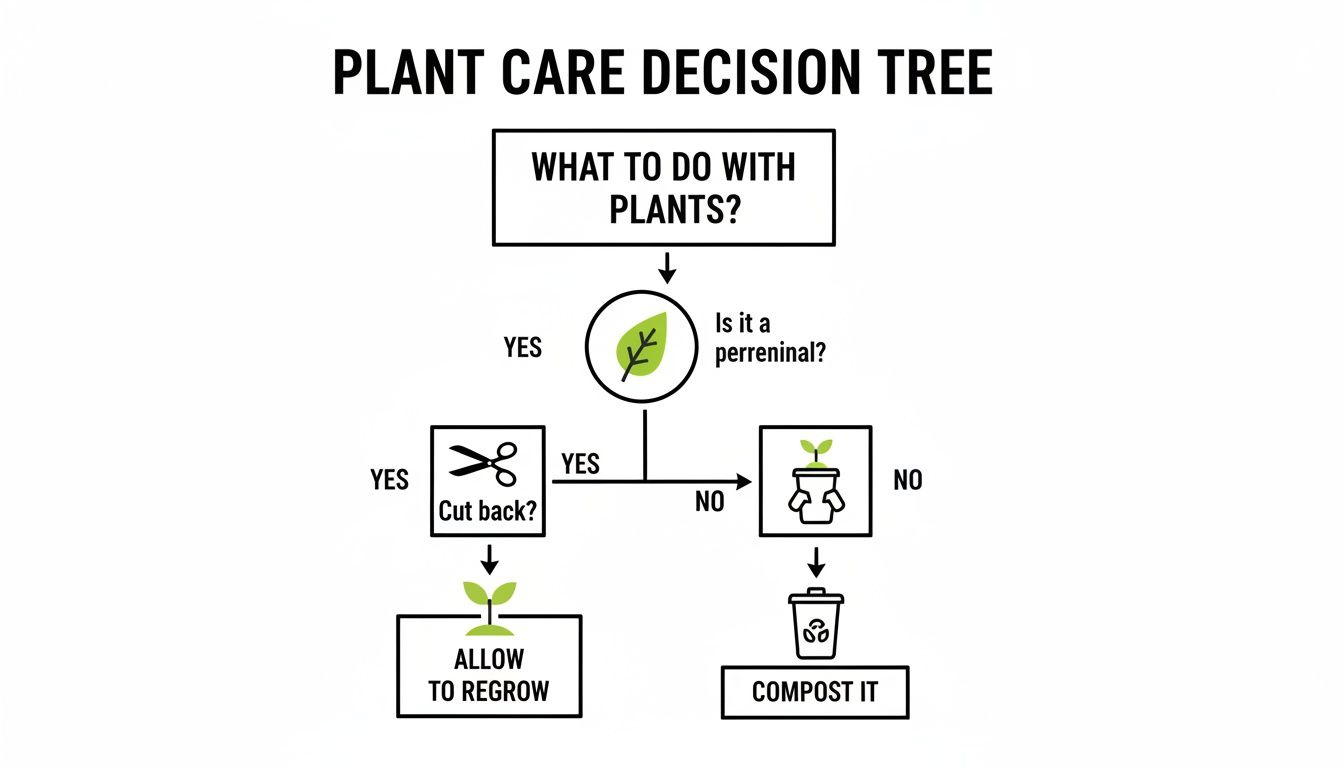
As you can see, it simplifies the choice: either cut back perennials to encourage fresh growth next year or clear out and compost anything that simply won't make it through the cold.
Shielding Vulnerable Plants and Containers
While mulch does a fantastic job for plants in the ground, anything in a pot or container is far more exposed. Their roots have only a thin layer of soil and the pot itself standing between them and the freezing air.
Historical data shows that unprotected potted plants can suffer up to 70% higher mortality rates during a prolonged cold spell. A simple trick is to wrap containers in hessian sacking or even a few layers of bubble wrap. This easy step helps trap warmth and prevents the soil from freezing and expanding – a phenomenon responsible for cracking pots in over 40% of untreated cases during December freezes.
Moving your pots to a more sheltered spot also works wonders. Tucking them up against a house wall protects them from bitter winds and lets them benefit from the small amount of warmth radiating from the brickwork. Huddling several pots together helps them insulate each other, too.
Expert Tip: For your most precious plants, don't just wrap the pot—drape horticultural fleece over the foliage as well. Secure it with a bit of twine, but make sure it's loose enough not to cramp the plant. This creates a mini-greenhouse effect, trapping air and keeping frost from settling on tender leaves.
If you're looking for an effective covering, a good quality garden plant frost protection fleece can be used for both wrapping pots and covering plants directly in your borders.
Here's a quick rundown of the most common ways to protect your plants.
Winter Protection Methods at a Glance
| Protection Method | Best For | Cost Level | Key Benefit |
|---|---|---|---|
| Mulching | Perennials, shrubs, and roses in garden beds | Low | Insulates soil, retains moisture, suppresses weeds |
| Horticultural Fleece | Tender perennials, shrubs, and potted plants | Low | Lightweight, breathable frost and wind barrier |
| Pot Wrapping (Hessian/Bubble Wrap) | Terracotta or ceramic pots and containers | Low | Prevents pots from cracking and insulates roots |
| Cloches | Individual small plants or rows of seedlings | Medium | Creates a mini-greenhouse, protecting from frost and pests |
| Cold Frame | Overwintering young plants, hardening off | High | Provides a sturdy, semi-permanent protected environment |
These methods offer a range of solutions, from simple and cheap to more permanent structures, so you can pick what's right for your garden and budget.
Lifting Tender Bulbs for Safekeeping
Finally, some plants simply can't cope with a cold, damp British winter underground. Tender bulbs and corms—think dahlias, cannas, and gladioli—are almost guaranteed to rot if left in the soil in most parts of the country.
Your cue to act is the first light frost that blackens their foliage. Carefully dig them up, trim back the stems, and gently brush off most of the soil. Let them dry out for a few days somewhere cool and airy, like a shed or garage.
Once dry, store them in trays or crates filled with dry sand or compost. All they need is a cool, dark, and frost-free spot until you’re ready to plant them out again next spring.
Pruning for Winter Health and Structure
Taking the secateurs to a plant when everything else in the garden is shutting down for winter can feel a bit backwards. But for many of your deciduous trees and shrubs, this is absolutely the best time for a strategic trim. Once the leaves have dropped, you get a clear, unobstructed view of the plant's entire framework – it's like having X-ray vision for its branches.
This clarity makes it so much easier to see what you're doing. You can instantly spot any problem areas: branches that are dead, damaged, or growing inwards and rubbing against their neighbours. Getting rid of them now not only tidies the plant up but also closes off potential entry points for diseases that thrive in the damp winter months.

This kind of structural pruning is about more than just a neat appearance. It's about setting the stage for strong, healthy growth come spring, which often means a much better show of flowers or a bigger fruit harvest next year.
What to Prune in Winter
Hold your horses, though – not everything in the garden appreciates a winter haircut. Knowing what to tackle now and what to leave until spring is key. As a general rule, you’ll be focusing on deciduous plants that are fully dormant.
Here are the prime candidates for a winter prune:
- Roses: Bush and climbing roses respond brilliantly to a hard prune in late winter. I find February is often the sweet spot. This encourages vigorous new stems that will carry next summer's glorious blooms.
- Fruit Trees: Got apple or pear trees? Now is the time to prune them to encourage a good balance of fruiting wood. You’re aiming for an open, goblet-like shape that lets air and light right into the centre.
- Wisteria: This climber can get out of hand quickly! It needs a winter prune to control its size and, more importantly, to encourage more flower buds. Simply cut back the whippy side-shoots from the summer to just two or three buds.
- Deciduous Shrubs: Plants like the classic Butterfly Bush (Buddleia davidii) or the colourful-stemmed Dogwoods (Cornus) can be cut back hard now to promote that vibrant new growth and a profusion of flowers.
However, be sure to avoid pruning spring-flowering shrubs like Forsythia or Viburnum. If you do, you'll simply be cutting off the wood that's about to produce next season’s flowers. Also, leave evergreens and any tender plants alone until all risk of hard frost has passed. Making the right cut is everything, which is why a sharp, clean pair of garden bypass pruning shears is one of my most essential winter tools.
Strengthening Against Winter Gales
Winter pruning is also a critical defence against harsh weather. As UK gardeners, we’re facing increasingly wild winters – the 2023-2024 season alone brought a record 18 named storms. This task is no longer just a ‘nice-to-do’. Research actually shows that properly pruned trees and shrubs can withstand winter gales 50% better, which dramatically reduces the risk of branches snapping in winds over 50mph. You can read more about how gardens are adapting to these shifts on PreventionWeb.
By removing weak or overly dense growth, you allow strong winds to pass through the plant's structure rather than pushing against it like a solid wall. This simple action drastically reduces the strain on the main trunk and branches, preventing damage that could otherwise take years to recover from.
Preparing Your Lawn and Veggie Patch
While it's easy to focus on the colourful borders and pots, don't forget about your lawn and vegetable plot. These hardworking areas need a different kind of attention to see them through the winter and ensure they’re ready for action come spring.
Let’s start with the lawn. Your first job is to give it a final haircut, but it's not a trim you want to get wrong. Raise the blades on your mower for this last cut of the season. Keeping the grass a little longer gives it a bit of a duvet, helping to protect the delicate crown of the plant from the worst of the frost.
Once you've mowed, get the rake out. It’s vital to get every last fallen leaf off the grass. If you leave them, they’ll turn into a slimy, suffocating mat that can kill off patches of lawn and encourage nasty fungal diseases like snow mould, something we see a lot of in our damp UK winters.
Building a Tougher Lawn
If your lawn tends to turn into a bit of a bog over winter, then aeration is your best friend. You don't need any fancy kit for this. Just grab a garden fork, push it into the soil every 15cm or so, and give it a gentle wiggle back and forth.
This simple task makes a world of difference. It:
- Lets the water drain away, preventing the waterlogging that can drown grass roots.
- Eases soil compaction from all the summer foot traffic, allowing air and nutrients to get down where they're needed.
A well-aerated lawn is far less likely to suffer from moss and disease. It’s a ten-minute job that pays you back with a healthier, greener lawn next spring. Think of it as helping your lawn breathe through the winter.
Getting the Veggie Plot Ready for Next Year
Over in the vegetable patch, the work you do now is all about setting yourself up for a brilliant growing season next year. The first step is a thorough clear-out. Get rid of all the spent summer crops—leaving old cabbage stumps or tomato vines in the ground is just asking for pests and diseases to move in for the winter.
With the ground clear, you've got a golden opportunity to give your soil a serious boost. If you've got heavy clay soil, digging it over now is one of the best things you can do. Turn over big, clunky clods of earth but resist the urge to break them up.
By leaving the soil in these rough lumps, you expose a massive surface area to the winter frosts. The magic of the freeze-thaw cycle will break down that heavy clay for you, creating that lovely fine, crumbly structure gardeners call a good 'tilth'. Come spring, it'll be a dream to plant in.
As you dig, work in plenty of well-rotted manure or your own garden compost. This is food for your soil, improving its structure and feeding the worms and microbes that make for a healthy, thriving garden. If you're just getting started, our guide on how to start a vegetable garden has plenty of advice to get you going.
Looking After Your Tools, Pond, and Furniture
A garden that's truly ready for winter isn't just about the plants and soil. After a long season, it's tempting to overlook the very things that help you enjoy your outdoor space. But spending a little time now on your tools, pond, and furniture is one of the smartest things you can do. It'll save you a lot of hassle and money when spring finally rolls around.
Give Your Tools a Winter MOT
Don't just sling your spade and secateurs into the shed and forget them until March. A bit of care now prevents rust and means they'll be sharp and ready to go for the first jobs of the new year.
Start by giving everything a proper clean. A wire brush is great for scraping off any caked-on mud. Once they're clean, wipe the metal parts with an oily rag. This simple step creates a barrier against the damp winter air that leads to rust. For anything with a blade, like shears or secateurs, take a moment to sharpen them. A sharp tool isn't just easier to use; it's safer and makes cleaner cuts, which helps your plants heal faster.
A Gardener's Tip: I keep a bucket of sand mixed with a bit of vegetable oil in my shed. Plunging a spade or fork in and out a few times is a brilliant way to clean and oil it all in one go.
Protect Your Garden Furniture from the Weather
Your garden furniture has seen a lot of use over the summer, and a harsh British winter can really do a number on it. Protecting it properly now is the key to making it last for years to come.
If you have the space, the best thing you can do is store it in a dry, sheltered spot like a garage or shed. If that's not an option, invest in some decent, breathable covers. Try to avoid the cheap plastic sheets – they tend to trap moisture, which encourages mould and mildew to grow underneath. That's a real pain to clean off in the spring.
- Wooden Furniture: Give it a gentle wash with a mild soap solution and let it dry completely before you cover or store it.
- Metal Furniture: Look for any chips in the paint. Touching these up now will stop rust from getting a foothold over winter.
- Rattan & Wicker: Make sure it's bone dry before covering to prevent it from going brittle or getting mouldy.
Easy Winter Care for a Garden Pond
If you're lucky enough to have a pond, a few simple jobs will keep it healthy for fish and other wildlife. The main thing is to stop the surface from freezing over completely. A solid layer of ice traps toxic gases in and stops oxygen from getting in.
One of the easiest tricks is to float a lightweight ball, like a child's football, on the surface. As the wind moves it about, it often keeps a small patch of water ice-free. It's also really important to scoop out any fallen leaves with a net. As they rot down, they release gases that can harm or even kill fish in an icy pond. A little effort now helps your pond's ecosystem bounce back to life in the spring.
Creating a Winter Haven for Wildlife
Your garden is so much more than just a collection of plants; it’s a living, breathing ecosystem. When you're getting it ready for winter, it’s easy to focus on tidying everything up. But this is a golden opportunity to support the wild creatures that call your garden home during the toughest months of the year.
A few thoughtful actions can turn your space into a sanctuary, which is great for the wildlife and, believe it or not, fantastic for your garden too.
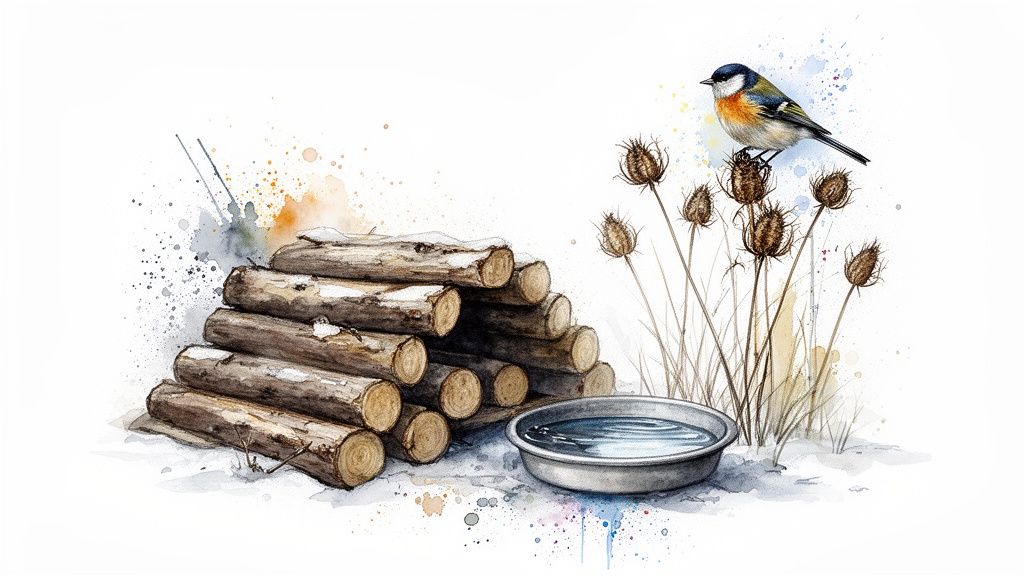
This is the one time of year when it pays to be a little less tidy. Fight that urge to cut everything back to the ground. If you can leave the seed heads on plants like echinacea, rudbeckia, and teasels, you’ll be providing a natural, high-energy larder for finches and other small birds when food is hard to come by. Plus, their skeletal shapes look absolutely stunning coated in a layer of frost.
Provide Shelter and Water
One of the best, and simplest, things you can do for wildlife is to create a log pile. Just find a quiet, out-of-the-way corner and stack up some logs and branches. It might not look like much to us, but for hedgehogs, toads, and beneficial insects like ladybirds and lacewings, it's a five-star hotel. These little guests will thank you next spring by becoming your very own pest control squad.
Water is just as vital as food in the cold. When ponds and puddles are frozen solid, a shallow dish of fresh water can be an absolute lifesaver for birds and other small animals. The only catch is you'll need to check it daily and break up any ice that forms.
Key Takeaway: A wildlife-friendly winter garden isn't just an act of charity. By providing food, water, and shelter, you're building a team of natural pest controllers and pollinators that will help create a healthier, more balanced garden next year.
For the birds, putting out some extra high-energy food can make all the difference. Consider adding these to your bird table:
- Fat balls or suet cakes: These are brilliant for providing warmth and energy.
- Sunflower hearts: A massive favourite for a whole range of bird species.
- Nyjer seeds: The best way to attract beautiful goldfinches and siskins.
It’s also a good idea to keep your water butt topped up through winter. You can learn more about fitting a simple rain diverter kit to make collecting this precious resource completely effortless.
Answering Your Winter Gardening Questions
Even the most seasoned gardeners have questions when it comes to winter prep. It's only natural to second-guess yourself, especially when a plant's health is on the line. Let's tackle some of the most common queries we hear from fellow UK gardeners.
Should I Water My Garden in Winter?
This is a classic, especially when we get one of those surprisingly dry, cold snaps.
For plants bedded out in the garden, the answer is almost always no. Our UK winters are reliably damp, and the soil holds plenty of moisture for dormant plants. Adding more water is a recipe for root rot, which is a real killer in cold, soggy soil.
The big exception? Anything in a pot. Containers, particularly those with evergreens, can dry out much faster than you'd think. This is especially true if they're tucked under the eaves of the house, sheltered from the rain. Get into the habit of checking them every couple of weeks. Just poke a finger an inch or two into the compost. If it feels bone dry, give it a little water on a milder, frost-free day.
Can I Still Cut My Grass?
Regular mowing is definitely off the cards come late autumn. But what about those mild spells when the lawn seems to perk up a bit? If it’s looking shaggy, a very light trim is possible, but you have to pick your moment carefully.
- Check the ground first. Only ever mow if the soil is firm and not frozen or waterlogged. Cutting on wet ground compacts the soil and can do serious damage.
- Set your mower blades high. This isn't a proper cut; you're just aiming to gently top the grass. Raise the blades to their highest setting.
- Watch the forecast. Never, ever mow if a frost is predicted. Cutting the grass leaves it vulnerable, and a frost soon after can be devastating for the blades.
Our advice? If you're not sure, just leave it. A slightly long lawn has far more protection from the cold than one that's been scalped right before a hard frost. One bad cut can really set your lawn back come springtime.
At Deal For Any Occasion, we provide all the affordable tools and garden essentials you need to prepare your garden for the seasons ahead. Explore our full range and get ready for a successful spring.