


A Parent's Guide to the Best Infant Learning Toys in the UK
Choosing the right learning toys for your baby doesn't have to be overwhelming. It’s actually simpler than you might think. These aren’t just distractions; they’re tools that meet your baby right where they are in their development, turning a simple playtime into a moment of real discovery. The best toy is always the one that clicks with what your little one is ready to learn next.
Your Guide to Developmental Play
Let's be honest, walking into a baby shop or browsing online can feel like navigating a maze. You're met with a wall of brightly coloured boxes, all promising to make your baby a genius. It’s easy to get lost in the noise. This guide is your map, written to help UK parents cut through the marketing fluff and focus on what truly matters.
My goal is simple: to help you see how different toys support those big milestones. We're talking about everything from that first clumsy grasp of a rattle to the proud moment they stack one block on top of another. You’ll learn how to spot genuinely good, safe toys that are worth your money.
What You Will Discover in This Guide
This is about more than just a shopping list. It’s about understanding the ‘why’ behind the toys you choose. We’ll cover:
- The Real Benefits: How toys actually help build those crucial motor, sensory, and thinking skills.
- Play by the Ages: What to look for at each stage, from a tiny newborn to a busy one-year-old.
- Safety First, Always: A practical checklist for UK safety standards and what makes a material truly baby-safe.
- Shopping Smarter: Tips for finding quality without overspending and making your budget work harder.
It's clear that parents are invested in this. The UK baby toys market was valued at an incredible $1030.0 million, and educational toys made up the biggest slice of that pie. It just goes to show how much we all care about giving our kids a great start.
Ultimately, I want you to feel confident. By the time you finish reading, you’ll have a clear idea of how to pick the perfect infant learning toys—the ones that make playtime a genuinely joyful and enriching time for you both. If you're looking for some ideas to get started, you might like to browse our collection of children's accessories and toys.
How Toys Build Your Baby’s Brain
Imagine your baby’s brain as a new city, bustling with construction. In these first few months and years, millions of connections are being formed between brain cells, like tiny roads linking up new neighbourhoods. The right learning toys act as the building crew, supplying the perfect materials to make those pathways strong and efficient.
Every time your little one reaches for a toy, they’re doing so much more than just playing. They’re running mini-experiments, solving puzzles, and figuring out how the world works. That simple rattle isn't just making noise; it’s a hands-on lesson in cause and effect.
This is exactly how babies build the foundations for all future learning. From that first clumsy grasp of a soft block to the focused stare following a colourful mobile, every interaction forges a new pathway in their developing mind, making it easier for information to travel later in life.
Boosting Motor Skills Development
When we talk about motor skills, we're really looking at the building blocks of physical freedom. They split into two main areas. Gross motor skills are the big movements using large muscles for sitting, crawling, and one day, walking. Fine motor skills are the small, delicate movements of the hands and fingers needed for grabbing, pinching, and twisting things.
This is where good learning toys come into their own. An activity gym encourages a baby to reach out, kick, and roll over, strengthening their core and limbs. Stacking rings or chunky puzzles challenge them to coordinate their fingers and thumbs—developing what’s known as the pincer grasp. These simple-looking activities are vital practice for a lifetime of physical tasks.
Igniting Cognitive Growth and Problem-Solving
Cognitive development is all about how your baby learns to think, reason, and make sense of things. Toys are brilliant at this, turning abstract ideas into something they can actually touch and figure out. A shape sorter, for instance, is a baby’s first real dive into logic and spatial awareness.
They quickly learn that a square block just won’t go into a round hole, all through trial and error. This simple act teaches them about shapes, problem-solving, and remembering what works. Each time they get it right, a neural connection gets a little stronger, building their confidence to tackle the next puzzle.
For a baby, play isn't just fun; it's the most important work they do. Every shake, rattle, and roll is a building block for their cognitive, physical, and emotional future.
Awakening the Senses
From the moment they’re born, babies use their senses to explore their new world. Sensory play is absolutely essential for their brain development, helping them process all the information coming at them. Learning toys are fantastic tools for this, offering a safe and engaging way to stimulate all their senses.
- Touch: Toys with different textures—think crinkly fabric books or bumpy silicone balls—help babies understand the difference between soft, hard, rough, and smooth.
- Sight: High-contrast patterns and bold, bright colours are easier for a baby's developing eyes to focus on, strengthening their vision and their ability to track moving objects.
- Sound: Rattles, simple musical toys, and squeakers teach that all-important lesson of cause and effect while helping them learn to locate where a sound is coming from.
This sensory exploration helps them build a rich mental map of the world around them. It’s a crucial part of learning that starts in infancy and continues as they grow. To see how these ideas evolve, check out our guide to educational toys for preschoolers.
The chart below shows just how much the UK baby toy market is growing, which really reflects how much parents value developmental play.
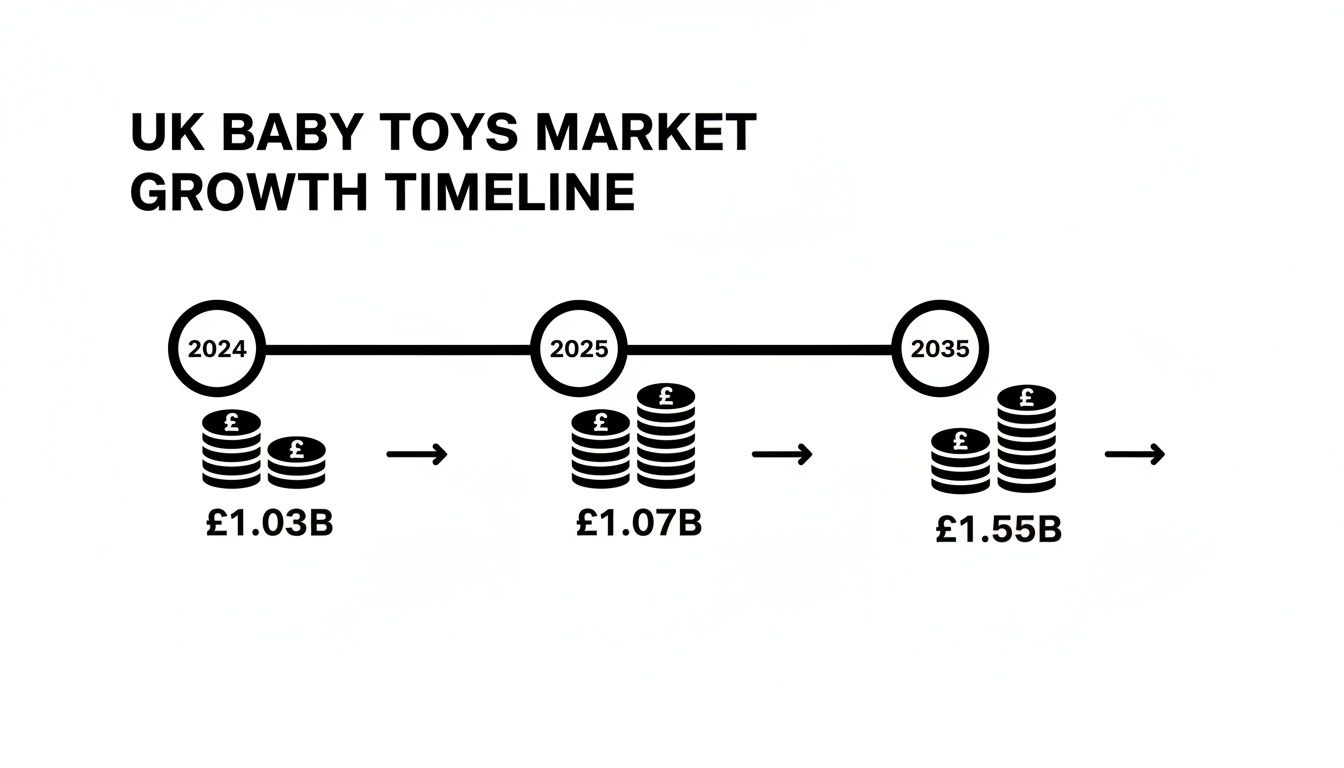
This projected jump from £1.03 billion in 2024 to £1.55 billion by 2035 shows that more and more, these toys are seen as a worthwhile investment in a child’s early development.
Nurturing Social and Emotional Skills
Play is also deeply social. When you get down on the floor to roll a ball back and forth or make silly faces with a hand puppet, you’re teaching your baby incredibly important social and emotional lessons. These little interactions are the groundwork for communication, empathy, and building relationships.
Toys often act as the bridge for this connection. Sharing a toy teaches turn-taking. Copying the actions you make with a toy encourages them to watch and mimic you. Through these simple games, babies start learning to read facial expressions, understand your tone of voice, and feel the joy of connecting with you. These playful moments are their very first lessons in forming happy, healthy bonds with others.
Choosing the Right Toy for Every Stage
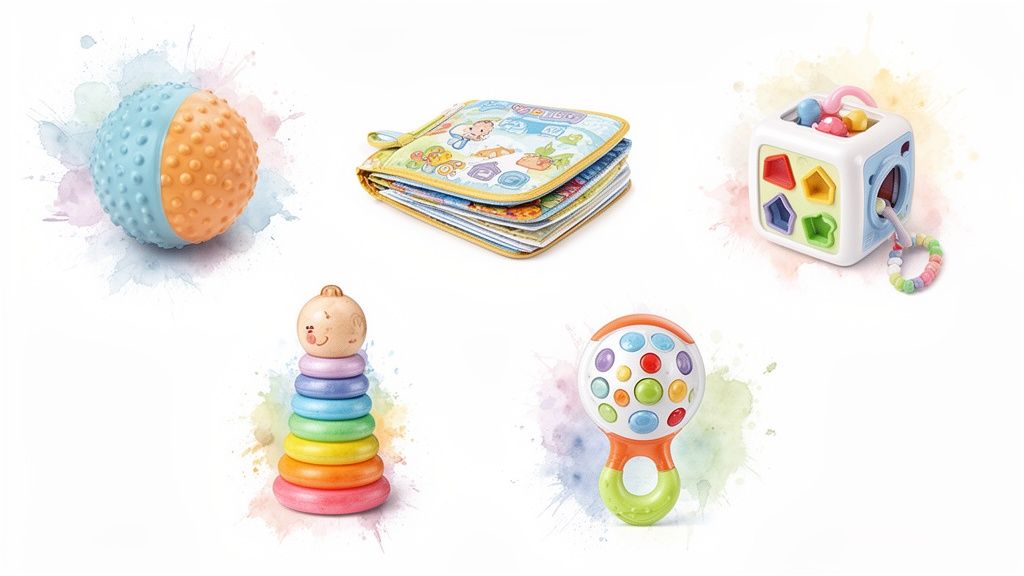
It’s one thing to know why learning toys are great, but picking the right one for your baby’s specific age and stage is where the magic really happens. A toy that’s perfect for a 3-month-old will likely bore a 1-year-old, and vice-versa. Let’s break down the best types of toys for each developmental phase.
Sensory Toys
In the first few months, a baby’s world is a whirlwind of new sensations. Their job is simply to see, hear, touch, and feel everything around them. This is where sensory toys come in.
These toys are all about stimulating those brand-new senses. Think of things like:
- Rattles and shakers: These teach babies about sound and where it’s coming from.
- Soft, textured books: They offer different feels, from crinkly pages to fuzzy patches, which is fascinating for tiny hands.
- High-contrast flashcards: A newborn’s vision is still developing, so the stark difference between black and white patterns is captivating and helps their eyes learn to focus.
At this stage, it’s all about exploration. The goal is to give them interesting things to look at, listen to, and grasp.
Motor and Cognitive Toys
As babies get a bit older, usually from around 4 to 12 months, they start wanting to do things. They're no longer passive observers; they’re active participants. This is when motor and cognitive toys become essential.
These toys help develop both fine motor skills (like pinching and grabbing) and gross motor skills (like sitting up and crawling). At the same time, they get your baby's brain working, introducing them to early problem-solving.
Every time a baby stacks a ring or fits a block into the right hole, they're not just playing. They're running a tiny science experiment, learning about size, shape, and how things fit together.
Even something as simple as pressing a button to make a light flash teaches a fundamental lesson about cause and effect. It shows them they can make things happen, which is a huge confidence booster.
Language and Musical Toys
Long before they can say "mama" or "dada," babies are like little sponges, soaking up every sound and word they hear. Musical and interactive toys are fantastic for tuning their ears to language.
Think of these toys as your baby’s first conversation partners. They introduce rhythm, melody, and sounds that lay the groundwork for speech.
An interactive book that sings the alphabet or a cuddly toy that names body parts when squeezed makes learning feel like just another part of the fun. You can find out more about how toys support this journey in our guide on musical interactive learning toys for babies. They help attune a baby’s ear to different tones and patterns—a vital first step towards talking.
A Parent’s Checklist for Toy Safety
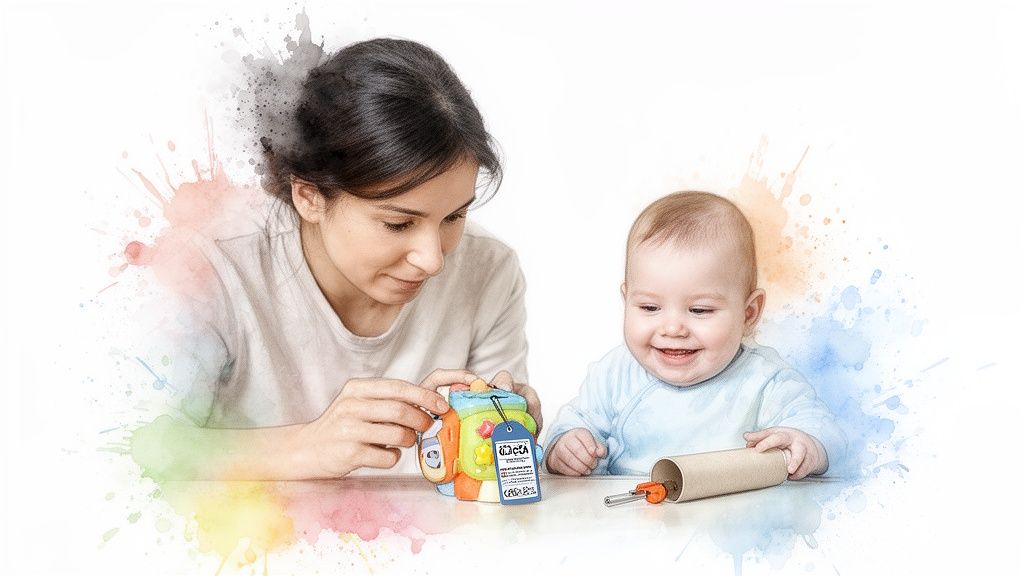
Before a toy can be fun, it absolutely must be safe. I know that navigating the world of toy safety can feel a bit overwhelming, but a few key checks are all it takes to give you complete peace of mind. Think of this as your quick-start guide to spotting potential hazards and choosing toys built for happy, worry-free play.
Your baby is going to explore everything with their mouth, hands, and whole body. It’s just what they do! That’s why understanding materials, construction, and UK safety standards isn’t an optional extra—it’s the most important step of all. Let’s walk through the non-negotiables.
Understanding UK Safety Marks
When you pick up a toy in the UK, the very first thing you should look for is a safety mark. This little symbol is your guarantee that the product has been properly tested and meets our strict safety regulations.
The main one to recognise now is the UKCA (UK Conformity Assessed) mark. This confirms the toy complies with all relevant UK safety laws. You might still spot the CE mark on some products, which shows it meets EU standards. A toy with one or both of these marks has passed tough tests covering everything from flammability to the chemicals used.
Basically, think of these marks as a safety passport. Without one, a toy hasn't been approved for the journey into your home.
Identifying Choking Hazards
For babies and toddlers, anything and everything is a potential chew toy. This makes choking one of the biggest risks we need to guard against. There's a brilliant, simple way to check if a toy or any of its parts are too small: the toilet roll tube test.
It’s exactly as it sounds. If an object can fit completely inside a standard toilet roll tube, it’s a potential choking hazard for a child under three years old. This rule applies not just to tiny toys but also to any bits that could break off, like the button eyes on a teddy or the wheels on a little car. Always give them a good tug to make sure they’re secure.
A toy's true value is measured in smiles, not pounds. But its fundamental worth is determined by its safety. Always prioritise robust construction and certified, non-toxic materials.
Another critical point is battery compartments. If a toy takes batteries, the cover absolutely must be secured with a screw. This simple feature stops curious little fingers from getting to the batteries, which are incredibly dangerous if swallowed. Toy safety is a huge part of making your home safe all around; you can also learn about essential baby safety products to help protect your little explorer.
Choosing Non-Toxic Materials
Because babies put everything in their mouths, the materials their toys are made from are so important. You need to be sure that nothing harmful is leaching out while they’re having a good chew and drool.
Look for toys that are clearly labelled as non-toxic and BPA-free. Bisphenol-A (BPA) is a chemical that has been linked to health concerns, so it's definitely one to avoid. The best infant learning toys are usually made from materials like:
- Food-grade silicone: It's soft, flexible, and perfect for teething gums.
- ABS plastic: This is a tough, stable plastic that doesn't contain BPA.
- Natural wood: Look for solid wood with non-toxic, water-based paints or natural oils rather than chemical-heavy varnishes.
These materials are built to withstand enthusiastic playtime while keeping your baby safe from nasty substances.
Keeping Toys Clean and Hygienic
Finally, a clean toy is a safe toy. Regular cleaning stops germs from building up and making your baby poorly. How you clean a toy really depends on what it’s made of.
- Plastic & Silicone Toys: These are the easiest! Just wash them in warm, soapy water or give them a once-over with a baby-safe disinfectant wipe.
- Wooden Toys: Never soak wooden toys in water, as it can make them swell and warp. Instead, wipe them with a damp cloth and a mild soap or vinegar solution, then let them air dry completely.
- Fabric Toys: For soft toys, comforters, and cloth books, check the care label. Many can pop straight into the washing machine on a gentle cycle.
By running through these simple checks, you can feel confident that the infant learning toys you choose are not only brilliant for your baby’s development but, most importantly, completely safe for them to enjoy.
How to Shop Smart for Infant Learning Toys
Building a fantastic collection of learning toys for your baby doesn't mean you have to empty your wallet. It’s all about being a bit clever, focusing on quality over quantity, and knowing what to look for. With a little planning, you can give your little one everything they need for developmental play without breaking the bank.
The trick is to think like a minimalist. Rather than cramming a toy box full of plastic, aim for a smaller, curated selection of truly brilliant, versatile toys. A single, well-made wooden block set, for instance, will offer years of creative play, far outlasting a dozen flashy gadgets with only one function.
Invest in Toys That Grow with Your Child
One of the best ways to get real value for your money is to pick multi-functional toys that stay relevant as your baby hits new milestones. These are the true workhorses of the playroom, adapting to different stages and saving you from constantly buying new things.
Take a simple set of stacking cups. They're a perfect example of a toy that grows with your child. A three-month-old will love just looking at the colours or gumming the edges. By six months, they’ll be banging them together, and by their first birthday, they'll be developing the fine motor skills to actually stack them up. One toy, many stages of play.
Quality Over Quantity Is the Golden Rule
It’s easy to be tempted by a basketful of cheap toys, but it’s often a false economy. Flimsy toys can break, creating potential safety hazards, and they rarely keep a child's attention for long. Investing in fewer, more durable items is always the smarter move in the long run.
A thoughtful collection of five to eight high-quality infant learning toys is often far more effective than a room overflowing with dozens of options. Quality ensures safety, durability, and sustained engagement.
When you're looking at a toy, feel its weight and check the materials. A beautifully crafted toy made from solid wood or sturdy, food-grade silicone is built to survive months of enthusiastic chewing, dropping, and banging. These are the toys that last, giving you real value. You can explore a great range of durable options among our top-selling products.
Time Your Purchases and Look for Deals
A little bit of strategic shopping can make a huge difference to your budget. Many UK retailers have fantastic promotions throughout the year, which is the perfect time to grab those higher-quality toys you've had your eye on.
Keep an eye out for these opportunities:
- Seasonal Sales: Big events like Black Friday, the Boxing Day sales, and the January sales are classic times to find brilliant discounts on top brands.
- End-of-Season Clearances: As shops make way for new stock, they often reduce last season's toys. It's a great time to find a bargain.
- Free Shipping Offers: Don't forget to factor in delivery costs! Choosing retailers who offer free nationwide shipping means more of your money goes directly on the toys themselves.
By putting these simple tips into practice—choosing versatile toys, focusing on quality, and shopping at the right times—you can build an incredible and affordable library of infant learning toys that will support your baby's development at every turn.
The Secret Ingredient: Your Active Participation
So, we've covered the what, why, and how of picking the right infant learning toys. But we've saved the most important part for last. There's one element that turns a simple toy into a powerful tool for growth, and that secret ingredient is you.
A toy, after all, is just an object. It’s your involvement that breathes life into playtime, transforming it into a rich, shared experience. These are the moments that build connections in your baby’s brain and heart at the same time. Really, the best toy for a newborn is simply your face and your voice.
Turning Playtime into Connection Time
Try to see these toys less as baby-sitters and more as conversation starters. They're the props in the beautiful, unfolding story of your baby’s first year, and you’re the narrator, the playmate, and the biggest cheerleader.
This doesn't mean you need to schedule elaborate activities. It's about being present and engaged in small, meaningful ways. The real goal is to share in their discoveries, helping them make sense of the world while showing them you're their safe, loving guide through it all.
A toy can teach a baby about colours and shapes, but a parent’s joyful interaction teaches them about love, communication, and their own value. Play is the language; connection is the lesson.
When you join in, you’re modelling curiosity and joy. You're showing them that learning is an exciting adventure you get to take on together. Every smile and word of encouragement you offer builds their confidence brick by brick.
Simple Ways to Engage at Every Stage
Naturally, the way you interact will change as your baby grows. The key is to simply meet them where they are and celebrate each tiny step forward.
Here are a few simple ideas for each stage:
- For Newborns (0-3 Months): When your baby is gazing at a high-contrast mobile, lie down beside them and softly talk about the shapes. This helps their eyes learn to track and links your soothing voice to what they're seeing.
- For Infants (4-8 Months): As they explore an activity cube, become their commentator. "Wow, you made the spinner go round and round! What does this button do? Click!" This builds their vocabulary and introduces the idea of cause and effect.
- For Older Babies (9-12+ Months): When they’re trying to stack rings, be their enthusiastic audience. If they get one on, clap and cheer! If they get frustrated, gently offer a helping hand. This teaches them about trying again and the joy of getting it right.
The True Purpose of Play
At the end of the day, the real value of infant learning toys isn’t measured by the skills they teach, but by the moments of connection they create. These shared experiences—the laughter, the little discoveries, the encouragement—are what build a secure and loving foundation for a lifetime of learning.
So, get down on the floor with them. Be silly. Marvel at the world through their eyes. Celebrate every small victory and offer comfort through every minor frustration. Your engaged, loving presence is the most powerful developmental tool your baby will ever have. You’re giving them the confidence to explore, learn, and grow, one playful moment at a time.
Your Top Questions About Baby Toys Answered
It’s completely normal to have questions when you're trying to pick the perfect toys for your little one. Let’s clear up some of the most common ones we hear from parents.
How Many Toys Does My Baby Actually Need?
Honestly, there's no magic number. It's all about quality over quantity. A small, well-chosen collection of five to eight toys that target different skills—like sensory play, motor skills, and problem-solving—will do far more for your baby than a mountain of plastic.
A great tip is to try toy rotation. Just pop a few toys away and swap them out every week or so. It keeps things fresh and exciting for your baby, preventing them from getting overwhelmed and encouraging them to explore each toy more deeply.
Are More Expensive Toys Better?
Not always. A hefty price tag doesn't guarantee a better toy. The best learning toys are the ones that are safe, engaging, and just right for your baby's current stage of development.
In fact, you'll often find that simple, classic toys deliver more developmental bang for your buck than flashy electronic gadgets.
Instead of focusing on price, look at a toy’s play value, how well it’s made, and whether it has the right safety marks (like the UKCA symbol). A solid set of wooden blocks, for instance, offers endless learning opportunities and will outlast a flimsy, one-trick-pony gadget every time.
This way, you know you're investing in your child's learning, not just clever marketing.
When Should We Start with STEM or Tech Toys?
For babies, real STEM learning starts with their hands, not with a screen. Think of it like this:
- Building blocks are your baby’s first introduction to physics and engineering.
- Shape sorters teach the fundamentals of geometry and spatial awareness.
- Stacking rings lay the groundwork for understanding size, order, and balance.
This kind of hands-on play is what builds the essential brain connections for future learning. You can introduce simple electronic toys that teach cause and effect (like a button that triggers a light or sound) from around six to nine months. But the real focus should always be on toys that spark imagination and get them moving—those are the true foundations of STEM.
At Deal For Any Occasion, we believe in providing high-quality, safe, and engaging toys that support your child’s development without breaking the bank. Discover our carefully selected range of essentials for every stage of your baby's journey. Explore our collections at https://dealforanyoccasion.com.